

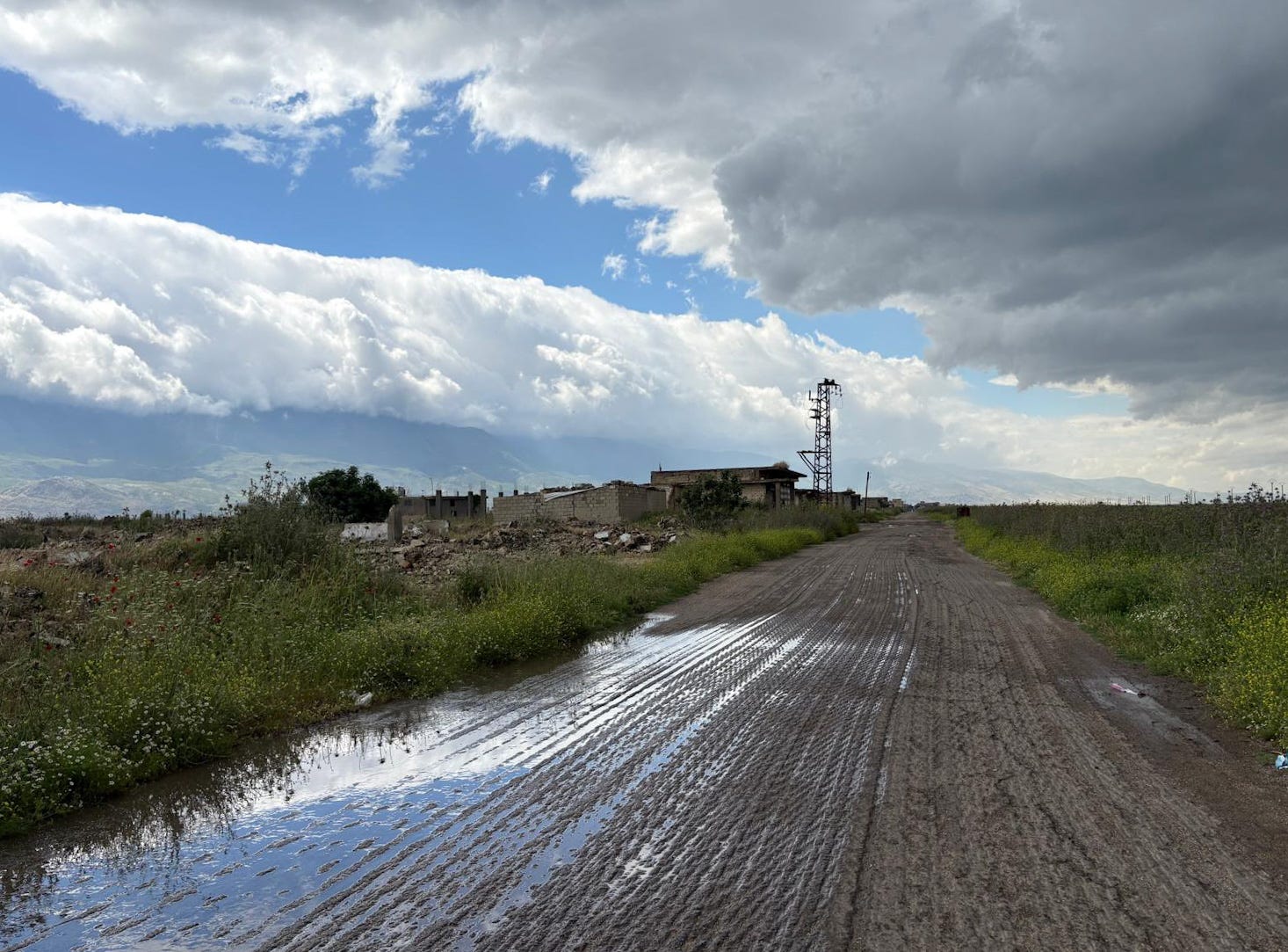
“Here we are too intertwined with other sects to have had protests,” Abu Ahmed tells me, “We had to discreetly move to Qalaat al-Mudiq to demonstrate.” We are sitting in the dimly lit living room of his newly rebuilt home, surrounded by bare concrete walls. Just outside is a small prefabricated building with the large letting of a Turkish NGO. It was Abu Ahmed’s home of many years while he lived in the refugee camps in northern Idlib. His old and new homes now sit along a long, straight gravel road, raised high above the marshy fields amidst the al-Ghab Plains in northwest Hama.
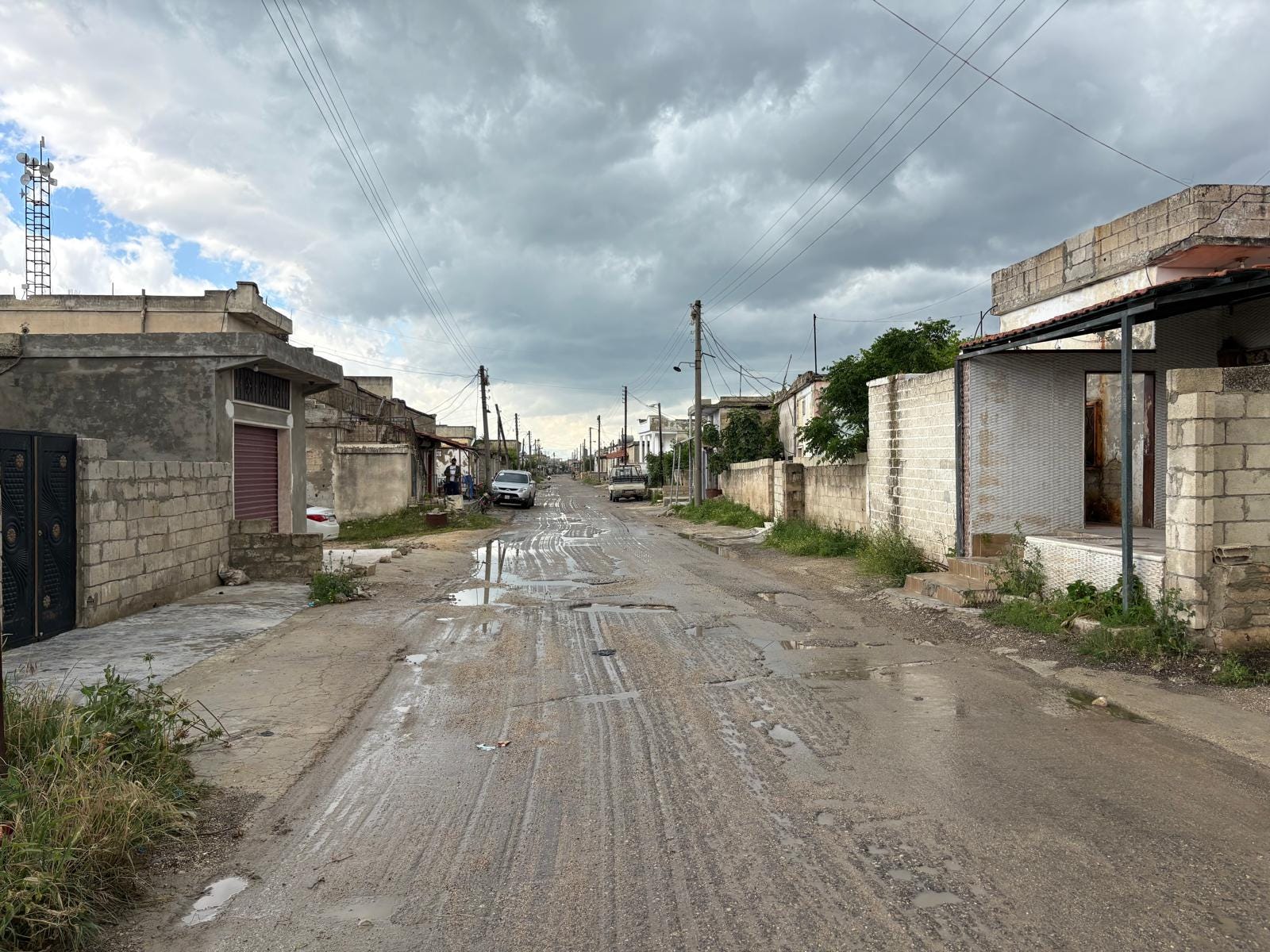
“In early 2011, after the first protests, the army came here and they used people from the area as guides,” he continues, “They would cross the area and stop only in houses where the guides would tell them, ‘he was in the protests,’ and then they took everything from inside and threw it in the canals.” All around us tall grass grows uncontrolled, hiding beneath its stalks the foundations of scores of buildings which once made the village of Ramleh. Only a few broken homes remain today.
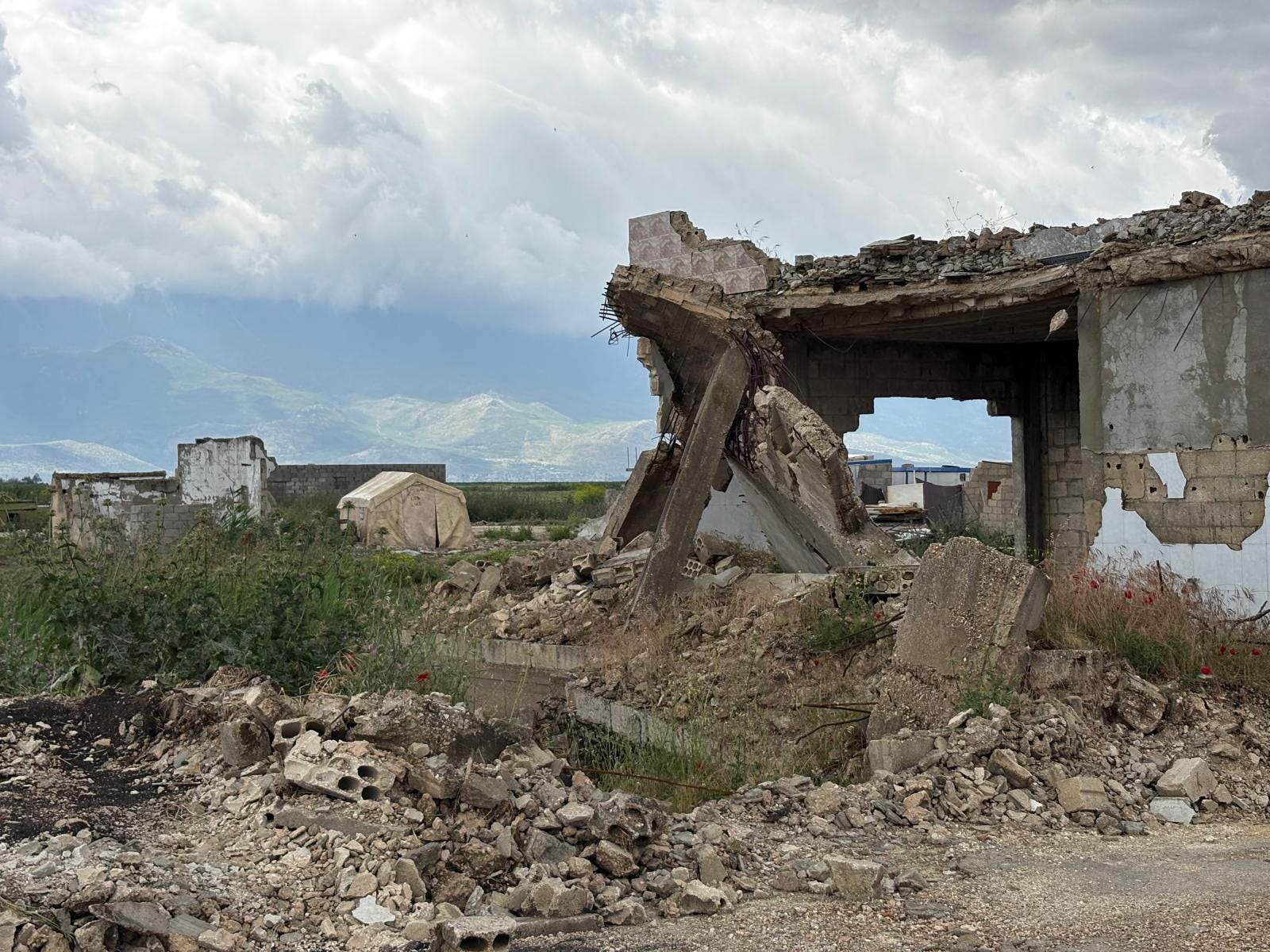
Ramleh was itself the frontline that once ran through the al-Ghab Plains during the first half of the Syrian war. Later, when the regime forced opposition communities towards the base of the Shashabo mountains that mark the eastern edge of the plains, Ramleh was turned into a military encampment. Closely mirroring this military faultline is al-Ghab’s complex sectarian fault. Sunnis, Alawis, and Murshdis – a small Islamic sect native to Syria and formed in the early 1900’s – all reside in close proximity here. Three long roads dotted with villages run north to south through the plains. On the eastern road are most of the Sunni towns, the western road Alawi and Murshdi, and in the middle in an almost alternating pattern are villages belonging to all three sects.
Ramleh was in essence a liberated town from 2012 until 2015. The regime established a large checkpoint at the northern crossroads that marked the border between Ramleh and the Murshdi town of Rasif. The houses of Rasif flow seamlessly north into the Alawi town of Aziziyah, then the Sunni town of Tamanah and lastly the Murshdi town of Jayid. To the south of Ramleh the road runs through the two Sunni towns of Qabr Fida and Kareem. These seven towns formed one nearly unbroken line of homes and schools through the center of the plains, now marred by destruction and displacement.
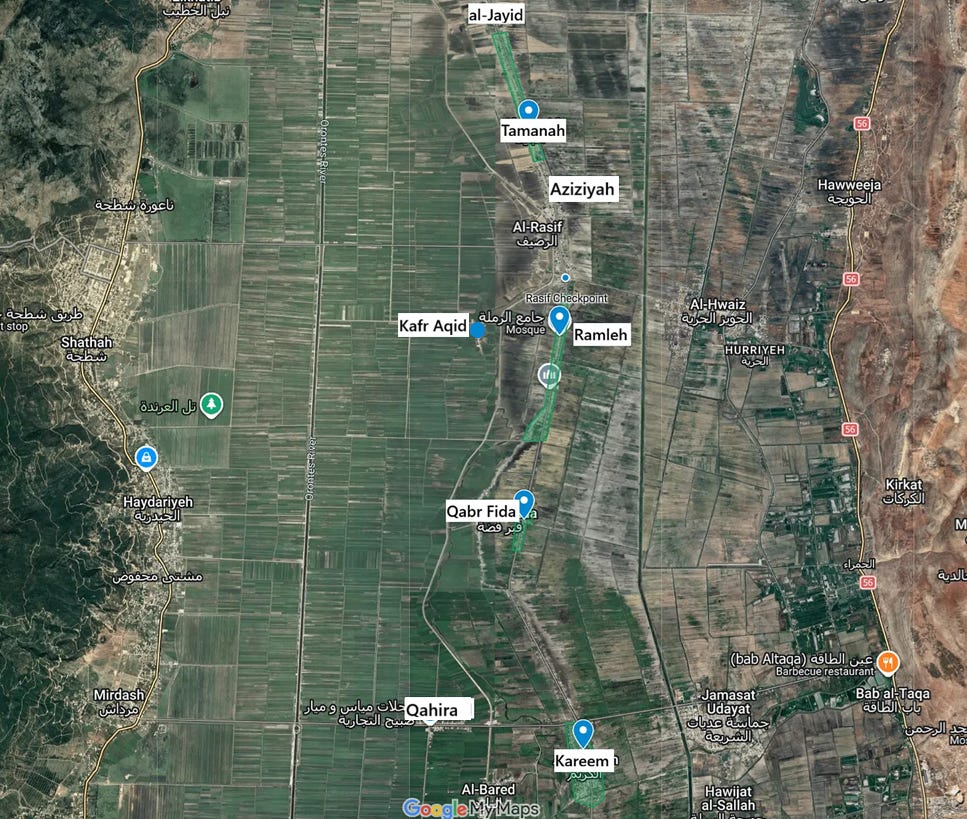
Generations of inter-sect relationships between these communities were strained and snapped by the violence of the war’s early years. The residents, those remaining and those displaced, are now enduring the consequences of that violence and the absence of any real social and economic initiatives to rebuild their communities. Amid the area’s abandonment by Damascus and the international community, violence has steadily returned.
The First Displacement
By 2012, Ramleh, Qabr Fida, Kareem, and Tamanah were free of any regime presence. They existed in a sort of uncomfortable truce with the regime forces stationed in the bordering non-Sunni towns. Murshdi and Alawi teachers from Rasif and Aziziyah who worked at Ramleh’s school would cross the checkpoint each morning on their way to work and each evening on their way home. Residents maintained contact with their friends and coworkers from the other villages in western al-Ghab, all under regime control, even if they could not meet in person.
For the Sunnis in Ramleh, only the elderly were allowed to cross the regime checkpoint and enter Rasif to buy food for their families. During this period, residents were generally still able to work their fields, but by 2013 the regime had become increasingly aggressive towards the farmers. The Murshdi elders of Rasif became key interlocutors for the Sunnis of Ramleh. “Some areas were a bit sensitive to cultivate in so the Wujaha of Rasif helped negotiate for us in order to access those lands close to the checkpoints,” recalls Abu Ahmed, “Sometimes the Wujaha would even stand at the checkpoints to protect us while the men were using their tractors.”
The first tear in this fragile peace came at the beginning of 2013. One evening, regime soldiers at the Rasif checkpoint advanced into the no-man’s land and shot and killed two young men buying phone credits in Ramleh’s main street. “People here then came to me and said ‘look they are killing us, we cannot accept people from other villages here’,” Abu Ahmed explains. All but one of the non-Sunni teachers stopped coming after this, as sectarian divisions deepened sharply. By this point, Ahrar al-Sham had anchored itself as the predominant opposition faction in northwest Hama, but alongside it were smaller, more extreme factions with links to al-Qaeda, like Jund al-Aqsa. The growing Islamist and sectarian rhetoric coming from these extremist factions added fuel to the fears stoked by the regime among many Alawi and Murshdis that they faced imminent death from their Sunni neighbors.
By late 2013 the remaining Murshdi teacher in Ramleh quit, enduring too much pressure from the two communities. Abu Ahmed offered to escort her back home to Rasif. He was detained while attempting to return through the checkpoint he had just passed, the soldier falsely claiming he had never seen Abu Ahmed before. “Another teacher from Rasif who knew me intervened and the soldier eventually gave me my ID back. If it were not for her, I would have been taken to the prisons.” He adds with a smile, “I recently went and found her and thanked her.”
The central al-Ghab plains became fully militarized by mid-2014. Movement between towns had ceased, armed opposition fighters had embedded themselves in and around Ramleh, and the regime had formed a large and powerful militia headquartered in the Alawi town of Aziziyah. The village of Tamanah was semi-contested at this time. Regime forces would enter the village and occasionally be ambushed, at which point the army would shell Tamanah. In July 2015, as part of the larger military campaigns underway in the Idlib governorate, the regime launched a final assault on Tamanah, Ramlah, Qabr Fida, and Kareem.
The remaining Sunni residents were evicted, their homes seized, property systematically looted and then largely demolished. Only a few families were able to remain in Tamanah – those on the northern edge bordering the Murshdi town of Jayid. Their Murshdi neighbors protected them and ensured the militias did not steal their homes.
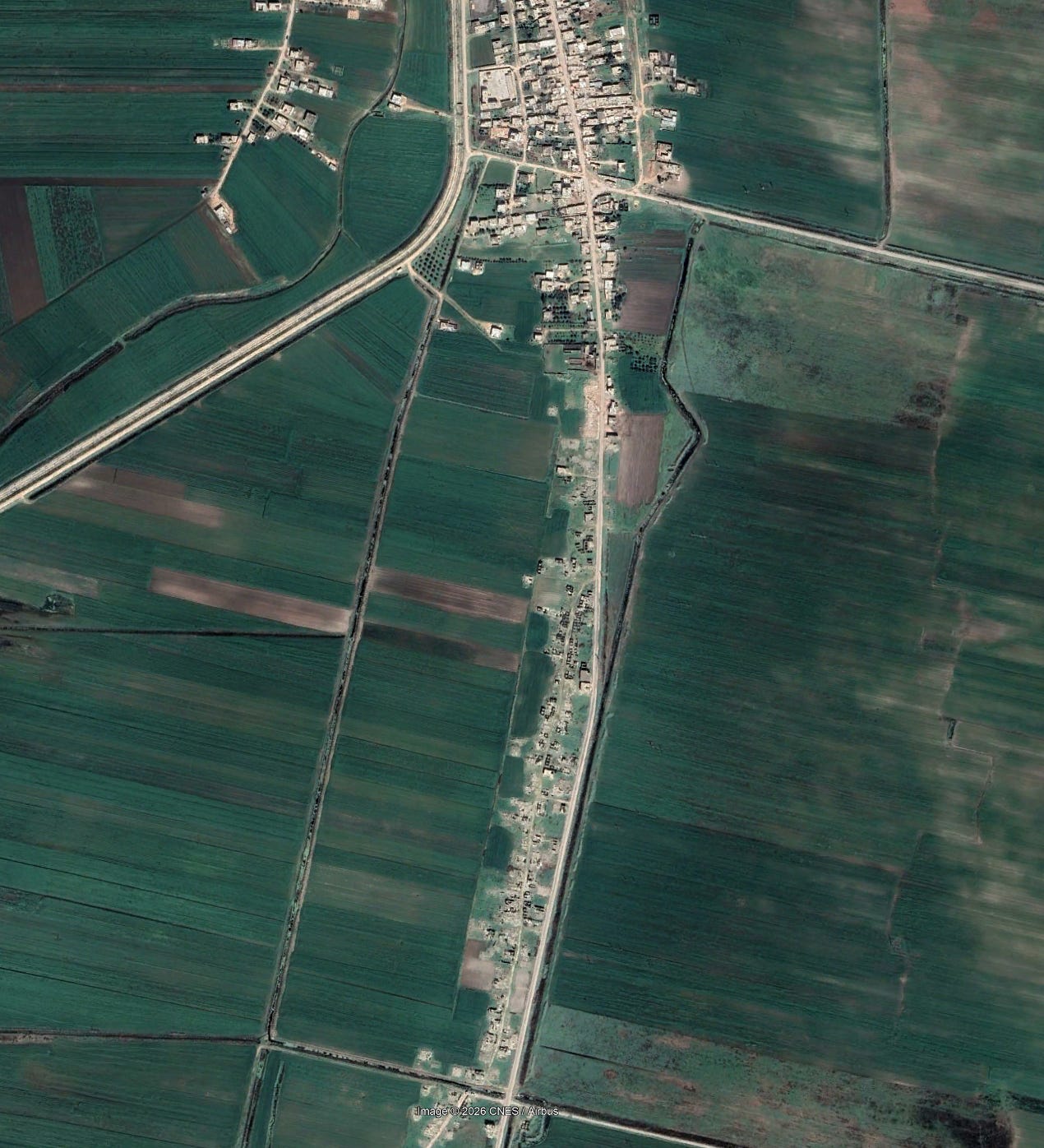
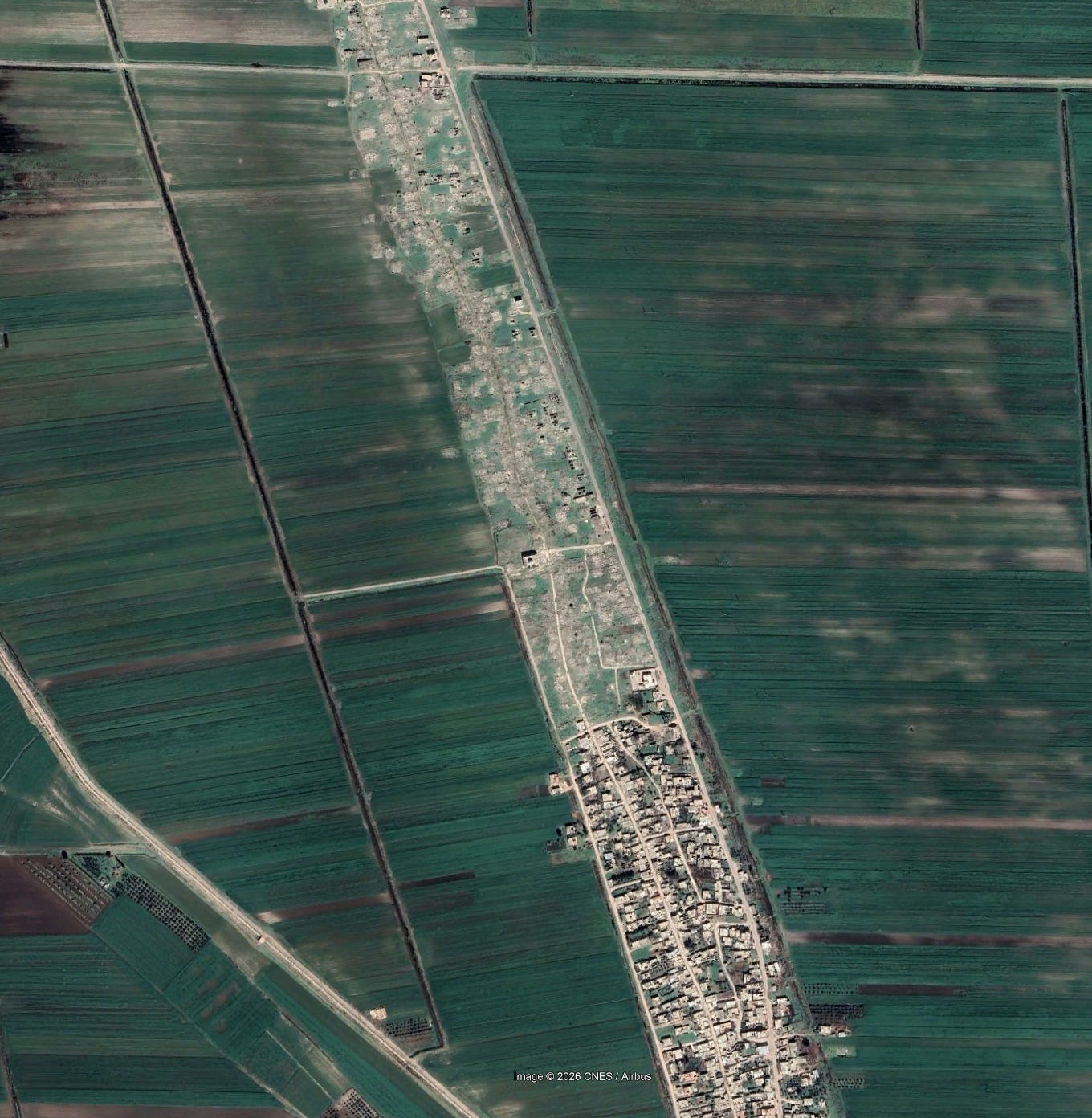
A single artillery strike on Ramleh sent a clear message: withdraw or face assault. Within a few days the remaining fighters and civilians left their village for the safety of the mountains to the east. Identical scenes played out in Qabr Fida and Kareem to the south. Regime militias quickly moved in to fill the void. Every home in Ramleh was dismantled down to its foundations; the only exceptions were those turned into military bases. The effects of the displacement are starkly visible in satellite imagery.
The Long Shadow of the Militias
The displacement event and subsequent looting of Sunni property was the final catalyst for the post-liberation sectarian violence plaguing al-Ghab today. The same fate the Sunni towns in central al-Ghab suffered in 2015 was enforced on most of the other Sunni towns in eastern al-Ghab after they fell to regime control in 2019. More than 100,000 civilians were displaced from this area during the war, many forced to live in massive tent camps along the Turkish border. When the Assad regime fell, these families returned to find their homes gone.
The sectarian makeup of the regime militias responsible for this displacement and destruction is now a fundamental part of the Sunni narrative. Most from central al-Ghab accuse the Alawis of Aziziyah as the main culprits behind all of the regime’s violations. In 2011, regime officers mobilized loosely organized “Popular Committees” from their core support base – generally young Alawi men and criminals – across the country. In al-Ghab, these networks eventually coalesced into local branches of the National Defense Forces and the Air Force Intelligence-led Tiger Forces.
The commander of the Tiger Forces al-Ghab sector was a local man named Ali Taha, who first formed a group within the Tiger Forces in 2014, according to an interview by Aymenn al-Tamimi. Taha is from the Murshdi village of al-Jayid, not Aziziyah. The later village did have a local Tiger Forces commander, Ibrahim Naim, who served under Taha, but it was Ali Taha whose name became widely circulated among Sunni opposition circles over the years. Like most militias in western Syria, the Tiger Forces and al-Ghab NDF were majority Alawite. However, they contained at least some men from each of the sects local to their areas of recruitment. The presence of Sunnis became even more common in later years as the regime used its militias as a part of its settlement strategy with formerly opposition Sunni towns. Sunni men from nearly every town across northwest Hama can be found among the obituaries of Tiger Forces fighters in later years.
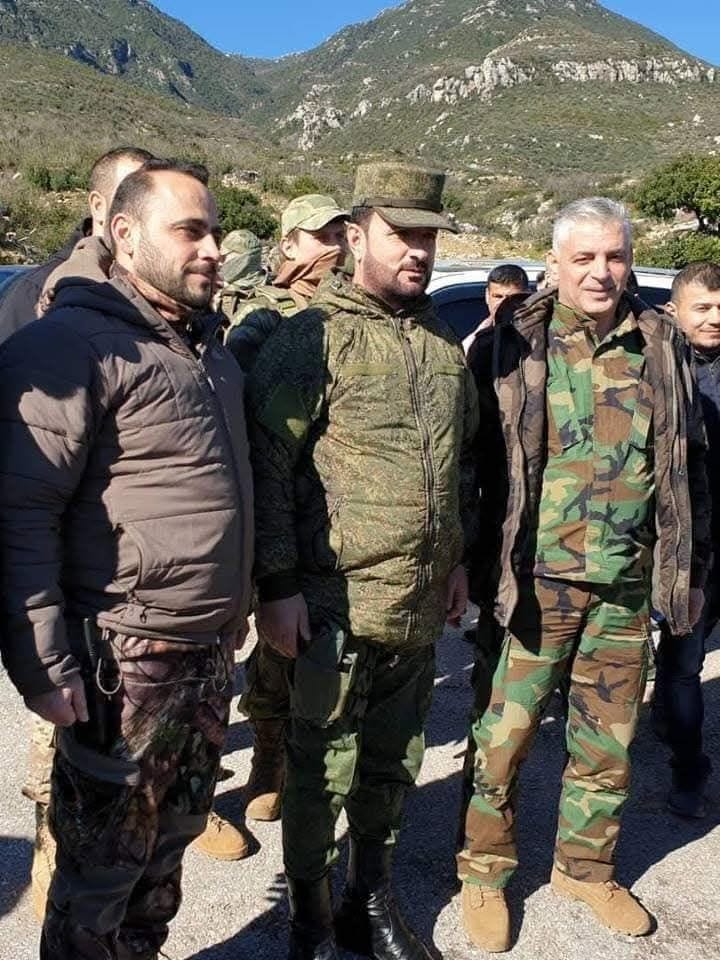
Residents from every sect have accused specific men and families from the others of being “shabiha” under the regime and involved in the crimes against the Sunni villages. In Ramleh, even after one resident emphasized the role of Alawis from Aziziyah in looting his home, he added, “there are four people from one of the villages near Qalaat al-Mudiq [Sunnis] who we know stole many things, and we know they are hiding around here.” Similarly, one resident of Aziziyah claims that four Murshdi men from Rasif died when a roof collapsed while they looted a home in Tamanah - a claim vehemently denied by the areas Murshdi representatives.
In October 2015, a Russian military delegation visited the Murshdi towns in Al-Ghab, pressuring government employees of fighting age to join Syria’s new 4th Corps. The formation was to be assigned command over the al-Ghab and Latakia fronts, and the region’s state employees represented a large untapped manpower pool with little choice in joining. While many Sunnis, Alawis, and Christians were also pushed into the 4th Corps, the move would irreversibly link the Murshdis here to the regime, deepening the already growing animosity towards the community from some hardline Sunnis who saw Murshdis as no different from Alawi loyalists. After the fall of the regime, some Sunni hardliners would use the presence of Murshdi men in the regime’s army as “proof” of the sect’s complicity in crimes.
Nonetheless, many Sunnis in the area today try to distance the Murshdi community from the regime, downplaying any potential role its members may have had in the crimes. Much of this appears to originate in the widespread personal and inter-communal relationships between the two communities pre-dating the revolution, bolstered by the sect’s broader anti-Assad stance since before 2011. This has caused new divisions between some Alawis and Murshdis, with some Alawis accusing those in Jayid and Rasif of encouraging vigilantism against Aziziyah in order to protect their own towns.
Post-Liberation Violence
The al-Ghab region continues to endure a range of direct and indirect violence since the country’s liberation. Retribution killings began within three days of Assad’s fall. According to local reporting at the time, a group of around 40 armed men returned to Tamanah on December 11 and stormed Aziziyah. The armed men reportedly moved house to house, assaulting families and looting, during which they killed at least one man. An elder from Tamanah and a local Free Syrian Army officer were able to intervene and prevent further killings.
Most of the regime soldiers from Aziziyah were not in the village at the time, instead living in the military housing blocks in Damascus and Latakia. These men largely did not return. Other residents initially remained in the village thinking they were safe. However, as more displaced Sunnis returned to al-Ghab, pressure campaigns mounted.
On March 6, 2025, Alawi insurgents initiated a series of coordinated attacks against security forces in the nearby Tartous and Latakia governorates. The attacks triggered a massive mobilization of armed Sunnis, encompassing government military and security forces, non-integrated opposition factions, and armed civilians. While there were no insurgent attacks in al-Ghab that day, this same mix of armed government supporters mobilized and moved on towns known to have been centers of Assad regime recruitment. According to several witnesses and activists in the area, armed men from Tamanah killed 12 men in Aziziyah, and in the nearby town of Salhab, armed civilians joined government factions and sought out Aziziyah residents living in the town, killing two more.
While killings became much rarer after the March attacks, disputes now turned to land. When the regime displaced the Sunni villages, it sold or leased the land at extremely low prices to local militia members and farmers. The Mursdhi community leaders across Syria issued a decision during the war banning the cultivation of Sunni land or use of Sunni homes. While this limited murshid involvement in land theft, some members of his sect ignored this and were subsequently excommunicated from the religion. Negotiations over land rights became the main effort for the leaders of Ramleh, Rasif, and Aziziyah in 2025. Mursdhi elders in Rasif played a central role in mediating the return of Sunni land – and demands for compensation by the displaced Sunni families – and after a year of negotiations a deal was finally agreed.
However, some Sunni families have gone further and began harassing Alawi farmers in the area in order to steal their land or force them to sell at a low price. Just before the 2025 harvesting season began, sheep from nearby Sunni villages began grazing on Alawi farmland. Most Alawis were too scared to attempt to harvest. Attacks on farmers and farmland has not been isolated to minorities, though. Sunni farmers across eastern al-Ghab have also endured recurring theft of farming equipment and solar panels from armed men.
Later in the year, some men from Tamanah began entering Aziziyah and threatening families to leave. IEDs, sound bombs, and small arms have all been used against Alawi homes to scare the residents out, their homes then taken by the displaced Sunni family. Today, only 80 original inhabitants remain in Aziziyah. Similar violence played out in the Alawi town of Kafr Aqid, close to Ramleh, which now stands empty.
A Desperate Need for Intervention
The post-liberation inter-communal violence now directed at the Alawi, and to a lesser extent Murshdi, communities in al-Ghab is a direct parallel and reaction to the violence imposed by the regime and its militias on the Sunni towns ten years earlier. Those stealing Alawi homes and lands justify the seizures by claiming they are only targeting “regime shabiha,” and pointing to the rubble where their homes once stood and to the years of profit some Alawi families made from the farmland they were forced to abandon at the barrel of a gun.
Security forces in this area appear to be under-equipped to handle the geographic scale of the threats. Previously, the Ministry of Interior had brought in Sunni security personnel from outside al-Ghab to man the checkpoints in the area. According to locals, the situation began to improve after this change. However, for some unknown reason those men were later replaced by local security members who have been accused of enabling or ignoring the property seizures and harassment.
Killings have returned to al-Ghab in recent months, underscoring the interior ministry’s inability to secure non-Sunni villages. On April 23, security forces raided an Alawi village in western al-Ghab and captured Amjad Yousef, the notorious war criminal responsible for executing scores of civilians in Damascus in 2013. His arrest, and his family’s public denial of his guilt, triggered a wave of anger and hate speech towards Alawis in al-Ghab. In the next two months, five men were killed and four others injured in targeted attacks in several Alawi and Murshdi villages in the central plains. Other attacks targeted homes of families who had come under pressure to leave their villages. Alawis who have been displaced or come under threat are often too scared to go to the authorities, knowing that any Sunni can file an allegation they were involved in property theft or looting which would likely result in a lengthy period of detention and investigation.
Still, most locals emphasis that there are still good relationships between most families of all three sects in central al-Ghab. Not all of those families displaced from Aziziyah had their homes stolen, for example. Some, fearing for the safety, entered agreements with Sunni families they know and trust to live in or rent their homes until the situation calms down. According to several people from the area, there are just a few powerful families from Tamanah who are behind most of the violence.
While the war’s violence largely broke down along sectarian lines, the area naturally had strong pre-existing cross-sectarian ties. Many of these relationships remained or were reforged after the liberation. Abu Ahmed recalls how the Murshdi wujaha from Rasif who had protected Ramleh’s farmers from the regime checkpoints stayed in contact with him while he lived in the displacement camps in the north. One of the first things he did upon returning to al-Ghab was meet them all again.
These ties are the foundation for the few local initiatives attempting to counter the post-war violence. Murshdi representatives still serve as intermediaries between Alawis and Sunnis, though in a more informal and ad hoc manner than could be achieved. Christian priests from nearby Suqaylabiyah have built a more robust civil peace committee with the help of an international charity. While the committee contains men from many of al-Ghab’s towns, its primary focus is on the long-standing tensions between Suqaylabiyah and Qalaat al-Mudiq and is therefore too overstretched to seriously intervene elsewhere. In Qalaat al-Mudiq, Sunni activists formed Kifa’at, a small organization that engages in trainings and dialogue sessions between Sunni, Christian, and Alawi residents of the area, but it relies entirely on local fundraising.
These locals attempts at building civil peace stand against a decade and a half of extreme violence. They have no outside funding, and no international organizations have deemed al-Ghab worthy of support. Sunnis are still living in tents and partially destroyed homes, Alawis and, increasingly, Murshdis are living in fear of violent attacks. Earlier this month, a new District Director was appointed to al-Ghab, one who maintains an excellent reputation in western Hama for civil peace work and with strong connections to the governor’s office. His appointment may be able to help shift the tides, but a comprehensive approach to civil peace is needed. Internationally-funded reconstruction of Sunni towns and security training and reforms of the local Interior Ministry forces should be undertaken in close coordination with locally-driven social cohesion initiatives. The longer al-Ghab goes ignored by Damascus and the international community, the more its residents of all sects will suffer.
Thank you for this in-depth account of the fragile peace in that region. May those in a position to help hear your call.