

The following article is based on several visits to Suqaylabiyah over the past year and extensive conversations with local leaders and civil peace activists in the area, including during the past week.
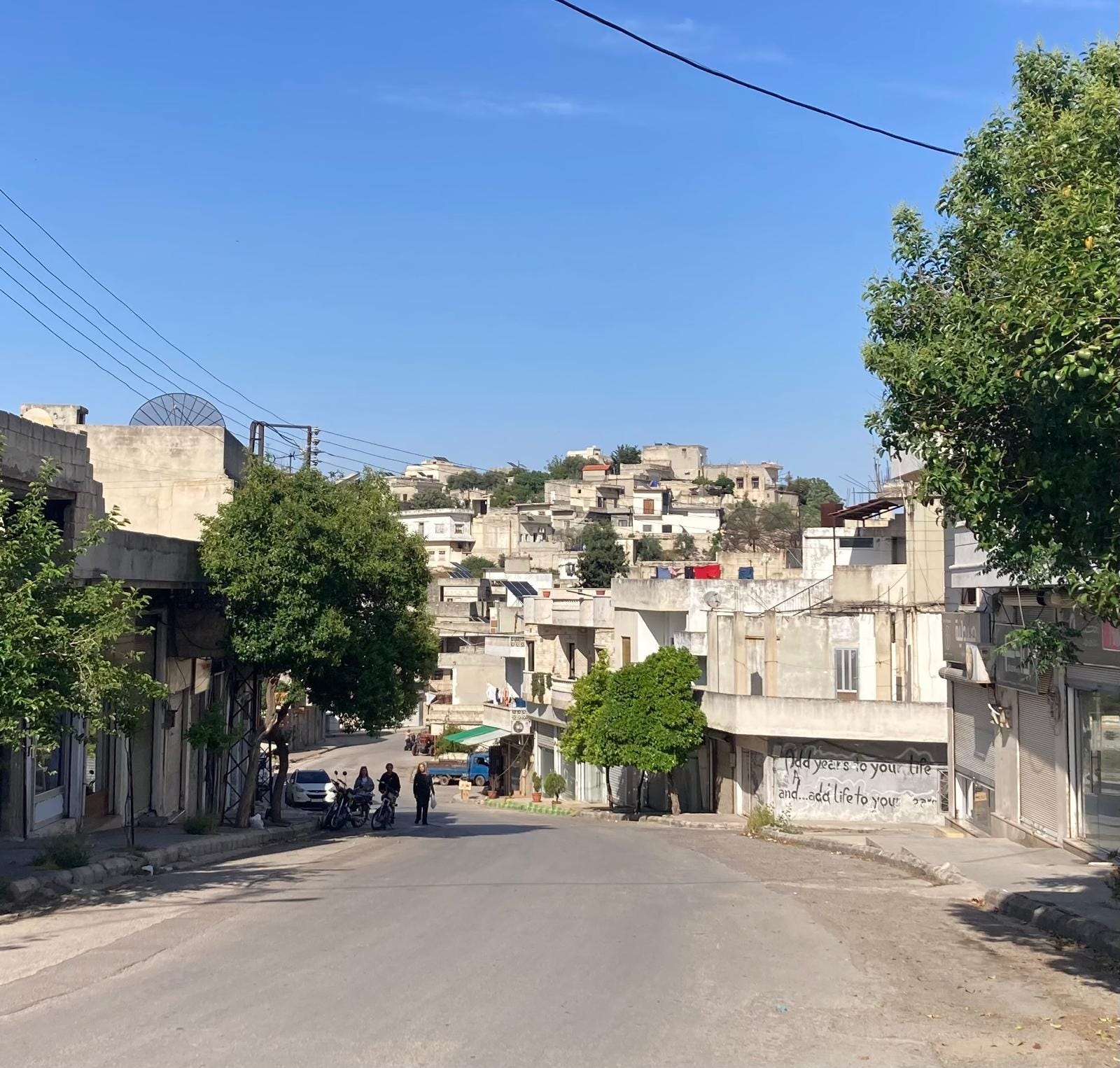
On March 27, hundreds of men rioted through the streets of Suqaylabiyah, a Christian town in northwest Hama, vandalizing and burning hundreds of shops and cars. The mob formed following a personal dispute a few hours earlier, fueled by misinformation and a decades-long complicated relationship between Suqaylabiyah and the nearby Sunni town of Qalaat al-Mudiq. The attack quickly gained national and international attention, becoming another piece of the wider debate over the new Syrian government and minority safety after Assad. Yet the attack was rooted in local dynamics, part of a wider pattern of deeply local inter-communal conflicts across the country. These conflicts require locally-rooted solutions, and should serve as a warning for Damascus regarding the fragility of much of Syria’s countryside.
Complex Historic Relations
Small-scale personal disputes between these two towns date back to before 2011. Suqaylabiyah is the commercial hub of the region, its main café street a lively place on weekend nights hosting people from the surrounding area. Men from Qalaat al-Mudiq, for example, have frequently visited here for years before the war, and at times gotten into disputes and brawls with local men. These incidents are not new and not sectarian in nature, and they have occurred amidst the existence of close personal and commercial ties between the two towns.
The relationship was strained, however, by the Syrian War. Each town became a strategic point on the frontline between the regime and opposition. Regime, and later Russian, forces established positions in and around Suqaylabiyah from which they indiscriminately shelled Qalaat al-Mudiq. The regime and Russian militaries also formed a militia from some of the Christian men in the town. This militia was involved in every battle against Qalaat, with its members looting homes and detaining and killing men from the other town.
Despite this, Suqaylabiyah also contains pro-revolution residents, and these men have formed the nucleus of a key civil peace network in the wider northwest Hama region. This network includes Amjad Hadad, a Christian opposition fighter who founded the Martyrs of St. George Battalion which fought for several years alongside Free Syrian Army factions in Qalaat. The network is led by several priests who had remained distant from the regime, and incorporates social dignitaries and activists from Sunni and Alawi villages across the area.
This network first began to take shape when the regime fell, its founders recognizing the need to rebuild relations between Suqaylabiyah and the destroyed Sunni villages. It has grown since then, particularly during the summer of 2025, thanks in part to support and guidance from a small international mediation organization. The network has been closely supported by the district Security Director, who has provided it with the support and autonomy to gain local legitimacy. This network and its coordination with the local security office was key for minimizing the damage last week.
The Friday Riot
On March 27, a small group of men from the two towns fought on the main street over accusations of harassment. This is a not-uncommon occurrence that has happened several times already this year and frequently before 2011. One of the men from Qalaat, an off-duty General Security member, was stabbed and taken to the hospital. The others returned home and rumors quickly spread on WhatsApp that he had been killed. Soon around 200 men had mobilized to get revenge.
However, other members of these WhatsApp groups quickly informed the civil peace network about what was happening. The network then circulated messages for residents in Suqaylabiyah to leave the streets and return home. As the mob mobilized in Qalaat and moved towards the city, it passed through security checkpoint which did not stop them. It remains unclear if the checkpoint was unwilling or unable to stop the crowd of men of motorcycles, but these are usually only staffed by a small number of personnel. The checkpoint immediately contacted the district security official, who deployed his 20 police officers from the city’s station and helped ensure the streets were cleared.
The police escorted three members of the civil peace network to confront the mob and attempt to calm them down. Other officers rushed to put out the fires started by rioters, but there were far too few of them to contain the group. The mob moved through the main streets, vandalizing cars and shops while in Hama city, a 45-minute drive away, security reinforcements mobilized. At the same time, a small civil peace network in nearby Masyaf – established by the same NGO which supports the Suqaylabiyah network – contacted their district security director and urged him to send additional units to Suqaylabiyah. They were joined one hour after the attack began by 100 security members from Hama. Together, they moved into the mob, firing guns in the air to try and push the group off the main street, but this resulted in them dispersing into side streets and continuing the vandalism until they were eventually pushed out of the town. The units from Masyaf remained in the town on March 28 and were crucial for preventing a second mob from entering Suqaylabiyah that day.
Urgent Lessons
In the days since, local officials have engaged closely with community leaders from across the area and there are ongoing dialogues between the two towns. Current efforts are focused on resolving the immediate dispute that resulted in the escalation and on restitution for the destroyed shops and vehicles. Meanwhile, the Ministry of Interior has arrested the off-duty officer who participated in the brawl, and he remains in custody today. This is standard practice.
Government officials and community leaders insist that, “the problem is now solved.” It may be true that this specific incident’s causes - revenge over the brawl and misinformation – have been addressed, but the decades-long tensions between the cities are not, and neither is the severe loss in trust Christian residents now feel towards the security forces and government.
Preventing this from happening again requires locally-rooted solutions and a unified approach by social actors, political officials, and security leaders supported by third party experts.
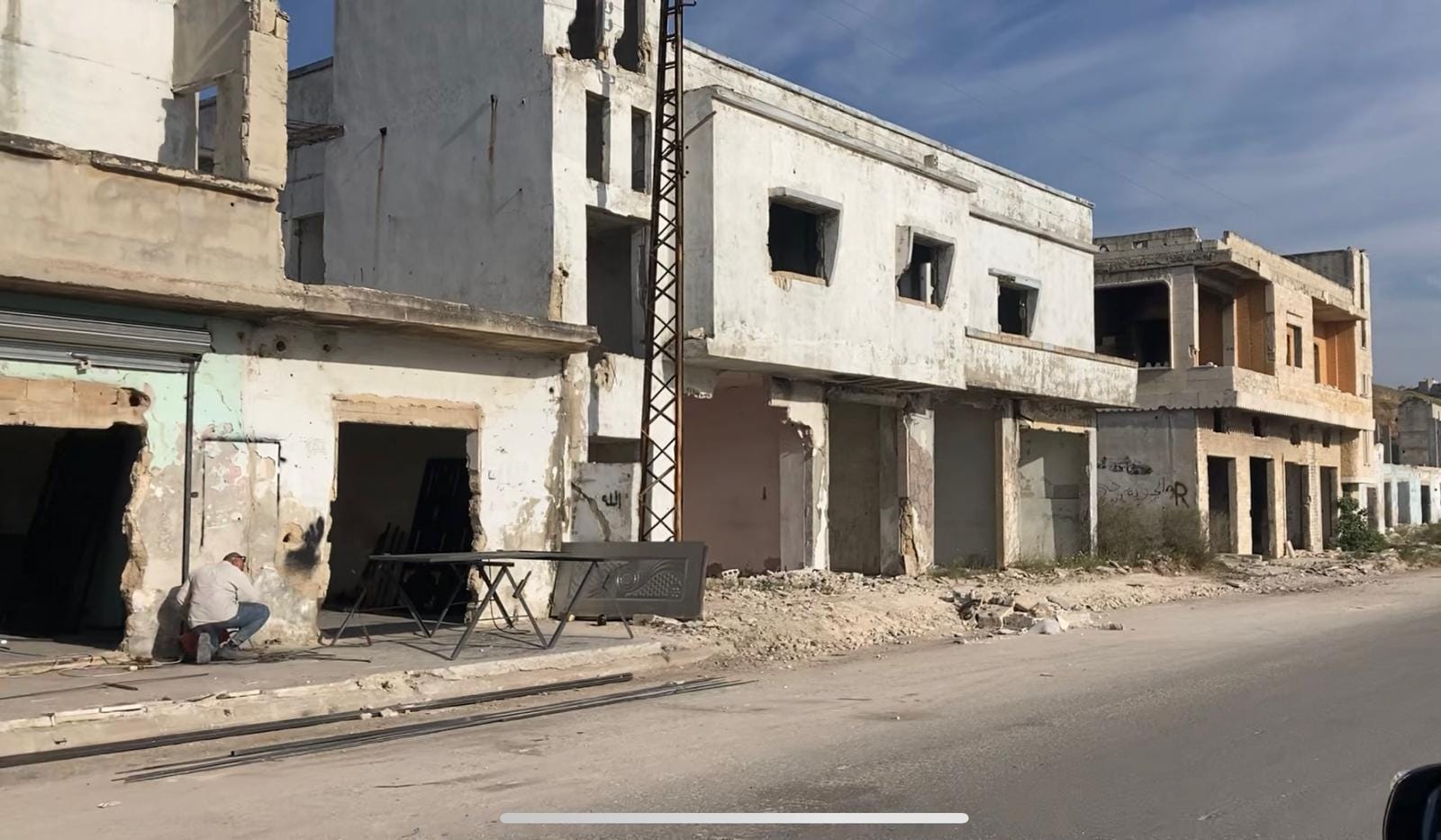
First, the government’s approach to these types of communal mobilizations lacks any deterrence effect. Damascus has adopted a restorative justice-oriented approach to these forms of inter-communal violence, opting for dialogue between community leaders and financial restitution rather than prison sentences for every participant. This approach reduces the risk of fomenting new vendettas, but does little to deter future participation in riots. Furthermore, financial restitution can exacerbate post-war intercommunal conflict when there are significant economic disparities between the two towns. In this case, Suqaylabiyah is a relatively wealthy town with strong diaspora financial networks that largely escaped damage during the war, while Qalaat al-Mudiq is physically devasted, with nearly every home having been systematically looted by the regime during the war and most residents unemployed. Ordering Qalaat’s residents to pay for the damage they caused will likely only deepen resentment, even if it is the fair thing to do.
The Syrian government should therefore find an alternative approach to accountability and deterrence, something more than financial restitution but less than prison time. Lifetime bans on government employment for anyone who participates in an armed mob could be one avenue. Increased pressure and engagement within Sunni communities by veteran opposition leaders and by officials from Damascus could also help shape social norms against such actions and make it clear that these types of local events do not escape the notice of national leadership.
Second, the attacks highlighted the Interior Ministry’s ongoing personnel problem. Checkpoints in rural are too weak to prevent mobs from passing. These checkpoints used to be run by the army, but the MoI has taken over most of these in recent months with army units confined to bases. This is part of the government’s wider security reforms attempting to separate the army from civil policing. As such, nearby army units did not respond to residents’ requests to deploy during the hour prior to the arrival of the general security reinforcements. However, given the MoI’s resource deficit and inability to rapidly respond to such large incidents, some temporary system should be made which would allow the army to support cutting roads and preventing mob movement in coordination with area security directors.
Third, while these tensions go back decades, the war has exacerbated them. The presence of ex-militia members inside Suqaylabiyah has been manipulated online to frame the entire town as “regime remnants,” with some prominent pro-government media pages framing the initial dispute as a regime insurgent attack against the off-duty officer. Residents of Qalaat al-Mudiq have the right to be angry over the lack of transitional justice in the area, particularly when the government has been so opaque about its approach. Damascus must therefore own its decision to adopt near-universal amnesty for former regime members and realize the impact this decision has on Sunni populations. The Syrian government cannot simply demand Sunnis stay patient for justice without explaining its policies or addressing their consequences on the ground and on social media.
Lastly, the civil peace committee’s network worked well as an early warning system, ensuring that no civilians were harmed during the attack. This model should be expanded to other areas, and the networks in Suqaylabiyah and Masyaf given increased support from the government. At the same time, senior government officials should be more involved in engaging both communities beyond pleasantries, hosting their own dialogue sessions with residents on topics related to personal freedoms, transitional justice, and civil peace.
The issue facing Damascus now is not in reassuring Christians that the they are with them, but to prove to them that the government takes seriously the fact there is a problem within its own constituency and is willing to deal with it. The MoI’s failure to effectively intervene early on, even if out of a lack of capability, has significantly undermined its trust among locals and fueled perceptions of intentional leniency towards Sunni criminals. Dialogues between the two towns are important, but serious security reforms that could prevent future mobilizations and attacks against the city should also be made. As one activist involved in establishing civil peace networks in Homs explained to the author:
“What has transpired constitutes a clear test of the state’s authority. Through continued observation, we will gauge its capacity to maintain a monopoly on force, rein in uncontrolled weaponry, and enforce the law upon all parties without exception. Any laxity in this regard will inevitably lead to a recurrence of such incidents, albeit on a larger and more organized scale.”
This riot was a local event that risked triggering national repercussions had it not been mitigated by the strong civil peace network and presence of police forces. This should serve as a warning about the delicate state of northwest Hama, where most Alawi villages do not have police stations or civil peace committees. Damascus must take seriously the fragility of these mixed-sect zones and re-prioritize expanding police forces, including through the recruitment of locals, and establishing similar civil peace networks in these areas in order to help prevent any future outbreaks of intercommunal violence.