

Social media coverage of Syria provides only a partial view of the reality within the country. As in any country, media coverage highlights problems and fear, while areas where daily life continues without incident go unnoticed. Syria’s Alawi regions are perhaps most impacted by this. While some areas, like Homs City, continue to face inter-communal, vigilante, and sectarian violence, many other places not only are violence free but have witnessed an expansion of local trust building initiatives over the past year. I have previously covered these efforts in places like Bahluliyah, Qadmus, Khirbet Maazah, and Beit Yashout, but some of the most interesting ongoing efforts are being made in Brummanet al-Mashayekh.
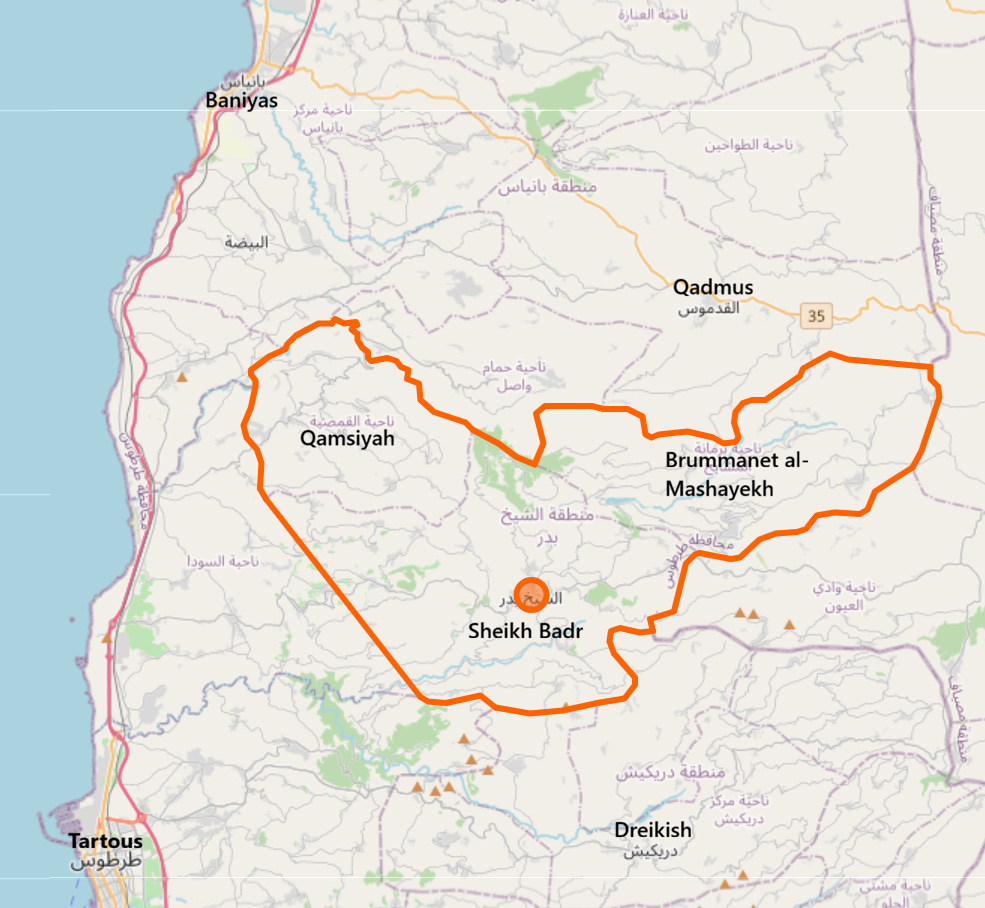
Deep in the Tartous mountains, a small group of Sunni and Alawi men have found innovate systems of building trust between the new government’s security forces and the local Alawi community. Today, the Brummanet al-Mashayekh subdistrict is a calm, quiet place where security forces joke easily with locals and join families for afternoon tea, men with taswiya move around freely, and arrests and security operations are conducted in close coordination with community leaders. But achieving this peace took months of hard work from a small group of young former revolutionaries from Idlib.
“We worked hard to break the wall of fear,” one of the security officials tells me earlier this year, “People used to run away from us, so we had to force ourselves on them in a friendly way for five or six months until the foundation of trust was built.” The two most senior official in the subdistrict were both veteran members of the General Security Services, having first joined the security force several years ago in its original iteration under the HTS-run government in Idlib. Both men, barely over 30-years old, had fought in opposition factions since their late teenage years.
Yet the training they received in Idlib Police Academy after 2020 would prove pivotal to their work after the fall of Assad. “Trust relies on how we treat people,” the official continues, “and we must treat civilians like civilians. I learned this in Idlib in the academy, they called it ‘merciful treatment,’ it was emphasized throughout the entire training.” The men began by reaching out to the area’s mukhtars and sheikhs first, meeting with them and establishing a basic relationship. From there, they expanded to the regular people, engaging them directly in order to both enhance their own understanding of the area and to counter misconceptions the residents had about them.
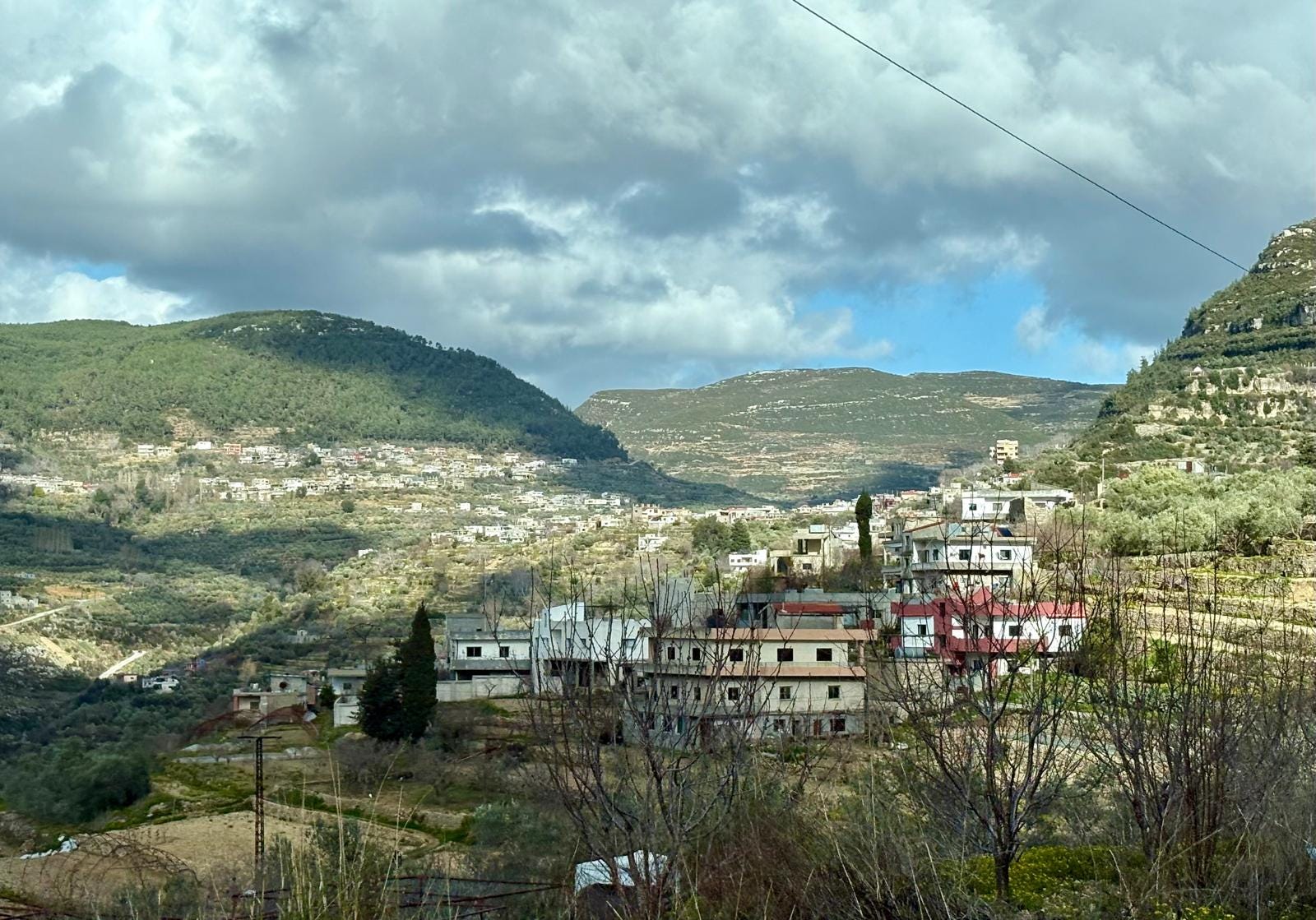
Empowering Locals
Two specific approaches have played a large role in breaking the wall of fear. First, one of the officials, a former HTS fighter and veteran GSS officer, re-established the area’s hunting club. “I grew up hunting,” he says, “and when I arrived here, I wanted to continue hunting, so I asked some local men to show me the hunting trails.” Bird hunting has been a hugely popular hobby in rural Syria, but it has come to a near complete halt in Alawi areas since the regime fell due to the danger of being seen walking in the mountains with a gun. At first only one local man was willing to take the officer hunting. “Afterwards he told his friends about the experience, and when I returned the next week there was a larger group of men who wanted to join me.” Through these efforts, Alawi men in Brummanet have been able to continue hunting in their mountains, an important step in normalizing their lives and building bonds with the local security members.
Building on these initial bonds, the officers pursued their second approach in March 2025: creating a neighborhood watch. Young men were selected to take shifts at village entrances, watching out for suspicious vehicles and serving as a trusted point of contact for anyone who needs to speak with the security office but might be afraid to do so directly. The network includes civilians, but also many men who had served in the regime’s forces and had taswiya. By 2026, around 200 men were part of this network. A few dozen core members receive small stipends from donations raised locally. In order to ensure none of the men abuse their positions, the officers selected one man from each prominent family in every village. This places familial and community reputation on the actions of the men – a strong motivation against betraying the trust of the officers and the village.
The neighborhood watch system, which the officers call a “Popular Committee,” is more than decoration. There appears to be a real sense of empowerment and community buy-in to it that has helped invest residents in the security goals of the new state. When thousands of Alawi insurgents rose up across the coast on March 6, 2025, no cells formed in Brummanet al-Mashayekh. Instead, around 200 insurgents arrived from Hama’s Wadi Ayoun region 20 minutes to the east. The insurgents quickly captured the small security detachment, but some young men and mukhtars – members of the original iteration of the committee – were able to negotiate with the Wadi Ayoun men, preventing them from executing the officers. Local Alawi youth then smuggled the officers out of the area under the cover of night. Today, the committee members take their jobs seriously, even stopping Ministry of Defense vehicles passing through their villages to ensure they are real government forces and not armed civilians.
The inclusion of taswiya holders in this network underscores a core principle of the officers’ approach to trust building: addressing the additional layer of fear among former soldiers. These officers understand that unchecked fear among ex-soldiers can push some of them to join insurgent groups. Ensuring that those who are not wanted by the state feel safe enough to return to normal life is therefore an important aspect of securing the area. As one officer explains it, “The General Security should be more active in reducing the fear among those with taswiya.”
The popular committee and direct outreach to taswiya holders are part of this engagement in Brummanet, but the officers have gone even further. Last autumn, when the Ministry of Defense still operated many checkpoints in rural Tartous, most taswiya holders were too scared to leave their villages. One of the Brummanet officers learned of a former soldier recently released from prison who had been offered a part-time job in Tartous city but was too scared to commute. So, for one month he drove the man to work each week, helping him become comfortable with the process of passing through checkpoints. Since then, the man has continued commuting to his new job on his own.
All of these trust-building efforts have had tangible security results. Late last summer, locals informed the officers of a villa deep in the mountains where more than a dozen men had gathered with weapons. The tip-off triggered a three-month surveillance operation. On November 12, 2025, two of the security officers raided the compound, capturing 13 ex-regime insurgents.
Effective Communication
A third official was transferred to the office following the March 6 events. The youngest of the three, he comes from a small town outside of Maarat al-Numan where he had joined the local opposition faction as a young teen. When he arrived in Brummanet he met with the community leaders and discovered, in an incredible coincidence, that the area’s most prominent mukhtar had known his father decades prior. “My father knew Kamal and told me he was an honorable man, and Kamal knew that my father was honorable,” the officer tells me over tea at his home, “because of this we knew we could trust each other.” “These men are like our own sons,” the mukhtar, Kamal Ayoub, tells me, “Our villages are like theirs in Jabal Zawiyah, so it is easy for us all to interact.” We are sitting in Kamal’s living room discussing the situation in Brummanet while the officers sit with his sons, talking together as if long-time friends.
The ease with which these men communicate with locals is an important aspect of their trust building approach. Activities like the hunting club and the popular committee are important, but they would not be sustainable without consistently effective communication between the two sides. “There is a way to learn how to talk to people,” explains the youngest of the three officers, “for example, if someone complains to be about the price of electricity, I just listen, and maybe later I will tell them about the situation in Idlib to help them understand, but I don’t confront or argue with them.”
All three officers had been IDPs for more than five years prior to the fall of the regime. When they and their families returned home in December 2024, they found their entire towns destroyed, not a single building left intact. The people of southern Idlib have been left to rebuild from scratch alone, without the support of Damascus or international organizations. Each family has lost someone to the war, or has a survivor of the regime’s torture centers. Despite this, they have dedicated themselves to supporting the communities now under their charge. For them, security in the coast can only be achieved through the cooperation of the locals.
The Need for Institutionalization
This mentality stands in stark contrast with recent events in Latakia’s Beit Yashout subdistrict, where a long serving well-liked security official was replaced in February. The new official was extremely aggressive, telling every Alawi, including the town mayors, “every one of you are targets,” and deploying large convoys for simple arrests. The new official was transferred out of the coast in early May after locals lodged complaints against him, but the damage was done. “He destroyed the state of security built by the previous official,” one prominent community leader told me a few days after his removal, “it will take a long time to rebuild that now.”
The freedom security officials have in how they pursue their assigned mandates has allowed for innovative approaches to community policing, as pursued in Brummanet, but it also builds fragility into the system. A routine transfer of personnel can see a year’s worth of relationship building overturned in a day. This impermanence undermines the Ministry of Interior’s efforts at building trust and calming restless areas.
The officers in Brummanet, as well as those in some other parts of the coast, have developed effective security approaches built on an open and patient mindset. Of course, this is easier in some areas than others. “Trust building really depends on the nature of the people,” explains one of the officers. Building relationships and communication lines requires both open minded officers and community leaders. The Ministry of Interior has control over the first of these factors, however, and should now work to institutionalize these innovative local approaches to community policing across all parts of Syria.