

This is the latest edition of my ongoing series highlighting the experiences of Alawi communities after the fall of Assad. I encourage readers to also read my past reports on Bahluliyah, Baniyas, and Qadmus, and interviews with local officials and activists in Sabburah, Daliyah, and Beit Yashout.
The experiences of individual Alawi communities during the first year after the Assad regime has varied widely, particularly in the first months of the post-Assad transition. These differences were exposed during the March 2025 events, in which some parts of Syria’s coast became hotspots of Alawi insurgent activity and dozens of Alawi communities suffered pro-government massacres in response. How exactly each of these communities transitioned into the post-Assad era was usually a result of several factors: the (perceived or real) security threat from that community, the attitude of the specific security officials assigned there, and early outreach by local Alawis.
In the recently-profiled area of Bahluliyah, for example, the area was not viewed as posing a security threat, security officials were very open and engaging with locals, and local leaders made an early effort to engage and cooperate with the new government. These combined factors have resulted in an area that has largely escaped the bouts of insecurity and violence that plagued the coast in early 2025, strengthened trust between locals and security forces, and reduced the level of fear among residents compared to other Alawi areas.
Trust Building in Rural Latakia

“Four of my children were burned to death by the Assad regime.” Abu Hassan recounts his losses with a nearly steady voice as we sip tea in Bahluliyah’s central cafe. “Thousands of dead bodies are sti…
Yet these underlying factors are fragile, and one misstep can condemn a community to cycles of violence and fear. Two other Alawi towns exemplify this complexity: Tartous’ Khirbet Maazah and Latakia’s Qurfeis. Unlike Bahluliyah, neither of these towns were viewed as low security risks. Khirbet Maazah, which sits just outside Tartous city on the road to Safita, was home to several senior regime figures. Among them were Ali Muhanna (the infamous Tiger Forces commander), Muhammad Ali (a senior officer from the Air Force Intelligence’s Palestine Branch), and Major General Muhammad Kanjo Hassan (head of the regime’s Military Field Court). Qurfeis did not have such prominent profiles, but the town had a significant population of ex-soldiers (more than 30% of its population), is the site of the most important Alawi shrine in the coast, and sits atop a strategic plateau overlooking the Jableh countryside, from which the most hardened of the Assad security forces resided.
Despite these similar profiles, the experiences of Khirbet Maazah and Qurfeis diverged early on, and the gulf between them has only grown since. The following case study presents the history of these two villages through three periods: 1) The first two months after the fall of Assad, leading up to the January 24 rumors of Maher Assad’s return, 2) The interim period of “demilitarization” in the coast just prior to the March 6 insurgency, 3) the March massacres. These details are based on multiple visits to these two communities and interviews with local activists working as interlocutors between their communities and the government. These divergent histories provide further insights into the complexity of security and Alawi relations in the aftermath of the Assad regime.
Equal Fear, Unequal Treatment
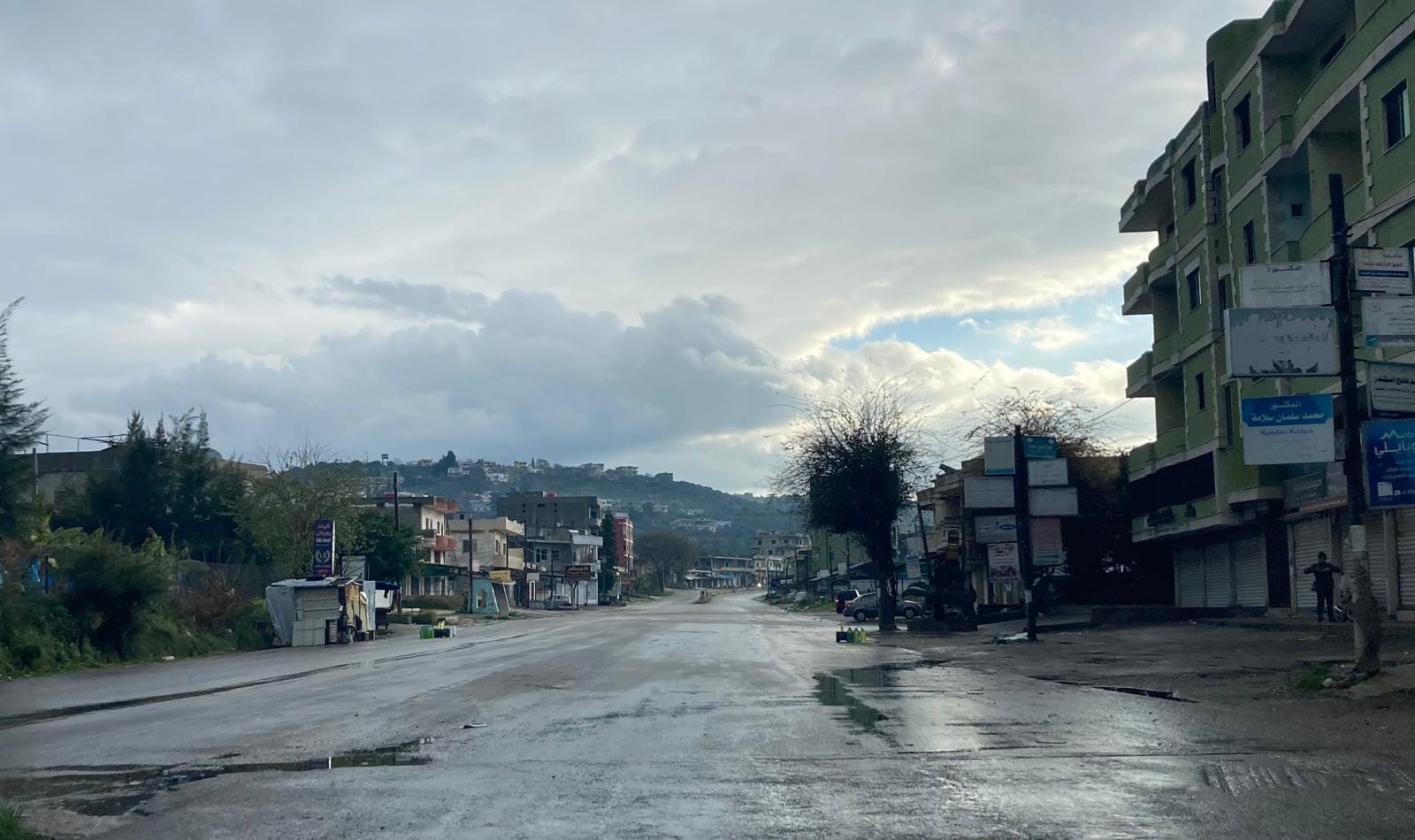
Khirbet Maazah
Khirbet Maazah made news in December 2024 as the site of the first serious clash with regime remnants, or fulul in Arabic. The first two weeks after the fall of Assad has seen a tenuous security situation in the coast as opposition forces newly transformed into policing units struggled to prevent crimes. Armed robberies of Alawi homes, isolated murders, and the occasional clash during arrest operations had become a near daily during middle of December. It was in this context that a General Security patrol was ambushed by ex-regime soldiers in the village of Khirbet Maazah on December 24.
Several factors combined leading to the attack. On the morning of December 24, a video showing the burning of an Alawi shrine in Aleppo went viral on Facebook. While the shrine’s destruction had actually occurred during the November 30 takeover of Aleppo city, social media posts now claimed this was a new assault on an Alawi religious site. An Alawi sheikh in the Khirbet Maazah region then took to Facebook calling for a general mobilization of the youth. Fearful from the social media propaganda, some young men gathered in one of the nearby villages. Later that day, a patrol heading to Dreikish was shot at while passing by Khirbet Maazah. As a result, two General Security trucks moved into Khirbet Maazah to sweep the area. Insurgents quickly ambushed the security forces, killing three and taking six prisoners.
Rather than assault the town, the head of security for the area called for a meeting with the area’s influential people. According to Bassem, a pre-revolution anti-Assad activist from the town, the security officials presented a list of demands to the locals in order to avoid a military operation; among them was the return of the prisoners, handover of bodies, and withdrawal of insurgents from the town.
The next day, the town’s residents were informed via social media and the mosque minarets to stay indoors and away from windows as security forces arrived. Four checkpoints were established around the town and security forces raided the villas of several senior regime figures believed to be involved in the insurgency. Units would continue to conduct security operations in and around Khirbet Maazah for six more days. Some small clashes occurred throughout this, and some security members used sectarian language during their interactions with locals, but multiple residents and activists all agree that the raids resulted in no civilian deaths, no property damage, and no looting.
“These steps were the basis of strengthening the relationship between the government and the people,” explains Bassem, “Civilians knew the regime’s people were the ones trying to instigate clashes, while government forces came in without violations.” Some local men were arrested during the operation, but all were released in good health within a month following an investigation. Security officials and local activists believe the senior regime officers involved in the initial clashes quickly fled to Lebanon. Their removal from the area further relaxed both the residents and security officials.
This early security challenge and the response both by locals and officials set the tone for the area’s relationship going forward. Shortly after the December 25 operation, a new batch of security forces were deployed to Khirbet Maazah. These men included former Sunni officers who had served in a regime base near Khirbet until defecting in 2014. They knew the area and the people well, according to Bassem, and helped to reinforce good behavior by the other Interior Ministry personnel deployed there. “There was one officer, Abu Fidai, who is beloved by the people here,” says Bassem, “He would explain the local situation to all new security members and one time even got in a fight with another member over the harassment of a woman at a checkpoint.”
Qurfeis
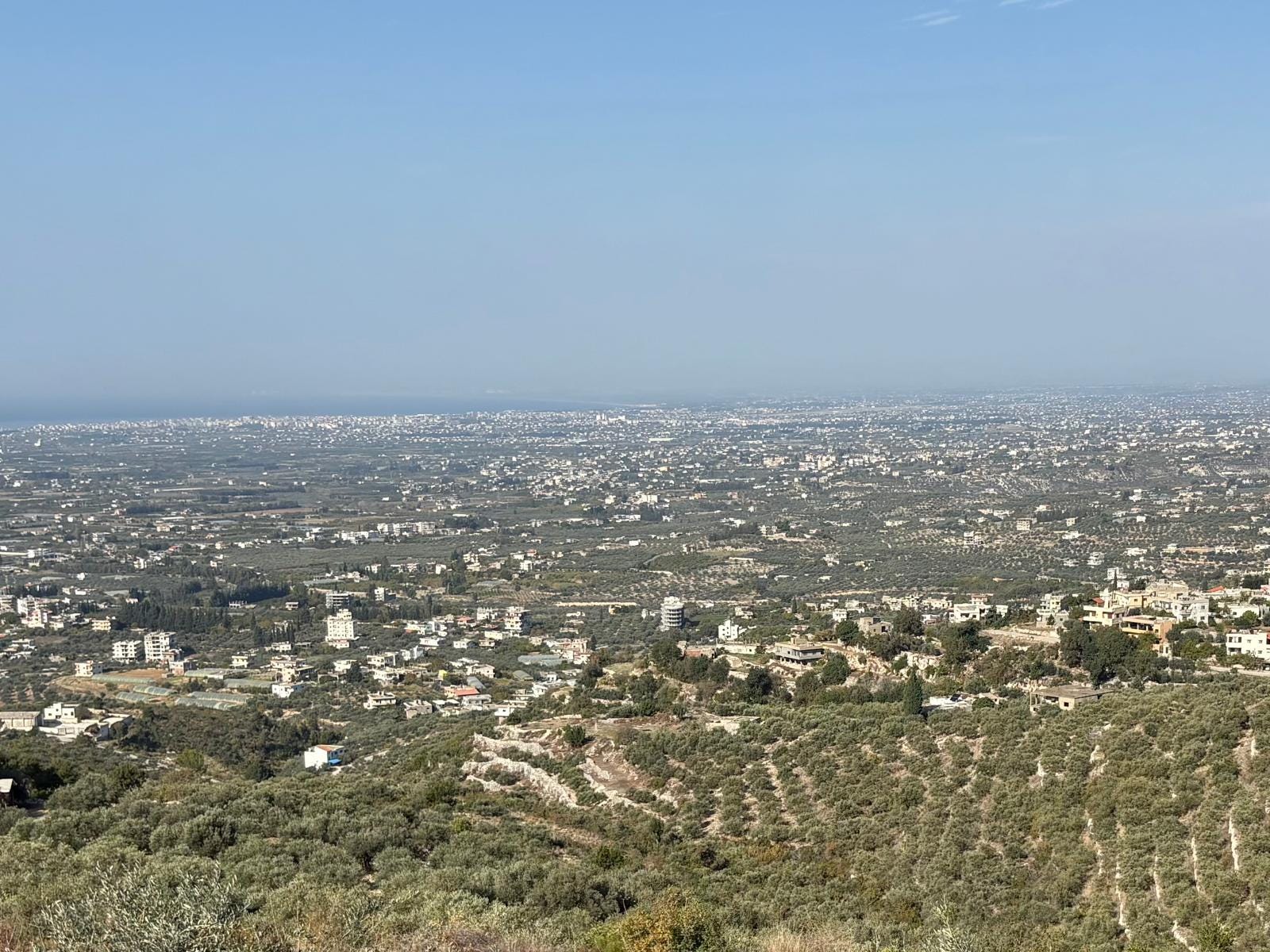
While the officials assigned to Khirbet Maazah adopted a diplomatic approach and worked diligently to enforce discipline within their ranks, this was not the case in Qurfeis. In Qurfeis, an initial opposition faction arrived right after the regime fell, staying for just under three weeks before leaving without having caused any issues. Just before this faction left, another faction arrived, Jaish Ahrar. This group set up a base on the western edge of Qurfeis near a village called as-Sin. As with the security forces in Khirbet Maazah, Jaish Ahrar would exchange shifts every Monday, making it more difficult to build a relationship with the fighters.
As with every Alawi community, the collapse of the regime triggered widespread fear that opposition factions would begin indiscriminately killing Alawi civilians. In order to protect their town, five men from Qurfeis formed a sort of negotiating committee to engage with the newly deployed factions. Karim (not his real name) was among these men. At the end of the month, the leader of the Jaish Ahrar unit deployed in the town, Abu Maher al-Homsi, ordered the residents to hand over their weapons in 48 hours or he would raid the town. The negotiating committee met with Abu Maher to try and convince him that they had none of the heavy weapons and caches he was claiming existed, just some personal small arms among the households.
The men from the committee handed over their five personal rifles as a sign of good will. Karim and the negotiators insisted that the faction would get more support from them in the long term if they pursued these security measures through cooperation, rather than force. After another few hours of intense debate, Abu Maher agreed not to conduct a raid.
Two days later, Abu Maher was replaced by a new commander from the faction, and within a week the first murder happened. On the night of January 7, three faction personnel kidnapped two local farmers. These three fighters had been meeting with one of the farmers, Qusay, for several days already, preaching to him in an attempt to convert him. But this night they tied up Qusay and a second man, beating them and calling them sectarian slurs before taking Qusay out and executing him. The second man was able to escape after he convinced the fighters he had hidden gold in the river valley, later losing them in the darkness.
That morning the survivor informed the town leaders of what happened, who in turn called the Ministry of Interior officials in Jableh. An investigation was launched and the three perpetrators, all Jaish Ahrar members, were identified. At this, the entire group deployed in Qurfeis was changed. No other punishments were made known to the residents, who to this day do not even know the real names of the men who killed Qusay.
Maher’s Return
Khirbet Maazah
The next major trust-building event in Khirbet Maazah was during the night of January 24, 2025, when rumors spread across social media that Maher al-Assad was returning to the coast at the head of a Russian military column. Some of the social media posts spreading these rumors used it to call for an armed movement in the countryside to support Maher’s arrival. These rumors coincided with the removal of significant ministry of defense units from Tartous, meant to calm locals’ fears by demilitarizing the countryside. As a result, the remaining General Security units were isolated and undermanned and surrounded by Alawi towns suspected of harboring insurgents.
Two Alawi activists from Khirbet Maazah gave near identical accounts of that night. While the vast majority of residents did not believe the rumors, the security forces deployed in the area’s checkpoints had no idea what was happening. Rumors spread that a shift change might occur that evening with a military show of force and gunfire in the air to deter any insurgent attack. Out of fear, residents shut off the towns’ lights around 7pm. Confused about what was happening, Abu Fidai went to a nearby checkpoint and called a local. The local man explained what they were seeing online and then joined Abu Fidai, sitting at the checkpoint with him until 7am. Locals contacted the other checkpoints in the area that evening as well, explaining what they were doing and urging the security members to not be afraid. One resident then opened his house to around a dozen General Security members, encouraging them to sleep there until morning to ensure their safety.
The concern shown by residents towards security forces that night further reinforced the trust between the two sides. This trust and positive relations remained even as key personnel, like Abu Fidai, were transferred elsewhere and newly trained General Security units deployed to the area. In other areas, transitions like this were fragile, at times resulting in the collapse of local-security relations. However, the continued positive developments in Khirbet Maazah through this change indicate that the individual-based relationship had become institutional.
“How do we know the people here trusted the government forces?,” Bassem explains, “Because we saw consistent use of filing complaints to the District Director and clear and quick responses to these complaints.” This does not mean the people of Khirbet had no fear. Fake news still held power over every community. For example, one time claims spread on social media that armed factions from Baniyas were coming to avenge the soldiers killed on December 24, resulting in most of the town’s residents fleeing the area. But each time, the trust in local officials resulted in quick resolutions. After the Baniyas rumors, the District Director called the town’s leaders, telling them that this rumor is not true but that he would establish new checkpoints regardless to protect the residents.
Qurfeis
The personnel change in Qurfeis following the January 7 murder did nothing to reduce the tensions. Other Jaish Ahrar fighters remained in the village for the next two months, causing daily problems with the residents, like verbally harassing women and stealing harvests from farmers.
The small group of men continued to try and engage with the local commanders to solve problems and reduce the tensions, like making daily requests to allow farmers to pass through the faction base and enter their land. “People in Qurfeis were very pressured because of the actions of these faction members,” explains Karim, “The harassment was so bad that at some point the faction members would question children, ‘Are you a Sunni or Alawi’.” This atmosphere continued until March 6.
The daily harassments were now amplifying the sense of isolation and fear among many of the residents, especially those who had lost their income from serving in the regime’s security forces. Killings of Alawi men by criminals and government factions continued across rural Jableh in January, such as the January 8 murder of three farmers near Ain Sharqiyah. Meanwhile, the armed insurgency led by ex-regime officers continued to grow in the area, such as the January 14 standoff with a cell of ex-regime militiamen who killed two security members and captured seven others, and the January 22 attack on a government checkpoint which left two soldiers dead.
The March 6 Uprising
Khirbet Maazah
Like Bahluliyah, the Khirbet Maazah subdistrict largely escaped the violence of March thanks to the efforts of locals and the Ministry of Interior. The night the insurgency began residents were terrified, and many fled to Lebanon or deeper into the mountains. There were no insurgent movements in Khirbet Maazah due to the security operations in December, though insurgents had clashed with pro-government forces at the nearby highway overpass. Still, reports of massacres being committed by government forces in Baniyas and rural Latakia terrified resident, with some turning to the District Director for help. According to Bassem, the director urged people to return home, telling them that he would prevent anything from happening even if he had to order the security forces to fire on the army units.
Ministry of Interior units then established a large checkpoint at the main junction between the coastal highway and Khirbet. When the pro-government factions came from the highway, the security personnel stopped them with gunfire in the air and told them the entire area to Safita was safe and had been secured since December. After negotiations, the factions were allowed to pass and move towards Safita, with the understanding they would stay on the main road. Yet several faction vehicles used side roads to reach the villages of Yahmur and Zirqat, where they killed two civilians and looted some homes. In Yahmur, one local man fired his pistol in the air near faction members and then fled. The next day he returned on his motorcycle, driving back and forth alongside the faction, whose members eventually shot and killed him.
Small violations occurred during the four days these factions traveled, like car theft and looting of businesses along the road and shooting in the air from their camps at night to scare residents. During this later event, General Security personnel intervened, forcing the factions to cease their fire. Later, MoI officials would also coordinate the return of much of the stolen property from the factions. “In general the situation was good and stable,” says Bassem, “but there was still a huge amount of fear.”
Qurfeis
Qurfies sits on the edge of the deep Jableh valleys and mountains from which the core of the ex-regime insurgency resides. The trigger for the March 6 uprising occurred just a few miles east, outside the town of Daliyah, when a security convoy was ambushed during an arrest operation. Qurfeis, with its shrine, strategic geographic location, and military base on the edge of the insurgent heartland thus became a central target of the new government’s military units. From March 6 to March 9, Qurfeis endured four days of terror and violence.
Like many Alawi areas of the coast, rumors of an impending uprising were widespread throughout the day. Insurgent networks had spread claims that the Russian military was preparing an aerial attack against government positions in support of ex-regime fighters who would invade from Lebanon. As a result, insurgent networks rapidly expanded that day with new local recruits and independent mobilizations. While no attacks happened in Qurfeis, insurgents from the area had set up ambushes on the coastal highway in the plains below the town, targeting security checkpoints and reinforcements throughout the night.
On March 7, a convoy of former HTS fighters from the Othman Brigade, which had been stationed along the highway and come under heavy attack the night before, moved towards Qurfeis. They entered the town from the west, just off the coastal highway, passing through the village of as-Sin first. According to Karim, the convoy fired its 23mm anti-air cannons at every house in the village, resulting in the death of one resident hiding in his home. Upon reaching Qurfeis, the faction members entered and killed five men hiding in the first homes. The convoy then moved to the town’s shrine, where many residents had sought refuge. Seven men who were caught while in the main square outside the shrine were killed. Then some faction members pulled out seven more men hiding in the shrine and executed them, while other members killed three more men hiding nearby. Within 45 minutes of the first shots being fired, orders had come to stop the killing, according to Karim. At this point the fighters began looting homes.
On March 8, Karim attempted to return to his home, having sought refuge in a relative’s house during the previous 48 hours. As he approached Qurfeis late that morning he saw a large convoy of fighters from the former HTS 400th Division as well as Jaish Ahrar arrive in as-Sin. The 400th Division had been deployed elsewhere in the Jableh countryside and lost more than 25 members to the initial uprising on March 6. One fighter then fired a shot in the air, triggering the entire convoy to begin firing in the air and at the mountain for several minutes, causing random injuries among civilians hiding in their homes and the bushes. After shooting, the faction members began looting as-Sin, killing six more men. Karim and the group of leaders from Qurfeis contacted the commanders of Jaish Ahrar who they had known from the previous months, asking them to stop the attacks, but the commanders told them, “those fighters are from the 400th Division, not us, we cannot tell them to stop.” The looting in as-Sin would continue off and on until March 11, at which point both factions left the area.
On March 9, a small group of general security members and military commanders arrived in Qurfeis to meet with the local leaders. The commanders pressured the men to record a video alongside them thanking the Military Operations Room, “for securing the village.” The security officials also interrogated residents about the location of a specific ex-regime officer who they believed had led the insurgent network in Daliyah.
Divergent Paths
Since the March events little has changed in Qurfeis. Units of the Othman Brigade stayed in the town until April 16, at which point new fighters from the 400th Division arrived. According to Karim, these fighters killed a resident on April 21 and would beat anyone who walked too close to their base. The small group of Qurfeis leaders continued to engage with security officials and even Fadi Saqr, trying to negotiate the removal of the army units from their town. Eventually the Othman Brigade returned, replacing the 400th Division, but no Ministry of Interior units were ever deployed. The severity of the violations gradually decreased, but verbal harassment remains.
Throughout much of the year, Qurfeis would be whispered about by Alawis in Jableh, a ghost town occupied by the army. On November 17, the governor of Latakia and commander of the Ministry of Defense’s 50th Division – a post-Assad unit within which all of the aforementioned factions have been merged – visited Qurfeis, the first high level delegation to do so. The meeting was intended to send a signal of resetting relations with the town, but for many, it was too little and too late. Already internal divisions within the residents were emerging, with some residents facing accusations of using their money and influence to maintain the military deployment in exchange for business deals and personal access.
Karim believes the town remains occupied for three reasons: 1) to protect the shrine from attack by Sunni extremists, 2) for the psychological impact of controlling the most important Alawi shrine, and 3) controlling a key strategic point both overlooking the Hmemeim Airbase and providing a military base close to Daliyah, where ex-regime insurgents still operate. Regardless of the government’s reason for maintaining this presence, the inability of the military’s commanders to either end the violations or hold those personnel publicly accountable has ensured the area remains steeped in fear and anger.
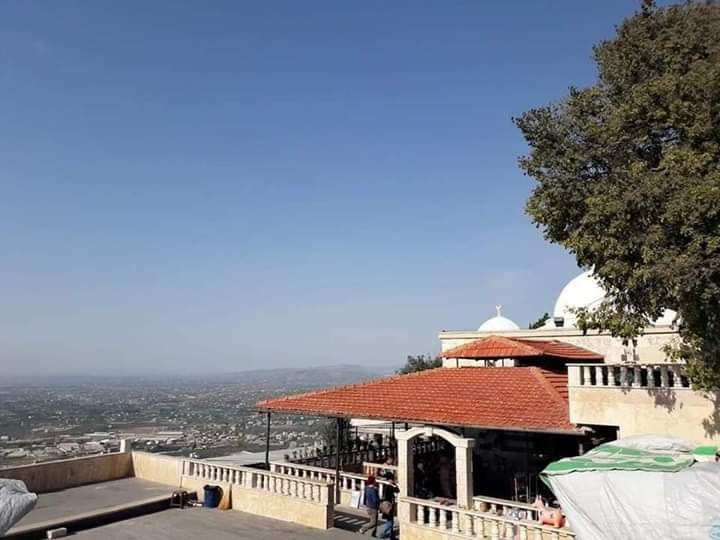
In Khirbet Maazah, the local activists attribute the positive relations between themselves and the local government to the actions of the different officials who have overseen the area since December 24. These relations and the trust built between residents and the MoI have only deepened through each of the major crises the area has endured. Bassem insists that the MoI, “continues to be very good and responsive to the people.” Yet since March, the deployment of military factions in the area has threatened to undermine these positive developments.
Fear remains due to uncertainty over the stability of the situation in the long-term. Since March 7, a military unit has resided in a former regime officers’ home on the town’s outskirts. While direct harassment has been limited, they occasionally fire bullets into the air, scaring residents and causing material damage to homes. People are unsure if or when this military unit will leave, and worse, whether the MoI can prevent the soldiers from committing violations should a new security issue arise.
“It is the faction which is driving the fear,” says Bassem, “The locals have trust in the MoI, but don’t know what the faction will do.” Residents regularly file complaints against the military unit’s personnel, and say the local MoI officials are quick to resolve them. But the uncertainty remains. Despite the Ministry of Interior’s efforts at building trust, the events of the past year have caused many residents to leave for Lebanon or the larger cities, reducing the subdistricts population from around 30,000 residents to 18,000.
Both Khirbet Maazah and Qurfeis had locals who engaged with security forces early on, and both had legitimate security challenges. Yet the experiences of the two towns were completely different due to the actions and attitudes of the officials and personnel assigned to them. It’s important to note that Khirbet Maazah was not free of violations - like was the case in Bahluliyah - but the consistent outreach by officials and earnest responses to complaints earned them locals’ trust and patience.
These two experiences showcase the complexities of post-Assad security and trust building, particularly in Alawi areas in the first months after Assad. A high degree of autonomy seemingly given to local officials meant that some were able to pursue genuinely constructive approaches towards community engagement, while others consistently undermined trust building through rigid sectarian beliefs and a refusal to enforce discipline within their units.
Still, regardless of whether it is Bahluliyah, Khirbet Maazah, Qurfeis, or any other Alawi town, many of the ongoing demands remain the same: Resolve the taswiyah process and hand out new civilian IDs, remove military units from residential areas and replace them with General Security forces, combat the social media stigmatism against specific Alawi towns, and do more government and economic engagement to show that these communities are an equal part of Syria’s future.
Good work. With regards to Qurfeis, I hope that the guys representing Jableh District (which is where Qurfeis is, by the way, just in case you didn't know) in the People's Assembly will be deployed as dignitaries in some form or another to reach out to the people there, assuming it's safe to do so, of course. Those representatives are both Alawites, if I'm not wrong. I also hope that the recent continuation of the issuing of civil ID cards in Jableh will help to smooth things over, eventually.
I mean, it'd probably take more than that to heal relations with the people of Qurfeis, but regardless, I hope the government will find a way to build a trusting relationship with that community at some point.
The recent re-opening of the Qardaha police station as well as your article about it is honestly pretty surprising, but also strongly encouraging. Not long ago, it made me wonder if they'll use Qardaha as a blueprint for other Alawite communities across the coast(not to leave out Hamawi and Homsi Alawites out of the equation, of course). Do you think so?
And especially with the issuing of the ID cards in Jableh, I know that in at least one previous report from state media last year about the issuing of ID cards(can't remember where that report covered exactly, not sure if it was Jableh or somewhere else), the photos in that report were blurred out and that was probably to prevent reprisal against anyone who did taswiyah. This time though, the latest report about Jableh had photos of guys getting their IDs and none of them were censored this time round(one of those photos even depicting a dude showing his ID proudly), which I hope is a sign that the Assadist insurgency is dying or at least taking a backseat to everything else that's going on for now.