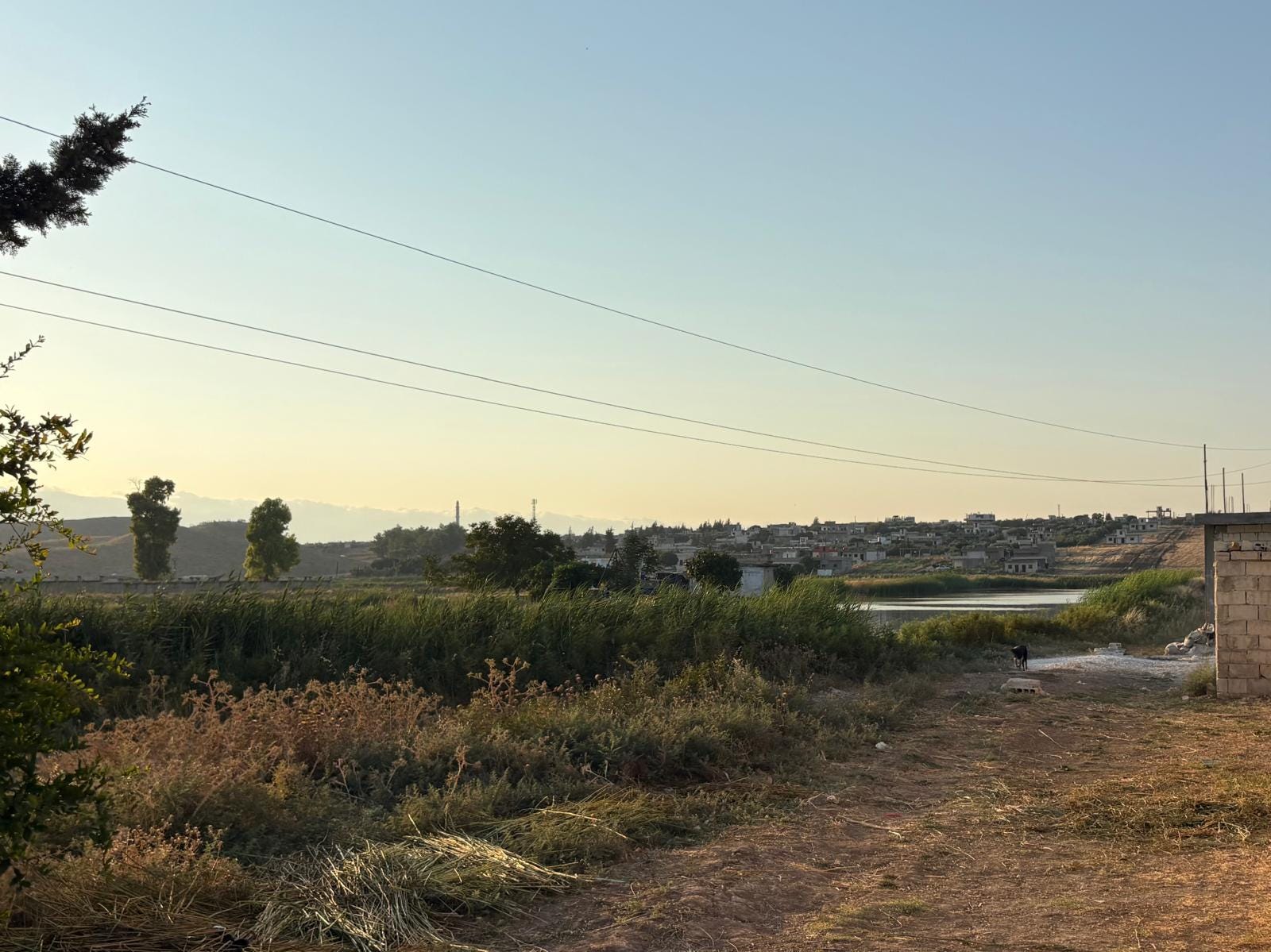
On the southern edge of the al-Ghab Plains, tucked into a bend of the al-Assi River, sits the Sunni town of Asharenah. It is surrounded on three sides by Alawi towns: Hawrat Amurin to the north, Nahr al-Bared to the west, and Salhab to the south. The area marks the edge of what was once the Assad regime heartland.
Both Alawi and Sunni residents of the area claim that before 2011, there were few sectarian problems. However, beginning in early 2012, Alawi militia fighters began to kidnap, harass, and kill Sunnis in Asharenah. The town was too isolated from the core Sunni regions of northern Hama to ever be truly liberated or form a real armed movement, and it was quickly occupied and largely displaced by 2014.
Since the fall of the Assad regime, these unaddressed war-time crimes have fueled ongoing harassments, thefts, and killings allegedly committed by people from Asharenah against Alawis in Salhab, Nahr al-Bared, and Amurin. On March 7, 2025, armed civilians joined pro-government armed factions and stormed Salhab and Naher al-Bared, participating in the killing of 13 people and widespread looting of Alawi homes. Alawis here accuse residents of Asharenah of being among the attackers.
I recently visited Asharenah as part of my ongoing work documenting the history of towns in al-Ghab and the current social problems between them. Below is a partial transcript of an interview I conducted with a resident of the town who had been displaced in late 2012 and returned to his home in the second half of 2025.