

The five day battle for Sheikh Maqsoud ended in the evening of January 10 with Syrian Transitional Government (STG) forces taking full control over the final Syrian Democratic Forces (SDF) positions in Aleppo City. The battle follows more than a year of back-and-forth clashes and failed negotiations between the two sides, with the SDF retaining control of Sheikh Maqsoud, Beni Zeid, and Ashrafiyah neighborhoods since the fall of the Assad regime.
A separate article this week will examine the conduct of the STG’s military forces during the battle and how the loss of Aleppo city changes the SDF’s position when negotiating their integration into the new government. Here, I will look at the government soldiers killed between January 6 and January 10, including their backgrounds and what units they fought in. Long-time readers will be familiar with these types of reports; for those newer readers, these ‘martyrdom announcements’ are shared on Facebook pages belonging to soldiers’ friends, families, and hometowns. They are used to honor the sacrifices of fighters and are ubiquitous across all sides of the Syrian war.
The information provided here comes only from pro-STG accounts, rather than pro-SDF accounts which might publish fake lists of STG dead. Yet they represent a base minimum of losses given the difficulty in searching for and finding every martyrdom announcement. I will update this post if the STG ends up releasing any official statistics.
The Martyrs
At least 39 soldiers were killed during the five day battle. Of these, more than half of the reports (24) were published on January 9 and 10. This likely reflects the STG’s advance into Ashrafiyah beginning late on January 8 into the early morning of January 9, and their advance into Sheikh Maqsoud late on January 9 into the morning of January 10.
Of these men, 18 are from Aleppo (46%), 9 are from Idlib (23%), 4 are from Homs (10%) and Hama (10%) each, and 2 (5%) are from rural Damascus. The home governorates of two soldiers are not clear.
The high number of men from Aleppo among the dead reflects the STG’s broader approach to is military and security institutions. Generally speaking, the new government has pursued a policy of having men serve in divisions that are based within their home governorate. The main two divisions leading this operation are Aleppo-based units, meaning most of their fighters are from Aleppo. However, several former Hayat Tahrir al-Sham (HTS) brigades (which have a more varied recruit background) played key roles as assault forces, resulting in the Idlib, Hama, and Homs deaths.
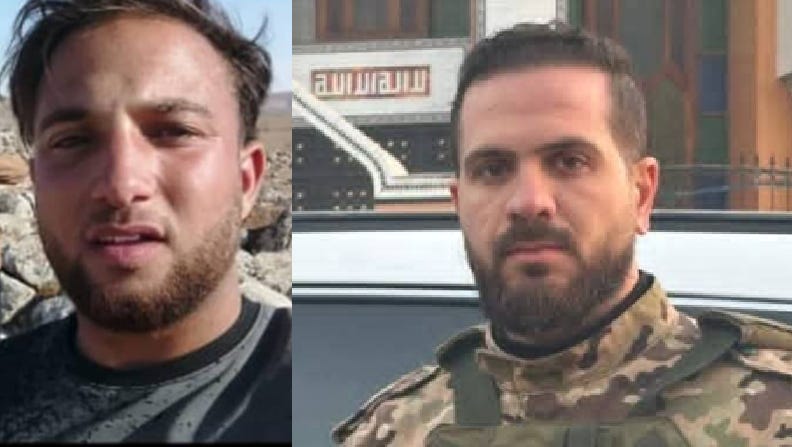
Most of the killed soldiers appear to be veteran fighters, whether from HTS or from the Syrian National Army. Only one martyr, Amer Zabdiya, from Aleppo, was clearly identified as a post-liberation recruit, having “returned from Turkey several months ago.” Yet many martyrs were part of the second generation of opposition fighters, such as Bilal Najihi, from southern Aleppo, who first joined the armed opposition in 2022 when he turned 18, following in his father’s footsteps who had taken up arms in 2011.
Their Units
The first two government martyrs were killed on January 6 during the initial SDF drone attacks on government positions in the early afternoon. The first was a soldier in the 72nd Division, followed later by a military trainer in the 60th Division. These two divisions would represent the bulk of combat losses over the next five days, with 18 of 26 men with identified units belonging to them.
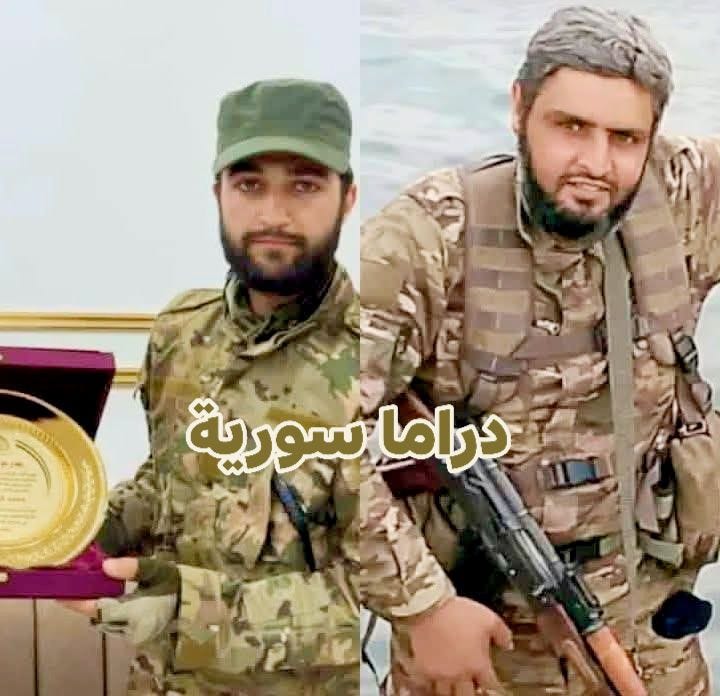
On January 7, three more soldiers were reported killed on the “Sheikh Maqsoud front” as negotiations broke down and Damascus began to mobilize its forces for a wider battle. Two were from the 72nd Division while the third, killed in the early morning hours of January 7, was from the 60th Division’s 2nd Brigade. The 2nd Brigade, also known as the “Elite Forces,” is likely built around a former HTS brigade.
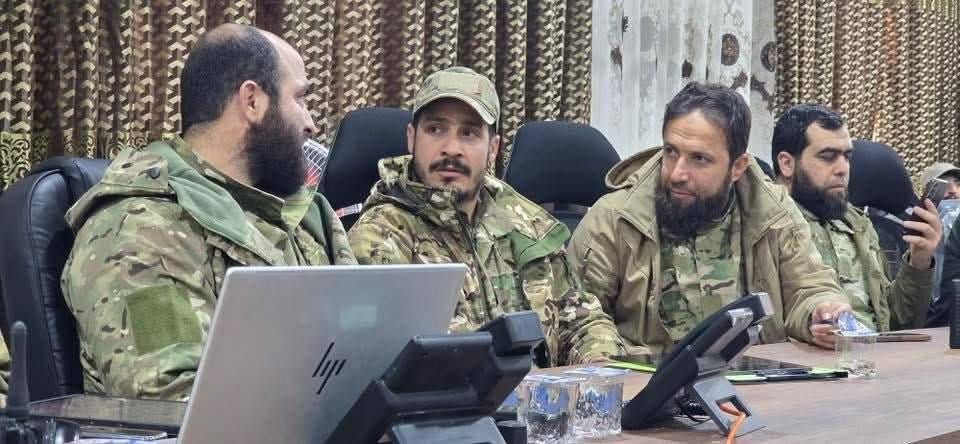
This same day the first images of senior MoD command emerged, beginning with a picture of the commander of the 60th Division monitoring SDF positions via drones. 72nd Division units deployed with heavy weapons along the front, using recoilless rifles along with artillery and mortars. Damascus also began evacuating civilians from SDF-held neighborhoods on this day.
Members of the 72nd Division firing a 106mm recoilless rifle at SDF positions.
Reported deaths began to rise significantly on January 8 as clashes intensified. Ten soldiers were reported killed throughout the day, four from the 60th Division and six from unspecified units. The intensification of operations coincided with the arrival of the Ministry of Defense’s Chief of Staff, Major General Ali al-Naasan, and the formation of an operations room consisting of the commanders of the 60th, 72nd, and 98th Armored Divisions (all led by veteran HTS officers). That night, STG units entered and secured the Ashrafiyah neighborhood.
The deaths of nine more soldiers were reported throughout January 9 as STG forces finished securing Ashrafiyah and Beni Zeid neighborhoods and closed in on Sheikh Maqsoud. As with the previous day, most deaths were from the 60th Division, including a unit commander, Mohammad al-Omar. This division was, according to one General Security source in Aleppo, the sole unit tasked with assaulting SDF positions, with other divisions providing fire support and helping with combing operations.
Among the dead on January 9 was a formerly displaced fighter from West Ghouta serving as a tank operator in the 76th Division (the former Hamzat Division). This was the first evidence of the involvement of the 76th, which seems to have deployed some armored and infantry units to support operations that day.
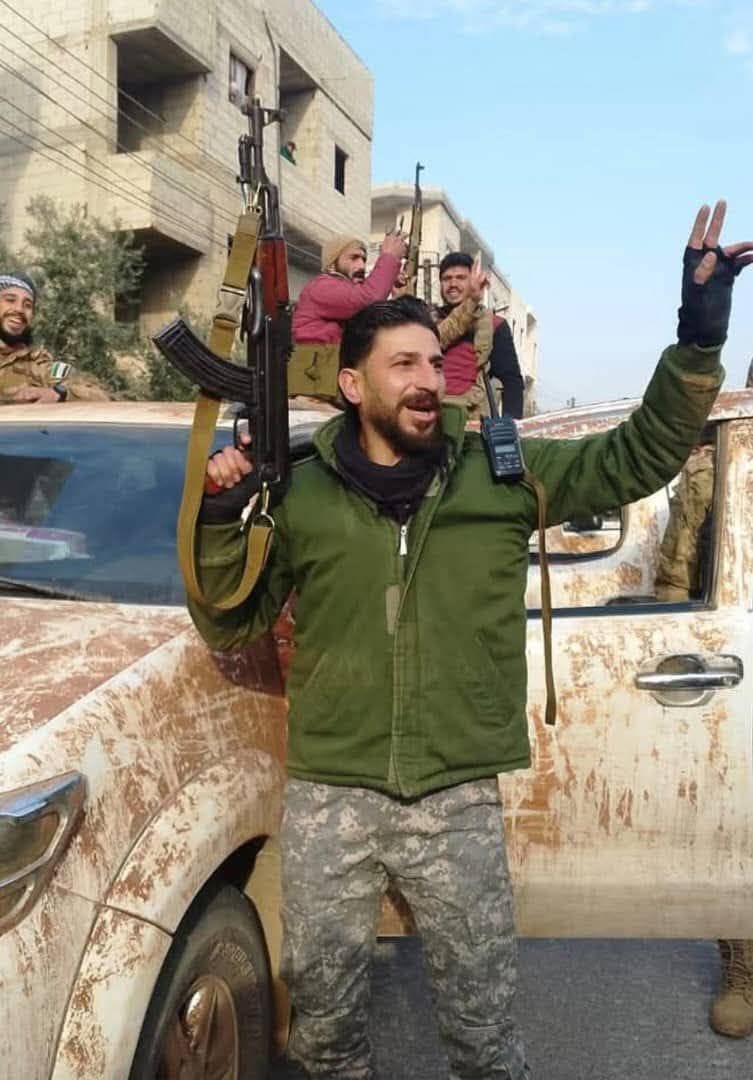
Fourteen more soldiers were reported killed throughout January 10 as the STG forces entered Sheikh Maqsoud. It is likely that many of these men were killed during the fighting in the neighborhood during the evening of January 9 and pre-dawn hours of January 10. Among them were two each from the 60th and 72nd Divisions, another soldier from rural Damascus serving in the 76th Division, and a soldier from the 98th Armored Division’s 87th Brigade, likely serving in an armored vehicle.
However, sometime on January 9 units of the 52nd Special Forces Division had arrived from Homs, likely in anticipation of the upcoming assault on Sheikh Maqsoud. The division’s “Elite Brigade”, also built around a former HTS brigade, appears to have taken the lead role in the assault that night, with at least four men from the brigade killed during the final battles.
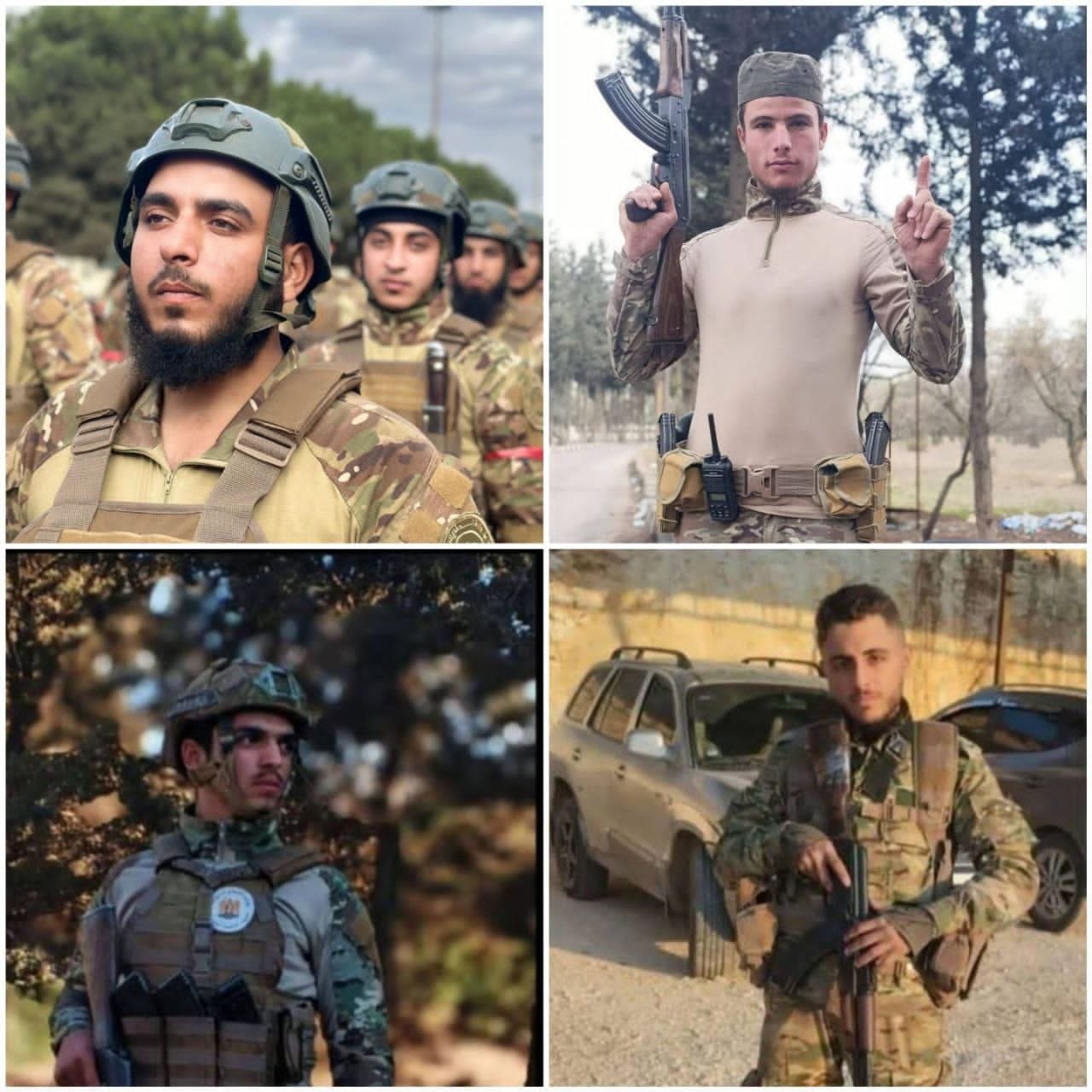
Lastly, one General Security member was killed in the afternoon by a SDF suicide drone strike on the Aleppo General Security Headquarters.
Throughout the five-day battle, the SDF claimed that the STG had deployed the Amshat, Hamzat, and Zenki forces - all former Syrian National Army factions which have been sanctioned by various western countries for human rights abuses. However, there is no evidence that Amshat (62nd Division) or Zenki (80th Division) were ever deployed in Aleppo city. As stated above, there is evidence that at least one armored unit of the 76th Division, which is built seemingly entirely around the former Hamzat Division, was deployed to the front on January 9. The main units involved, however, appear to be former HTS brigades operating within the 52nd, 60th, and 98th Division, as well as some smaller ex-SNA units in the 72nd Division such as the Sultan Mehmed Fatih Division.
You can find a full breakdown of each division’s component factions and leadership in my regularly updated report on the new Syrian Army:
The New Syrian Army: Structure and Commanders

Edited April 15: Updated 76th Division, 70th Division, 60th Division, 52nd Division, and 40th Division, added 98th Division, Damascus Division.