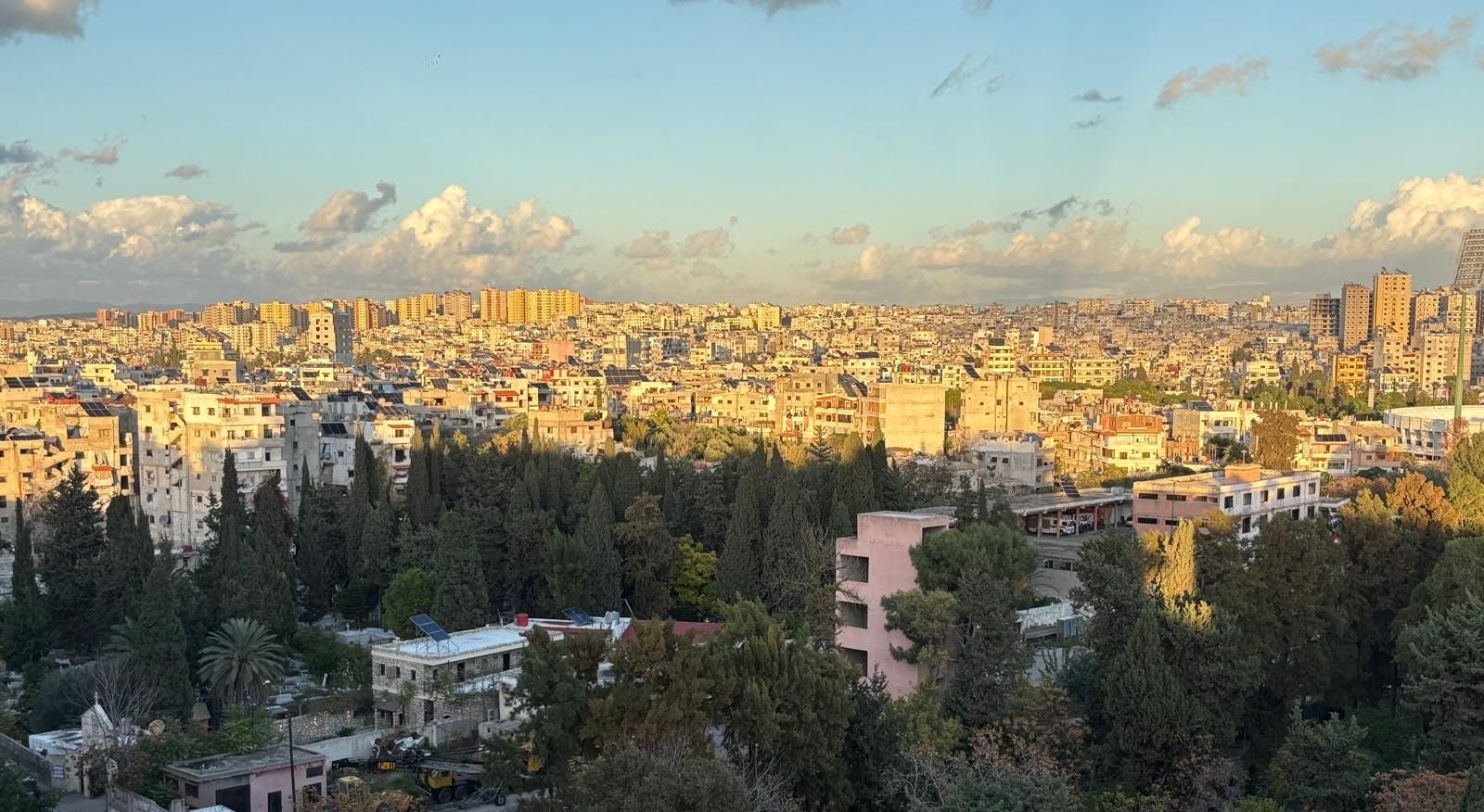
Through more than 50-years of Assad rule in Syria, every sect and every political movement has faced persecution. For the Sunni community living in the heart of Latakia, just a few miles from the hometown of the Assad family, this oppression has always been laced with more overtly sectarian motivations. Speak with any Sunni in the large coastal city and you will hear a story of themselves or a close family member being harassed, detained, or executed by the former regime.
These experiences grew in frequency and brutality after tens of thousands of Latakia’s residents rose up in protest against Assad in 2011, but they have been present since the first days of the Baathist rule. Yasser, now a respected doctor and community leader in the city, described to me his experiences growing up under the early Baath.
“I was in primary school when Hafez seized power in 1970,” he tells me this spring, “and I remember some of the Alawi boys at school came in the next day and starting telling us, ‘Hafez will kick out the Sunnis now’.” That same year, Yasser’s father was detained by the mukhabarat, accused of political activism against the Baath. He was released after a few years, but then arrested again in 1980. Forty-five years later, the family has still never learned of his fate.
With his father’s arrest, the family became financially destitute. Two years later, as he was graduating high school, Yasser was himself arrested. “The soldiers were beating me, telling me ‘you will die in the gutters like your father’,” he says. He was eventually released after several years of detention and torture.
Such overtly sectarian discrimination by the Assad regime was a common experience for Sunnis in Latakia. Inter-faith relations in the city today are intrinsically rooted in these decades of mistrust and mistreatment, but also held together by equally long-standing relationships. While Yasser and his family were singled out by the regime in part due to their Sunni sect, they still maintained personal ties to Alawi co-workers and neighbors. Within the city, Alawi and Sunni residents interacted regularly and had financial and familial relationships.
Relations with Alawis in the countryside were a different story, however, and the 2011 revolution would become a death knell for thousands of Sunni civilians within the city.
A History of Sectarian Repression
Latakia’s anti-regime protests in 2011 – in which members of all sects initially participated – were quickly met with violence by regime security forces. On March 26 – one day after the city’s first protest – hundreds of armed Alawi civilians from the countryside marched on the city in an attempt to confront the protestors. Mass violence was only prevented by the intervention of the governor, Riad Hijab, but the regime would transfer him out of the governorate less than a month later and soon after mobilize powerful Alawi militias.
The protests opened the door to widespread, sectarian-oriented violence against Latakia’s Sunnis. The wrong hometown on your ID could now be a death sentence, but thousands of residents were also detained at random. In August 2011, the regime stormed the poor Sunni neighborhood of Southern Raml, killing dozens and detaining hundreds of residents.
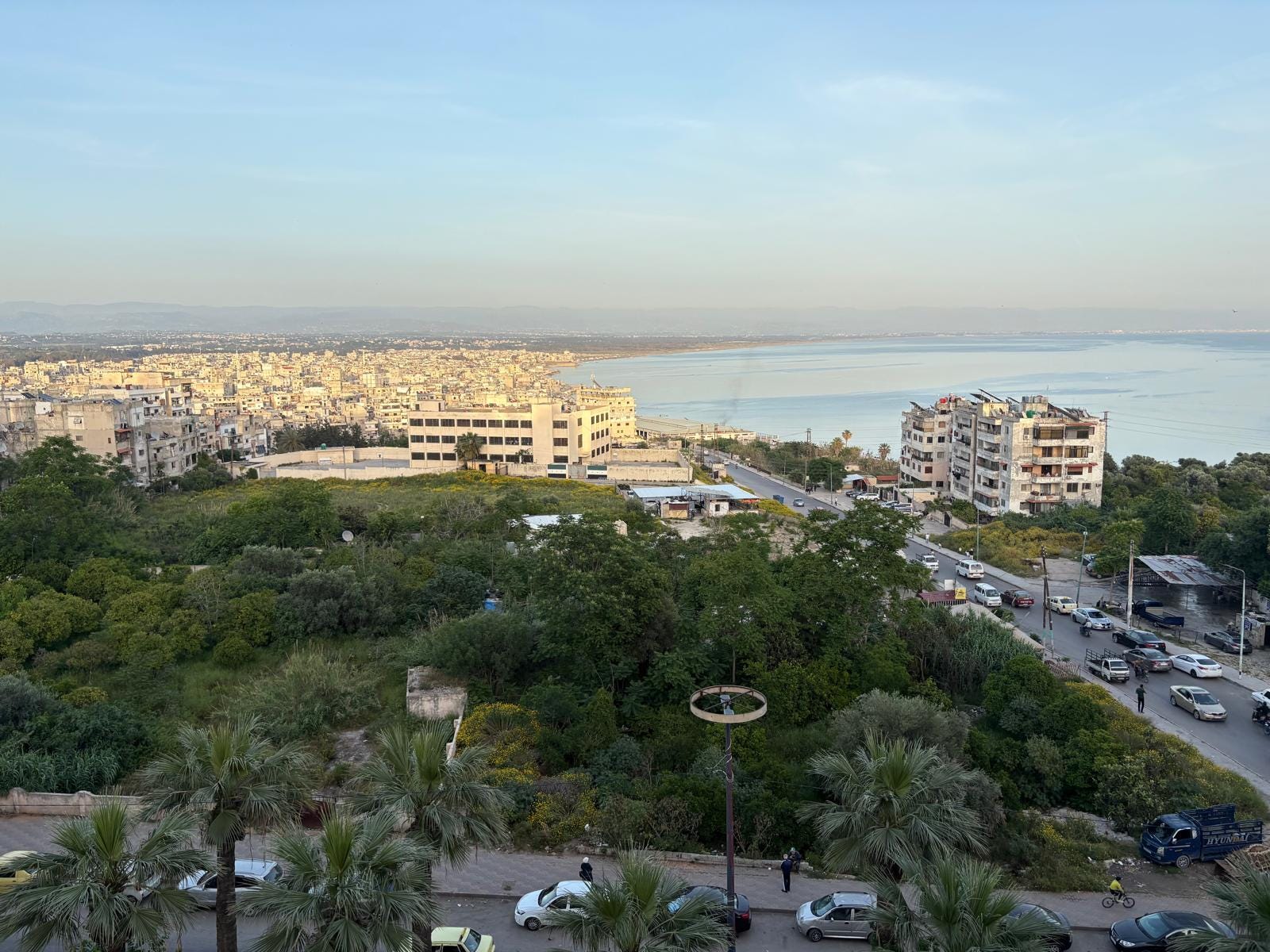
Even where inter-faith relations remained on an individual level, any potential indication that a Sunni might by sympathetic to the opposition was enough to sever them. “In university we would all eat and study together,” one young Sunni tells me earlier this year, “but the moment you brought up the regime you were excluded and viewed as the enemy.”
The gradual liberation of the Sunni villages in northern Latakia only exacerbated the situation for those living in the city. In mid-2012, the Sunni enclave of Haffeh rose up and briefly liberated their town and several nearby Sunni villages. For three days the regime besieged and shelled Haffeh before finally seizing it. Haffeh was depopulated and most of the Sunni villages around it razed to the ground by militias from the bordering Alawi villages.
Ahmed’s family is from Haffeh, though he and his brothers grew up in the city and rarely visited the town. Despite have no real connection to it, just the name ‘Haffeh’ on their ID cards was enough to condemn them after 2012. One day a few months after the battle, Ahmed’s oldest brother and father were traveling home from work when they were stopped at a checkpoint outside of one of the Latakia’s Sunni neighborhoods. Upon seeing their hometown on their IDs, the security forces detained the two men. Ahmed’s father was eventually released, but his brother disappeared into the regime’s web of detention facilities. The family only learned about his fate when they identified his body in the Caesar photos.
Bashar’s family has roots in the mountains of north of Haffeh. In 2012, regime agents accused his uncle, a truck driver, of supplying rebel fighters in the mountains with guns. He was arrested and murdered in Sednaya Prison. One year later, three of Bashar’s cousins were arrested in the city. Again, the regime accused them of supplying the opposition with weapons, this time claiming they used their fishing boats – though none of the men had boats or even worked near the sea. All three were murdered in Sednaya.
That same year, Ali, a middle-aged man from one of Latakia’s oldest Sunni families, was detained on accusation of supporting the opposition after sending his young son out of the city. For two months he was brutally tortured in the regime’s detention centers. “When they took me to the judge, he released me because I was in such a bad situation from the torture and close to losing my mind,” he tells me last summer, “if he hadn’t ordered my release I don’t think I would have survived.” Ali quickly fled to the Turkish border, abandoning his home for the next 12 years.
The overt targeting of Sunnis did not end even after the regime had secured the city and frozen the frontlines in the north. In 2017, Bashar, now a medical student at a private university in rural Tartous, was seen praying in an empty classroom one evening. An informant at the school wrote a report to the mukhabarat. Intelligence officers then asked Bashar’s Alawi classmates about his religious practices before arresting him. Bashar’s father accompanied him to the detention center and had to pay a large bribe to secure his release.
These experiences and thousands more like them became the foundation of inter-faith relations in Latakia after 2024. When the regime fell, Latakia’s Sunnis were ecstatic. It was the first time in 60 years they were not under Alawi rule. But the city was still cut-off from the rest of the country by an Alawi dominated mountain range and their new-found freedom felt fleeting.
When I visited the city in early February 2025, the Sunnis I met with spoke about the importance of inter-faith dialogues, but at the same time there was already growing anger over the perceived lack of remorse from Alawis for Sunni suffering under the regime. Many were hoping for a statement from Alawi community leaders apologizing for the regime’s crimes. The more time that passed without one, the more Sunnis began to distrust the intentions of their Alawi neighbors and fear for the longevity of their freedom. Every Sunni I met with was convinced that, “the Alawis will never accept living with us as equals and are waiting to take back control,” as one young government worker told me that month.
The March 6 Betrayal
These unspoken divisions came to a head in March 2025. Tensions had already been escalating inside the city by late February. Alawi insurgents conducted a series of attacks against security forces, nascent army units responded with an operation that left nine Alawi men dead in Daatour Neighborhood on March 3, and Sunni civilians were increasingly driving through the city in large convoys shouting provocative and sectarian slogans.
On March 6, 2025, thousands of Alawi insurgents rose up across the coast. Government positions were quickly overrun. Much of Latakia and Tartous governorates had fallen out of the government’s hands by the evening, and Latakia city itself was under divided control. The National Hospital became a frontline, besieged by insurgents and rapidly filling with the bodies of dead and wounded security forces.
Before the Massacres: 10 Case Studies of Syria's Coastal Insurgency

One year has passed since the outbreak of mass violence in Syria’s coast. What began as a coordinated, widespread insurgency by members of the Alawi sect devolved into days of mass killings, looting,…
Bashar was working here that night and remembers receiving a call from an Alawi friend living in Europe. “She told me her sister had been shot and asked me to help her in their family’s apartment,” he tells me, “she said they were too scared to call the civil defense and her mother had asked for just me.” Worried about the ongoing clashes, Bashar contacted the civil defense who organized a small part to go to the family’s block, just a short distance from the hospital. Two General Security vehicles joined them for protection. On the morning of March 7 they set out. But when the small convoy of ambulances and security vehicles arrived on the street, they were ambushed by insurgents.
Bashar shows me a short video he took of what he had thought would be his last moments. In it, he is crouched behind a small wall, praying repeatedly while heavy gunfire rings out around him. “The security forces killed the insurgents, but my friend’s sister had already bled out,” he recalls, “later I learned that she had been wounded while watching an attack against a police patrol on the street the night before.” Bashar does not believe his friend in Europe knew about the trap, but says, “I cannot rule out the possibility that my friend’s father and mother knew.”
The insurgency triggered a deep sense of betrayal across Latakia’s Sunni community. The betrayal narrative and accusations against the wider Alawi community were fueled by widely held perceptions that most Alawis knew about the insurgency before it began. More than a dozen Christian and Sunni residents I met with in Baniyas and Latakia in April 2025 all claimed to see their Alawi neighbors closing shops early and keeping their children out of school on March 6, or leaving the cities for their villages the day before.
Another Sunni doctor, Muhammad, tells me about one such interaction:
“In the days before March 6 we had Alawis we knew personally telling us things like, ‘you Sunnis will not be here much longer and that terrorist Sharaa will not sit on the chair much longer’.”
A Christian businessman in Baniyas similarly recalled seeing an Alawi ex-officer packing his family into his car in the evening of March 5, saying to the Christian man, “What are you doing here? Close your shop and leave, everything will be settled soon.” According to an Alawi activist in rural Tartous, there were widespread rumors of an impending uprising within the community due to leaks from ex-officers involved in planning the operation.
The sense of betrayal ran particularly deep in Latakia city, whose Sunni residents had suffered under 14 years of Assad regime oppression. “They have not accepted that the regime is gone,” one Sunni businessman told me during a dialogue session two months after the massacres. “We had gathered with Alawi sheikhs and influential men and all agreed on rejecting violence, but now after March 6 they have changed their way of talking and say Sunnis are threatening every Alawi.” The March 6 insurgency, which most pro-government Sunnis described as a coup attempt, solidified their belief that the Alawi community as a whole was against them.
Deepening the Wound
The insurgency and subsequent massacres in March shattered the early efforts at rebuilding interfaith relations in the city. Still, on the ground, many personal relations and the efforts of activists persist. Some Sunnis sheltered Alawis during the fighting and Sunni and Alawi groups organized aid packages to affected communities afterwards. “After the March massacres I went to Daatour neighborhood to offer help to my friend,” Bashar’s father, Nawras, tells me, “He admitted that men from his neighborhood betrayed them and attacked the government, but we still call each other and visit frequently.” That spring, Daatour’s community leaders worked with the General Security to arrest the key insurgent heads in the neighborhood.
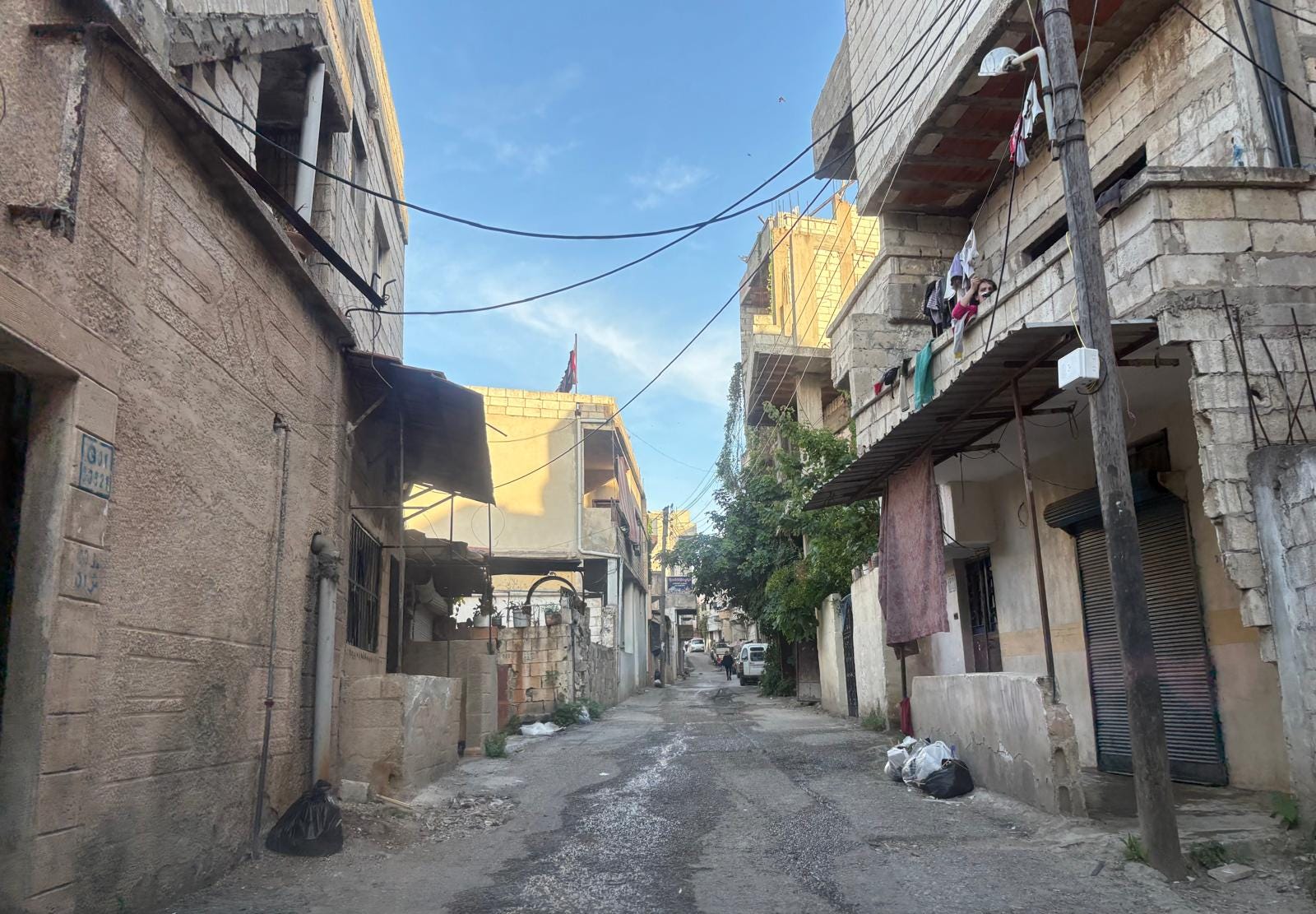
But online, the hate speech between both communities only escalated. Alawis now used the March massacres to minimize Sunni suffering during the war, while Sunnis cited the presence of insurgents in Alawi villages as proof that no civilians were killed by pro-government forces. The rise of Ghazal Ghazal and growing Alawi calls for federalism solidified Sunni distrust in their neighbors. “Federalism” became synonymous with Alawi rule in the coast – a direct threat to Sunnis’ newfound freedom. Alawi protests in November and December 2025 calling for federalism were met by aggressive Sunni counter-protests. In Latakia city, the Ministry of Interior was able to limit clashes during the protests, but at night Sunni mobs destroyed shops and cars in an Alawi-majority neighborhood.
Political divisions now added a new layer to the unresolved wartime grievances. Meanwhile, Alawi communities, who had been heavily overrepresented in government jobs, have continued to experience waves of layoffs as the new Syrian government shrinks its workforce. These layoffs, combined with the fact all senior government positions are now held by Sunnis, have left Alawis feeling particularly marginalized and fearful of their future place in the country. Economic woes exacerbated the shock of the regime’s sudden collapse and strengthened the Alawi inward turn, further separating the two communities.
The Wall Remains
Yet the passage of time and lack of serious intercommunal conflict in the city since last year has calmed tensions to a degree. As a result, interfaith relations in Latakia city today are varied and highly personal. Some Sunnis I met have maintained friendships across faiths; others have been cut off.
Zahraa, a young college student at Tishreen university, said that her mixed-sect friend group had stopped speaking after March 2025, but that in recent months they began to meet again and started planning summer trips together. Her older sister, however, has lost contact with Alawi coworkers. “One of my coworkers is from Mukhtariya, and since the massacre there she refuses to speak to any Sunni in the office,” she tells me. Bashar shared similar stories from his hospital, while the doctor Muhammad still speaks with many Alawis, including about more traditionally sensitive topics like religion.
Most Sunnis in Latakia insist they have maintained open arms to the Alawi community. “They have to take the initiative and we will receive them,” says Moustafa, a former activist who now works as an English teacher in the city. The other Sunnis gathered at the time agreed. Yet the openness is not without conditions. “Our revenge is not to kill them but to build bridges,” Moustafa explains, “We really need to do this, but they won’t even accept this government, they’re in complete denial of all things.”
“Even though we know that some of our Alawite friends and acquaintances supported the coup and aided the coup plotters in one way or another, we still maintain contact with them and try to bridge the sectarian divide,” Muhammad tells me. He points to the lack of mass killings in the area as a sign of the community’s broader openness:
“If there was genuine sectarian hatred among Sunnis towards Alawites, they would have exploited the early days following the fall of the regime and the ensuing chaos and security vacuum to kill Alawites, especially since they had stolen many weapons from security centers after Assad’s forces fled.”
The city’s Sunnis still feel a deep pain from the daily violence of the Assad regime, and the lack of acknowledgment by the Alawi community will forever leave a gulf between the two sides. “They have no guilt for what happened to Sunnis,” Moustafa says bluntly. At minimum, Sunnis expect the Alawi community to drop their demands of separatism if they hope to be accepted. “We want just two things,” says Moustafa, “hand over the wanted men, and act with good intentions towards the government.” When pressed on the second demand, he elaborates, “Of course we [Sunnis] always demand for better policies, but there is a difference between demanding for Alawis in the government and demanding for federalism.”
Accountability for both communities’ crimes, acknowledgement of suffering, and broad political alignment are massive hurdles to overcome. So far there have only been a few initiatives designed to address part of these challenges. Some prominent Sunni sheikhs work closely with Alawi leaders to connect their communities with local officials and resolve conflicts. Similarly, there are several Alawi sheikhs from the city and nearby countryside who work as intermediaries between their followers and the government. Other initiatives are focused on building dispute-resolution mechanisms between neighborhoods.
But there is nothing being done to try and address the divergent realities the two communities experienced under the regime. The city’s Sunnis remain deeply traumatized by their decades of violence under Assad and intimately connected to the suffering of the Sunni villages in the countryside who were displaced and destroyed during the war. The March 2025 events only sharpened the feelings of betrayal in both communities, leaving each highly sensitive and reactive to any perceived attacks by the other. As a result, the current, relatively calm atmosphere in the city today is only a thin layer over deep, unresolved wounds.