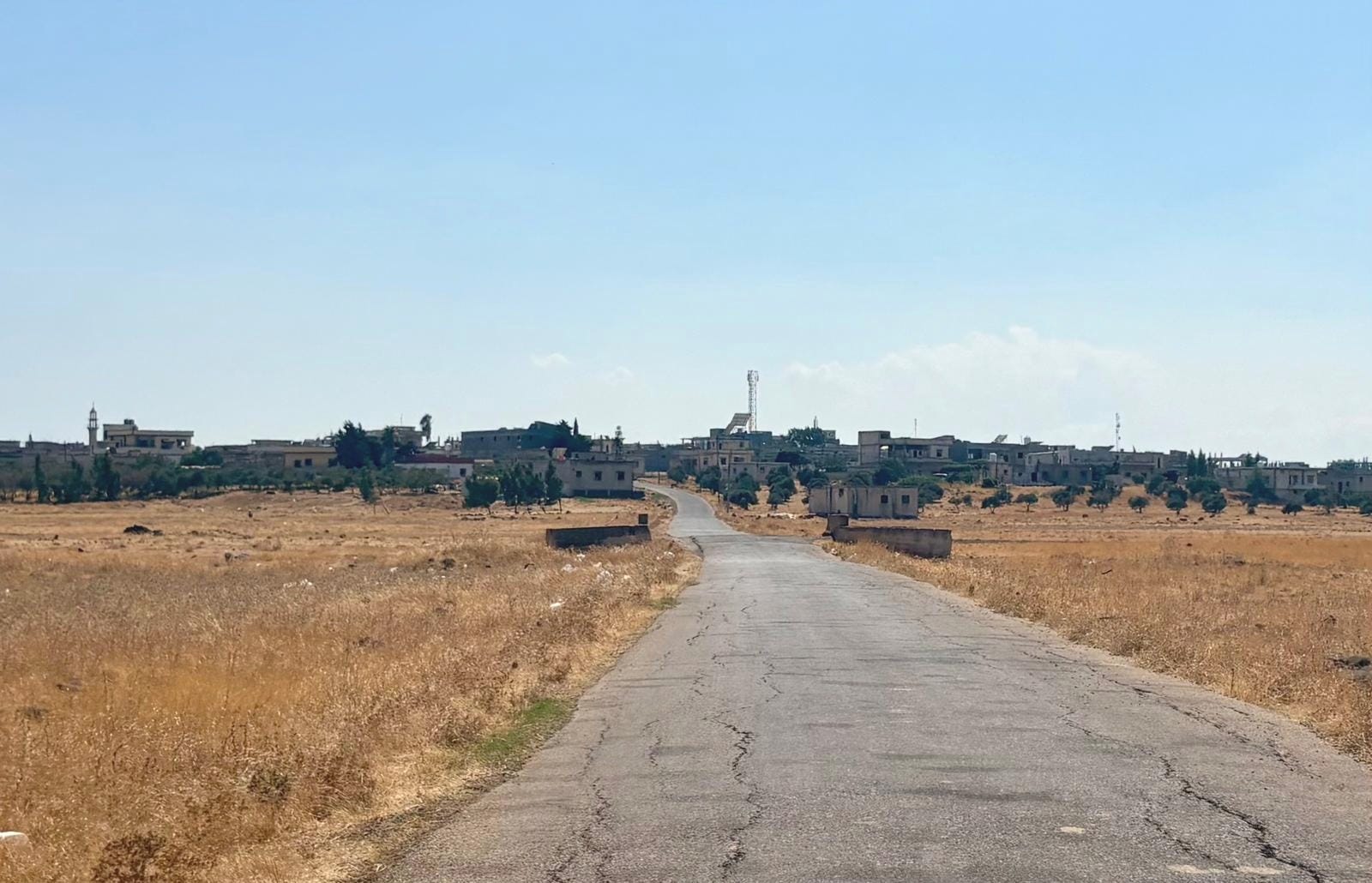
Vestiges of the Ottoman Empire are still visible through a long line of villages running from the Syria-Lebanon border north to modern Turkey. Stretching across the Homs, Hama, and Latakia governorates along the base Syria’s coastal mountains are dozens of interspersed Turkmen and Alawi towns, all founded during the Ottoman era and many bearing the ruins of the original Ottoman buildings atop small hills in the village centers.
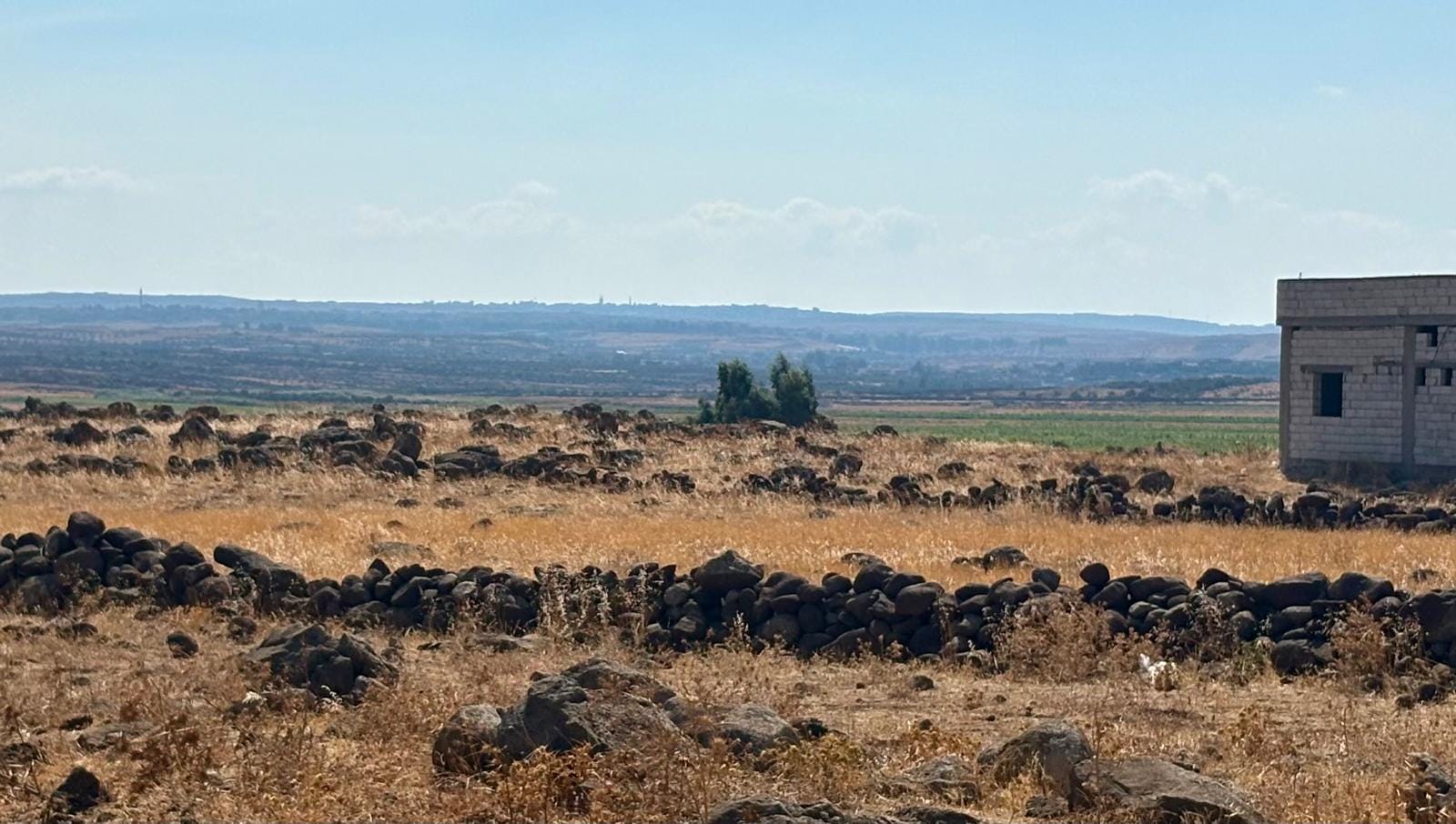
Two such villages sit just a few kilometers west of the city of Homs. Qizhal and Umm Qassab are both Ottoman-era Turkmen villages built on low rises in a rocky plain covered in wheat fields. To their northwest lies the Houla Plains, the Sunni Arab villages which suffered brutal sectarian massacres in May 2012. To their west are a string of mostly Alawi villages from which Assad-loyalist militias emerged in 2011.
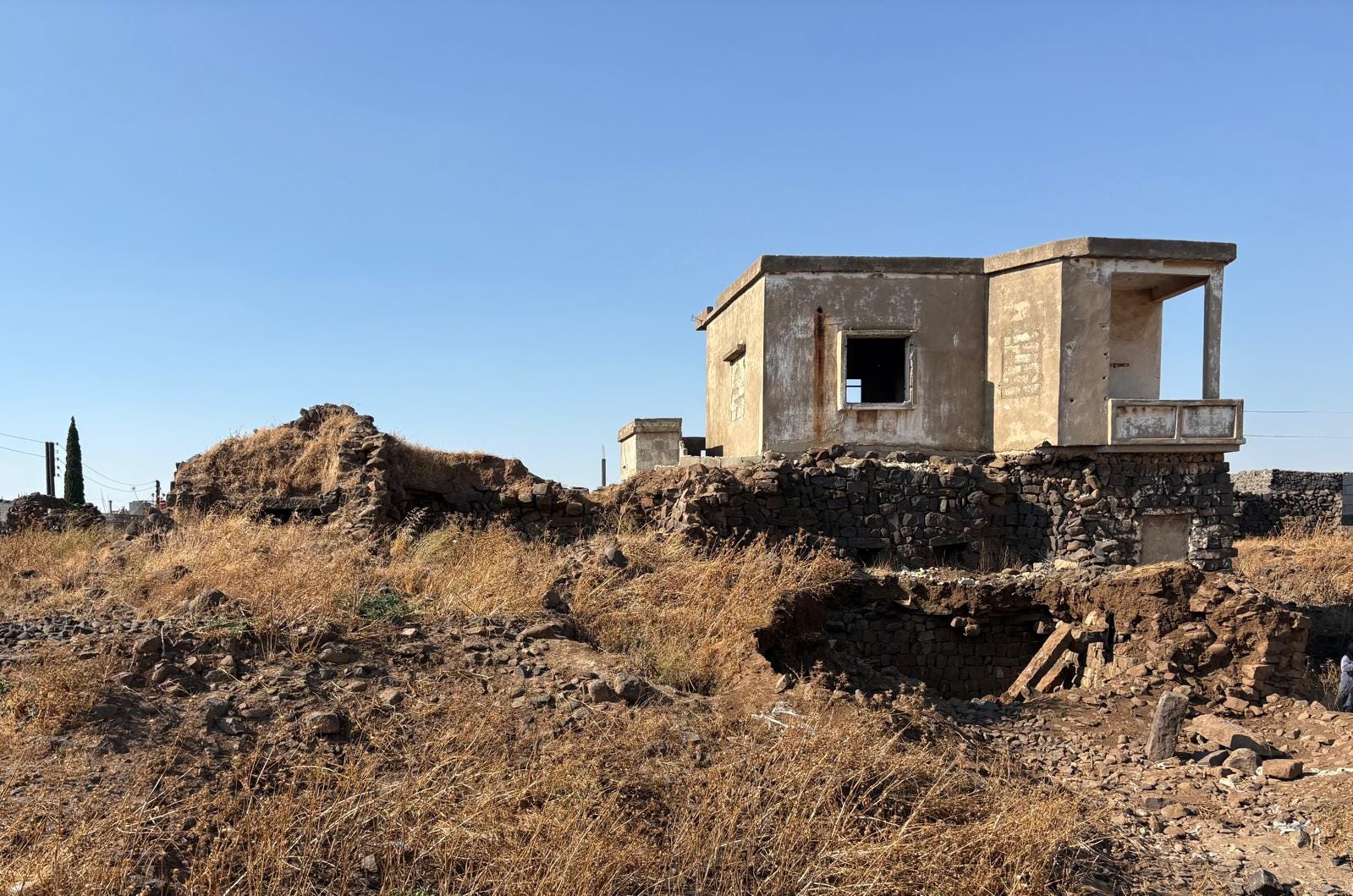
Like the other coastal Turkmen villages of Mitras and az-Zara, Qizhal and Um Qassab suffered under a multi-year siege and eventual violent displacement by regime forces during the war. The two villages are isolated, too far from their neighboring revolutionary towns and too small and exposed to have any large armed movement of their own. Their story is a microcosm of the systematic sectarian violence employed by the Assad regime across much of Syria, the consequences of which are still being felt two years after the country’s liberation. Yet their post-war reconciliation experiences also offer hope for the country’s future.
From Protests to Siege
I recently visited Qizhal to learn about its experiences during the Syrian revolution. The village historically relies on farming, with most residents alternating seasonal crops like wheat and vegetables. Before the war, around 40% of the town worked as either civil service or military employees in the regime, according to both locals and the regime’s 2004 census. When the revolution began, nearly all of these government employees defected or quit their jobs.
At first, the residents of Qizhal joined the protests in Homs City. But the regime quickly established checkpoints on the city’s outskirts, and traveling through the open fields and along the highway became too dangerous. Qizhal’s protestors then moved north, traveling weekly to Houla to participate in the demonstrations in Taldou’s main square. This pattern continued through the spring of 2011. Around July, regime intelligence units established a new string of checkpoints between Qizhal and Houla and began to violently crack down on the demonstrations. Residents were protesting on a near daily basis, but were often forced to demonstrate in side streets and quickly disperse when soldiers began to shoot at them.
In February 2012, the regime launched a massive military operation against a dozen opposition-held neighborhoods in Homs city. The neighborhood of al-Waer, separated from the rest of the city by the Orontes River and a wide swathe of farmland, remain cut-off from the other opposition neighborhoods. Together, al-Waer, Qizhal, and Umm Qassab formed one pocket increasingly under siege.
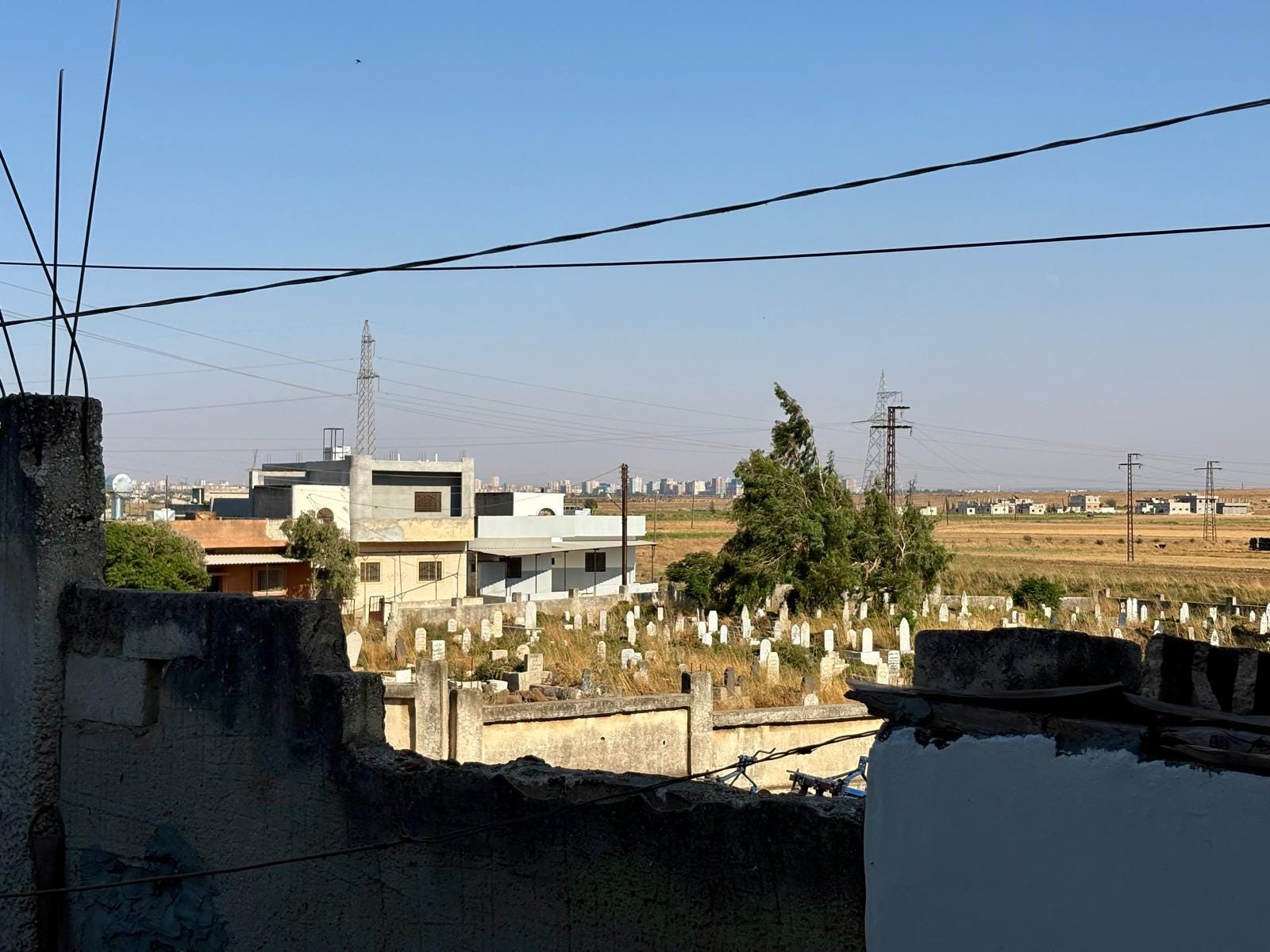
By 2013, it had become impossible to reach Houla, but movement between the other three communities continued, though only ever at night. In 2014 the regime cut the eastern side of Qizhal, establishing new checkpoints along an old railroad track running between Qizhal and al-Waer. To the west, the countryside had become a hotbed of regime militias, mostly units of the National Defense Forces (NDF) operating under the infamous criminal Shujaa al-Ali. Rebel forces in Houla and northern Homs made several attempts to break the siege, but the area was too exposed and the villages too weak.
At this point the humanitarian situation became dire. The militias and checkpoints suffocated the two villages and the regime blocked most aid from entering. Farmers were no longer able to work the land outside the villages’ immediate vicinity or risk being shot – four farmers were killed this way, their bodies never recovered. Dozens of people were kidnapped by NDF members while trying to pass the checkpoints; some returned after paying large ransoms but most remain missing to this day.
Throughout the first years of the revolution anyone found with an ID card reading “Qizhal” was in danger of being killed. Government employees and university students studying in the city soon abandoned their jobs and school as traveling through regime checkpoints each day became a gamble with death. Still, many were captured and more than 45 residents have been documented as executed in regime prisons during these first years. Nearly all of Qizhal’s men serving in the regime’s army defected as well, though most went to other places to join armed groups, leaving few experienced fighters to defend the village.
Left with only a small force to defend their town, Qizhal stood little chance when the regime made a final push to force the area’s “reconciliation".”
Surrender and Betrayal
The reconciliation process was led by the regime’s National Reconciliation Committee, headed by Minister Ali Haider. This committee had for years been involved in imposed reconciliations on oppositions towns across rural Damascus and Homs. On October 11, 2015, a delegation led by Ali Haider, Homs Governor Talal Barazi, and Homs Police Chief Akram Basou met with community leaders in Qizhal and Umm Qasseb. According to regime reporting at the time, 95 armed men from the two villages agreed to lay down their weapons. Locals say, however, that the regime demanded weapons which they did not have, forcing them to buy 15 rifles from regime units and then hand them over. The regime then brought in additional guns for a photoshoot to announce the reconciliation’s completion.
Yet nothing changed afterwards. The checkpoints remained in place and the villages remained empty of regime forces. For nine months a tense truce held. The people of Qizhal still could not leave their besieged area, but the regime had not taken full control.
Then, on July 14, 2016, regime forces backed by local militias from western Homs raided Qizhal and detained three men. According to a report by al-Arabiya, residents of Qizhal tried to defend their village from the raid. Two locals were killed but they managed to capture a group of regime fighters. The regime quickly moved from siege to assault, bringing in tanks and artillery and initiating two days of heavy strikes on the villages. Many women and children first fled to Umm Qassab, which was under less severe strikes, taking shelter in the main school. Yet regime forces soon hit the school with rockets as well, killing four children. On July 16, Qizhal and Umm Qasab surrendered.
A second high-level regime delegation visited the village and agreed to open a corridor to the besieged opposition pocket in northern Homs and exchange all prisoners between the two sides. On July 17, nearly the entire population of both towns – more than 6,500 people – walked to Dar al-Kabira where they were then bussed to Rastan. All 33 regime detainees were exchanged for 22 residents who had been kidnapped by regime military and NDF forces over the years, as well as the body of one kidnapped man who had been killed under torture.
The survivors of the siege of Qizhal would spend the next two years living under a new siege in northern Homs. On April 29, 2018, regime forces unleashed a massive bombing campaign on the Rastan pocket, launching more than 500 artillery shells and 70 airstrikes in just 24 hours, according to Syria Direct. On May 2, opposition leaders surrendered. Five days later, regime buses took thousands of fighters and their families to northern Syria. The residents of Qizhal were displaced a second time, with most arriving in Afrin.
A handful of families had returned to Qizhal a few weeks after their first displacement in July 2016, believing that they would be safe from regime retribution. However, according to locals, several residents were quickly detained and for two years the returnees lived under the thumb of intelligence and police units who had turned the town center into a detention center. Regime militias, mostly linked to Shujaa al-Ali, also engaged in widespread looting as soon as the villages were depopulated. Farm equipment, livestock, and everything left in homes was stolen and either brought to the Alawi and Shia villages to the west or sold in markets.
Return and Reconciliation
From 2018 until 2024, the residents of Qizhal and Umm Qassab spread out across the region. Most were displaced to Afrin, but many others found themselves in Turkey, Lebanon, or Europe. When the Assad regime fell in December 2024, they were finally able to return home. Most residents returned throughout 2025 – only around 1,000 are estimated to still be in the camps or outside Syria. Returning was just the first step, however. The residents of Qizhal now had to rebuild their lives and grapple with the years of crimes and violence that often came from their neighbors.
During the siege, it was the NDF factions emerging from several nearby Alawi villages which caused the greatest damage; kidnappings, killing farmers, extortion, and later looting homes. All of these crimes fueled deep hatred and anger between communities which had for generations lived alongside each other. Most of these regime networks fell under the command of Shujaa Ali. His network, which included both militia leaders and local intelligence and army officers, established several unofficial prisons inside their villages.
Shujaa Ali and many of his most hardcore followers were killed in a large security operation on December 27, 2024. According to community leaders in Qizhal, most of the remaining top leadership of Shujaa’s network and other NDF factions in the area fled to Lebanon that month. This left only some rank-and-file NDF members in these villages. Qizhal’s farmland, which had been worked by nearby Alawis in the years after the village’s displacement, was abandoned as well, preventing any post-war disputes over land rights.
With the worst NDF criminals gone and a few others detained, disputes settled on property theft and financial compensation. “Those small criminals were looting our homes due to their own poverty,” one man in Qizhal explained. Some residents were able to identify specific thieves from pictures on Facebook showing their tractors or farm equipment. They then entered into personal or legal negotiations for at least partial compensation. Others have filed cases in the courts. Still, most residents never learned who exactly looted their homes.
A combination of official and unofficial actors engaged in reconciliation dialogues between Qizhal and neighboring towns throughout 2025. A local branch of the Homs Reconciliation Council hosted several meetings, while Qizhal’s mukhtar personally hosted nine dialogue sessions with the Alawi village of Tanoula. All of the violations had been committed by only a few hundred NDF members - a small percentage of the thousands of Alawi residents living nearby. Emphasis was placed on understanding that not everyone from those communities was with the regime.
According to residents of Qizhal, relations between themselves and the Alawi communities have improved greatly over the past one and a half years. At first, Alawi farmers were too scared of reprisals to work their own land, and most residents stayed in their villages out of fear. Gradually, through dialogues and a lack of revenge violence, life returned to normal. Today, families in Qizhal hire their Alawi neighbors as farm labor or to help with reconstruction and there is regular movement between the villages.
Shadowed by the sheer numbers of victims from their Sunni neighbors, places like Qizhal, Umm Qassab, az-Zara, and Mitras represent scores of smaller villages across the country which suffered under the regime and its militias far from media headlines. Their experiences in inter-communal reconciliation after liberation were equally absent from the media, but highlight the successful role local mediation has played in dampening the scale of intercommunal violence post-Assad. These histories should serve as a warning for the scale of civil peace challenges in Syria today, but also as models for reconciliation which can be brought to other communities.