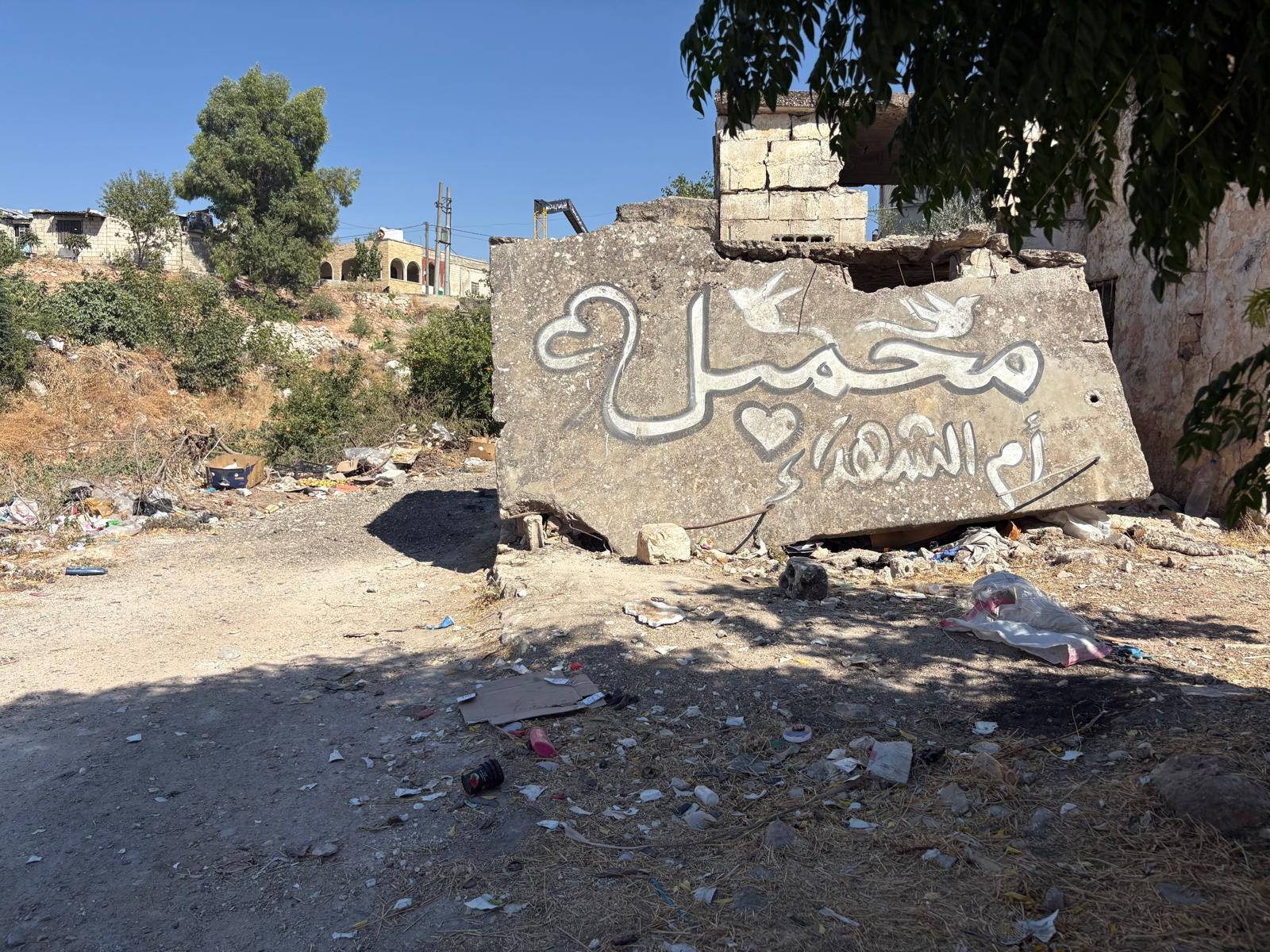
The name “al-Ma’sara Checkpoint” still carries with it a dark connotation for many residents of Idlib Governorate. For four years, this Assad regime base was used to indiscriminately shell villages across western and southern Idlib. Even as regime forces collapsed across the governorate in 2012 and 2013, Ma’sara stood impenetrable. With it, the regime maintained its crucial supply line between Idlib City and the coast.
Before Ma’sara gained notoriety across Idlib, it was first used to terrorize the residents of Muhambal. The checkpoint’s history serves as a microcosm of the revolution across Idlib: established in July 2011 as a part of the regime’s first military operation in the governorate, the checkpoint gradually grew in size and importance as regime forces were forced out of remote positions in the countryside and consolidated along the international highway. It would be one of the final regime holdouts in the governorate, not falling until after the liberation of Idlib City, Jisr Shoughur, and Ariha.
Yet the June 2015 battle for Ma’sara Checkpoint was not the first attempt at dislodging the regime. Three years earlier, Free Syrian Army fighters waged a month-long battle for the fate of their town. Ultimately unsuccessful, the First Battle of Muhambal serves as a clear example of the opposition’s structural weaknesses in Idlib during this period.
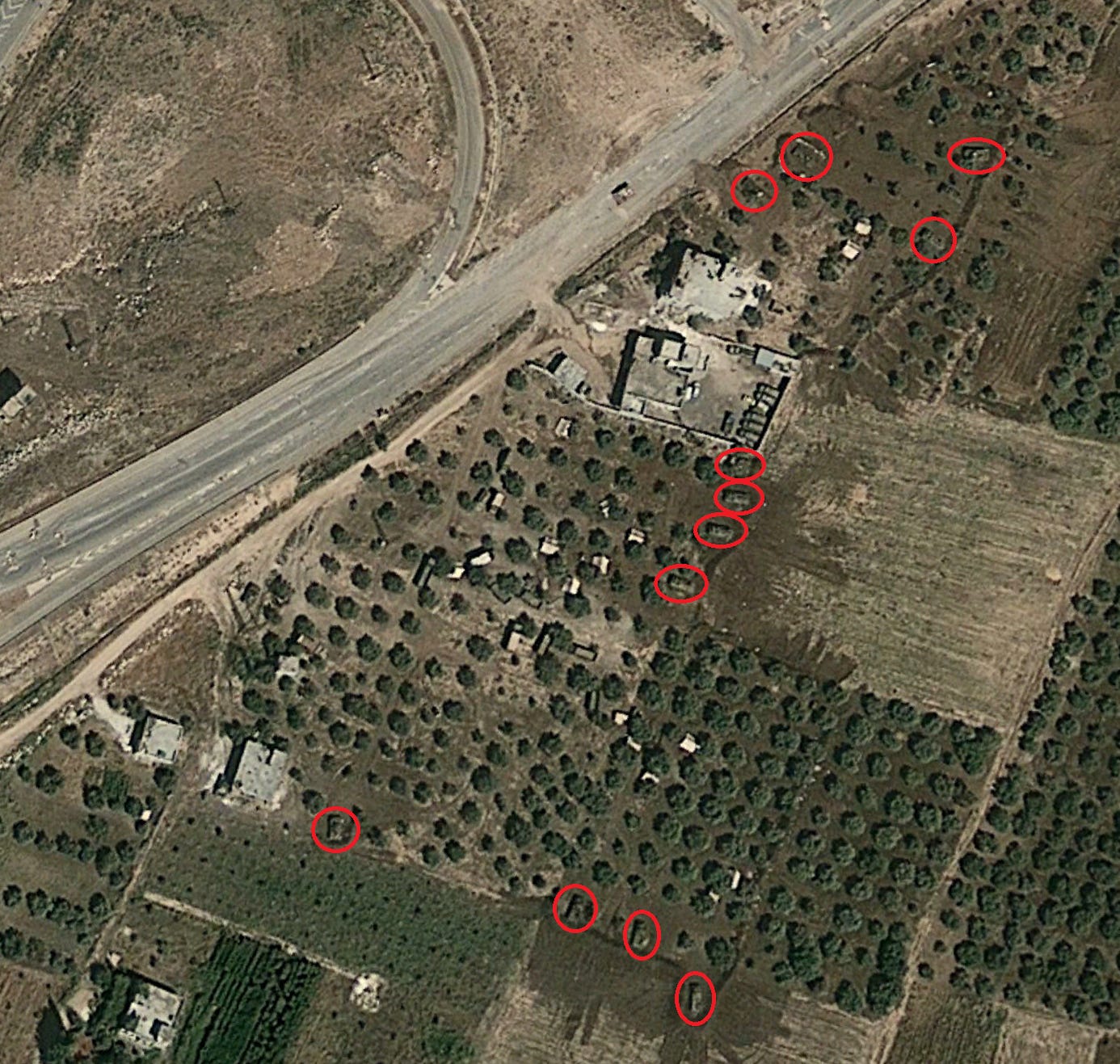
Tanks gathering at the Ma’sara Checkpoint in early October, 2012, one month before the first battle for Muhambal.
Returning Home
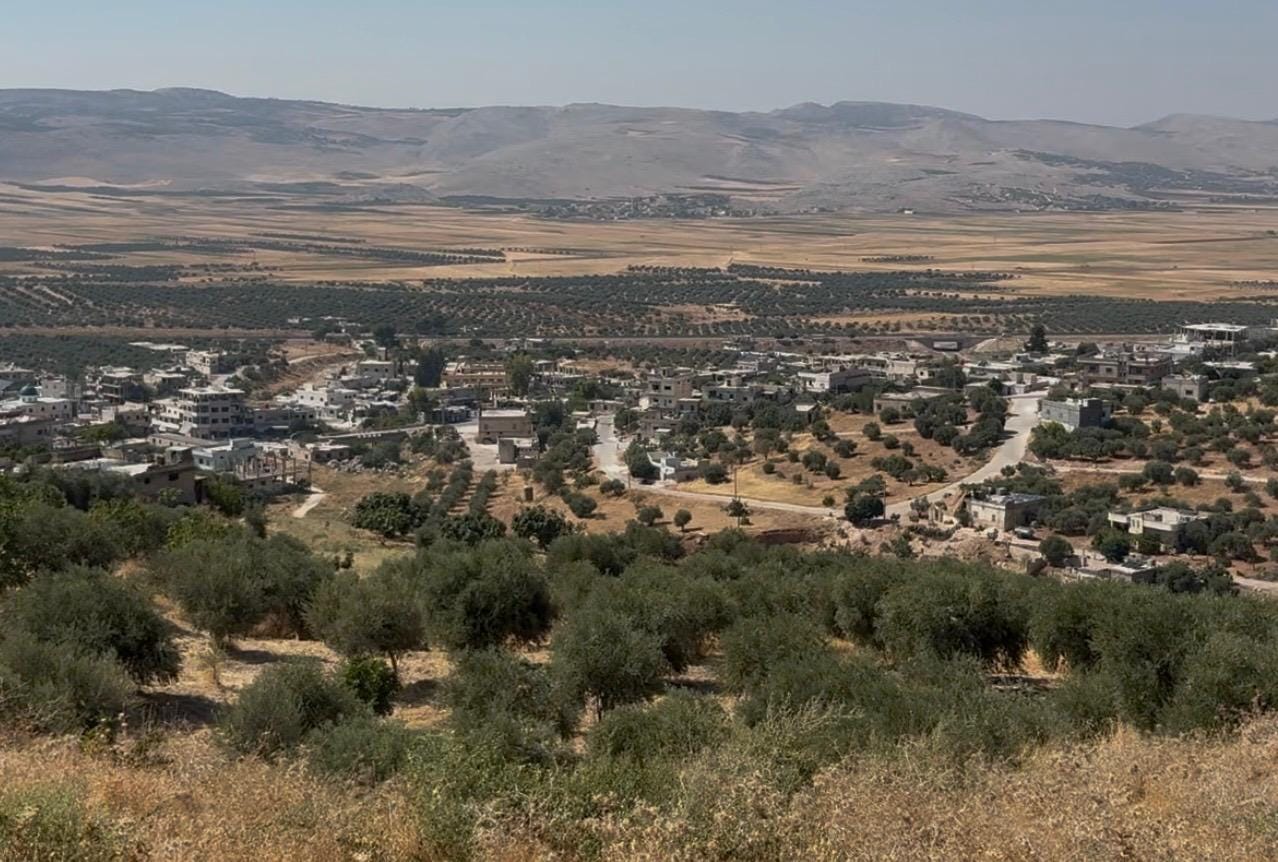
Major Bassem al-Youssef was serving as a battalion commander in the 100th Artillery Regiment when the revolution began. For three months his hometown of Muhambal held regular protests against the regime. Muhambal is The A subdistrict administrative seat, Muhambal connects northwest Hama with southwest Idlib. The city itself sits on the edge of the Jabal Zawiyah mountain range, looking north over the outstretched Rouj Plain. Known as “the Princess of al-Rouj”, Muhambal serves as the bridge between these two regions, its residents tracing their heritage to villages in both Jabal Zawiyah and al-Rouj.
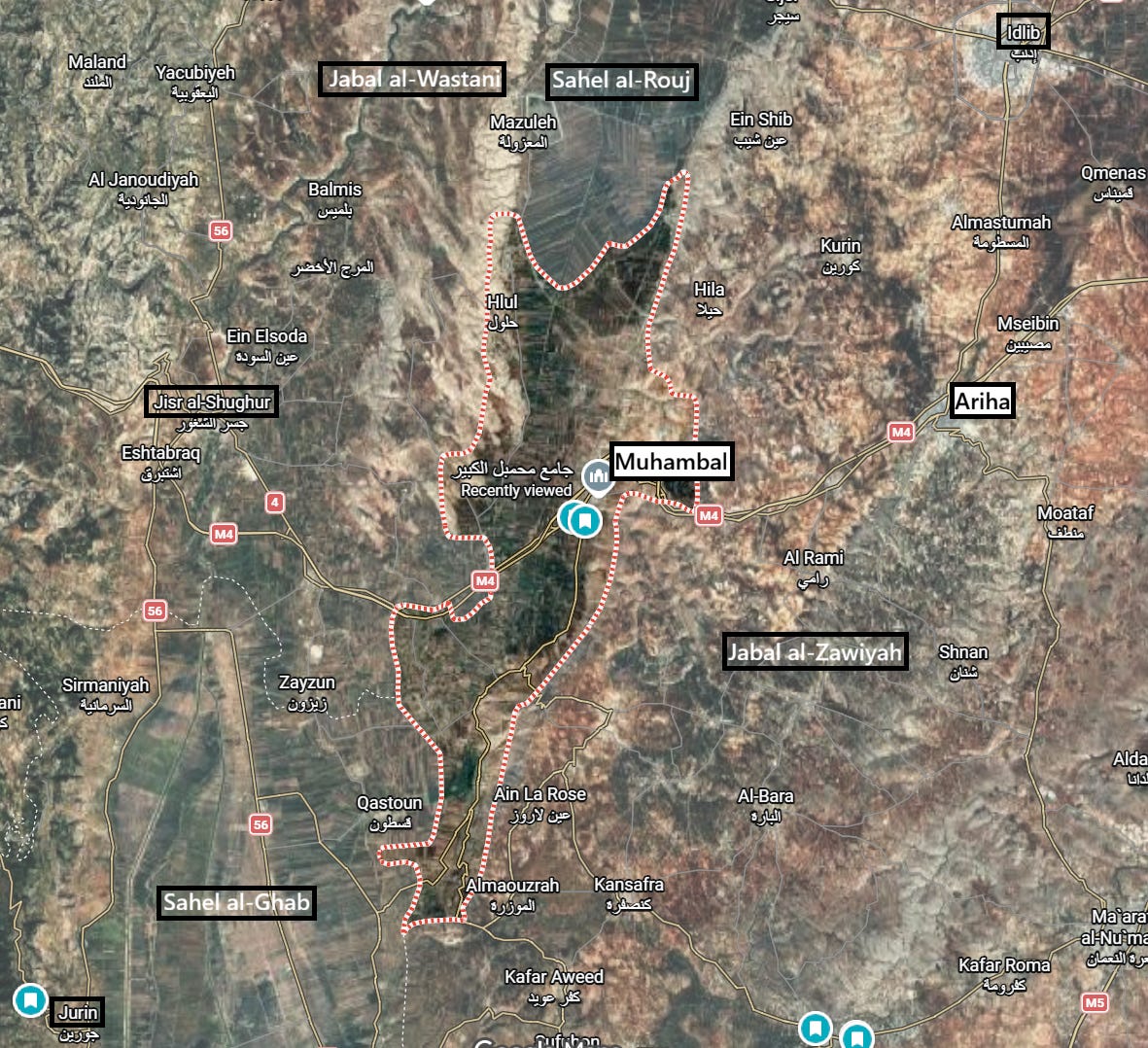
Residents from across the Muhambal Subdistrict would travel to the town for large, joint demonstrations against the regime. The town’s police station remained uninvolved during these first months, according to one resident, and the protests continued in peace. In June 2011, demonstrators received word the regime was sending a small shipment of assault rifles to the station. Protestors stormed the station and seized the rifles. Revolutionary leaders in the town then organized transportation for the police officers to return to their hometowns. Muhambal was liberated.
That same month, demonstrators and armed opposition fighters, inflamed by a series of escalating violations, stormed the Military Intelligence headquarters in the nearby city of Jisr Shoughur. According to an August 2011 United Nations Fact-Finding Mission report, on April 30 security forces had conducted a mass arrest of some 40 civilians in the city, releasing them three days later following demonstrations. All showed signs of torture. On June 4, locals organized a funeral of a murdered protestor. According to the UN, 14 civilians were killed during the demonstration, including Hassan Malesh, who was shot by snipers while giving a speech. The next day, a mix of armed locals and opposition fighters stormed the city’s intelligence headquarters, killing all 120 security members.
The regime responding by militarizing its anti-protest campaign in Idlib. A half dozen special forces regiments and regular army brigades were deployed to Idlib over the next month, establishing bases and a dense network of checkpoints across the governorate. Major Bassem’s battalion was among those newly deployed, tasked with establishing a new base on the outskirts of Muhambal.
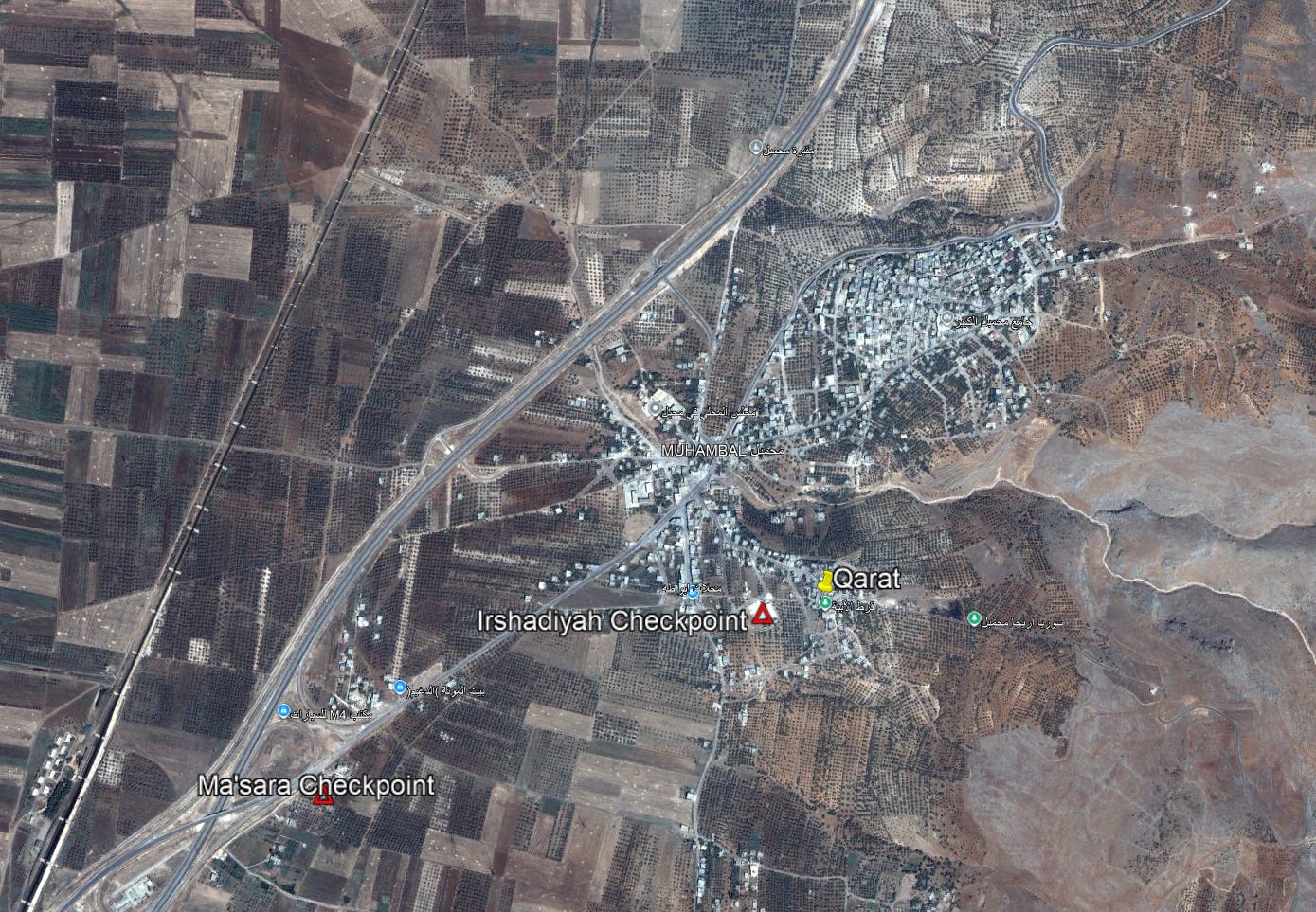
Regime forces stationed at the newly established Ma’sara and Irshadiyah Checkpoints began to heavily target demonstrators two months later, according to one resident. Locals formed loose armed networks to protect the protests and target the checkpoint in retaliation, but they were unable to end the violence, and many residents fled the town for the countryside.
Major Bassem was desperate to defect, but was transferred out of his unit shortly after arriving in Muhambal and sent to a brigade in Baniyas. One of his brothers was also serving in the army at the time; for either to defect required careful planning in order to avoid the other facing regime retribution. In the early fall of 2011 Bassem was able to use a short vacation pass and his brother’s smuggled ID card to defect join his family back in Muhambal. He quickly set out organizing the weak armed networks into a unified group, and two months later announced the official formation of the Martyrs of Muhambal Battalion (KSM) in November 2011. Under Bassem’s leadership, the battalion gradually expanded its operations against Ma’sara and began to coordinate with other newly established FSA battalions in the region.
Prelude to Battle
Shortly after Major Bassem’s defection, Colonel Ahmed al-Ali defected from the regime and returned to his home in the nearby town of Bsheiriyeh. Al-Ali announced the establishment of Liwa Ahrar Jabal Wastani in March 2012, brining together the local battalions of the villages in the Sahel al-Rouj and adjacent Wastani Mountains. His group quickly became a close ally of the Muhambal Martyrs Battalion.
On October 7, 2012, the revolutionary factions of the Sahel al-Rouj and Jabal Wastani launched their first serious offensive against the regime. Within 24 hours they killed Colonel Karam Mustafa, senior regime officer from the 3rd Division overseeing operations in the area. Over the next three weeks, regime checkpoints across the northwest Rouj Plain and Jabal Wastani were destroyed. On October 16 the town of Azmarin was liberated, followed two days later by Darkush. The Martyrs of Muhambal Battalion participated in all of these battles.
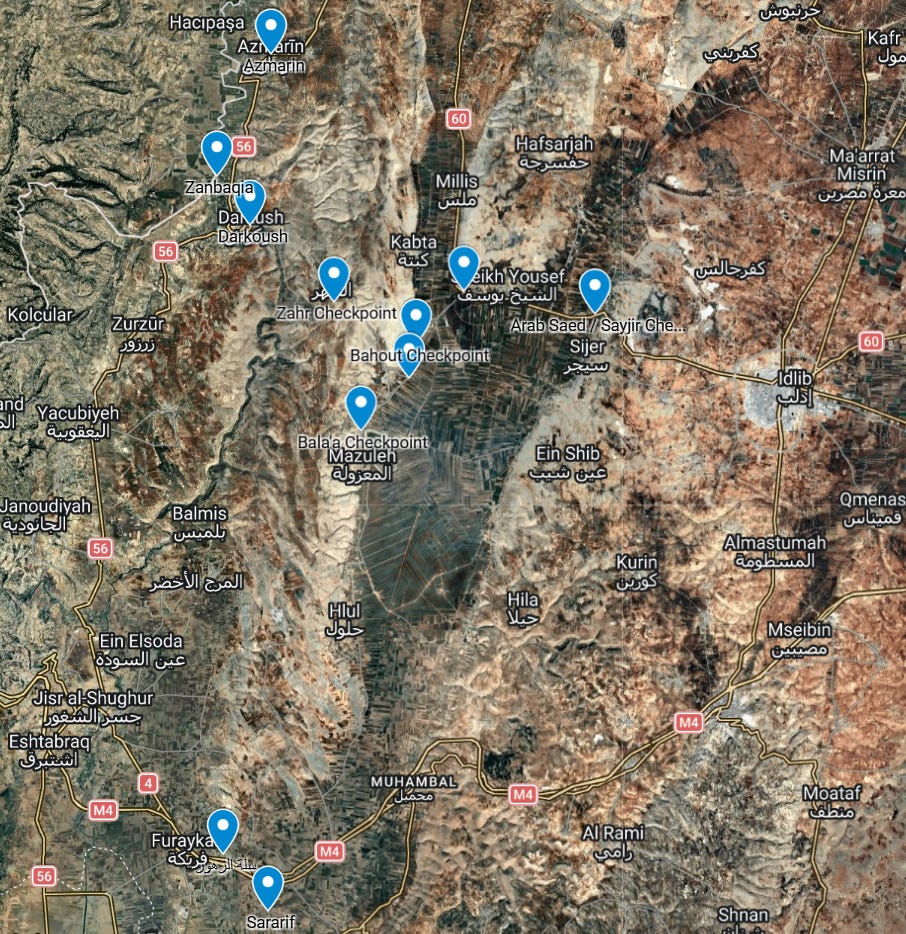
“This was the first battle where we all agreed to work together on a single objective, because without this we could not move,” one former KSM fighter explains to me in a meeting in Muhambal this summer. The entire Rouj Plain was locked down by the Ma’sara Checkpoint and a second base atop the Wastani mountain range, al-Zaher Checkpoint. Revolutionary fighters were forced to travel by motorcycle on small dirt roads, often at night, as long as the regime held both these positions.
Despite the intimidating mountain-top position of the Zaher Checkpoint, the battle itself was small. The opposition was able to surround the checkpoint and secure the defection of almost the entire garrison – 25 soldiers and a colonel. Some of the defectors then joined the fight, while others were smuggled home. Despite inter-faction coordination still being very weak, the offensive was a resounding success. Supply lines were now open from the Turkish border to Muhambal. “These battles were the opening gate to the November battle for the Ma’sara checkpoint,” the former fighter tells me.
The First Battle for Muhambal
By November 2012, most of the civilians in Muhambal had already been displaced. Regime forces inside al-Ma’sara and from the nearby Jurin base, in the al-Ghab Plain, used artillery and mortars to strike civilian homes in response to clashes in the wider area. By early 2012 regime helicopters had begun dropping barrel bombs on the town as well. Soldiers also regularly shot at and killed civilians – men and women – passing along the main road between Muhambal and the highway.
The regime had also successfully mobilized local shabiha inside Muhambal. These men and women, usually coming from the hardcore Baathist families or the town’s petty criminals, were primarily used to report on opposition activity. According to one resident, there were around 15 informants feeding intelligence officers in al-Ma’sara with the names and homes of opposition figures. This information was used to direct targeted shelling of homes and, at times, safehouses used by the Martyrs of Muhambal Battalion. At the same time, around a half dozen defectors had been secured from the checkpoint throughout 2012, each one providing information about the strength and deployment of regime forces inside.
With the northern axis now secured, Major Bassem prepared for a new battle to liberate his town. Muhambal’s familial and cultural links to the villages of Jabal Zawiya eased coordination with other nearby FSA battalions to some degree. The battalions loosely organized under Liwa Ahrar Wastani and local factions from Jabal Zawiya agreed to support the Martyrs of Muhambal Battalion. Calls were made to mobilize inside the town on November 1, and a last line of retreat into Jabal Zawiyah via the Bsamas road was agreed upon. Yet all coordination at this time was through walkie talkies. Unsecure communication lines and the presence of informants in the towns enabled regime forces to learn about these plans and the impending attack.
Fighters from Jabal Zawiyah enter Muhambal from the Bsamas road to support the operation, November 1, 2012.
Most of the groups involved in the battle were small FSA units with limited supplies. KSM itself only had one light machine gun, for example, and was stretched thin on ammunition. Bassem’s brother, Ihsan, who at the time served as the battalion’s logistics officer, made a supply run during the battle. Ihsan had has to drive a motorcycle from Muhambal to an FSA base 50 miles north in Atmeh, where he picked up a few guns and boxes of machine gun ammo. It was only enough to last the group ten more days.
Crucially, a few more powerful groups also joined the fight. Suqour al-Sham, originally from eastern Jabal Zawiyah but increasingly participating in battles across the governorate, operated at least one unit with IED experience on the western axis, tasked with cutting off reinforcements from Jisr Shoughur. A battalion from Liwa Tahweed – by now a rapidly growing armed faction with affiliates across Idlib and Aleppo – also joined, and brought with them trucks, machine guns, and plenty of ammunition.
On November 1, 2012, a group of KSM fighters gathered in the upper neighborhood, in an area known as Qarat, a hundred meters above the Irshadiyah Checkpoint. The attack began with an assault on Irshadiya – a school-turned-base on the edge of town. The checkpoint was quickly captured during the opening assault, with the soldiers inside either killed or withdrawing to Ma’sara. Opposition fighters then closed in around al-Ma’sara, readying for the final push. Then regime jets arrived.
Martyrs of Muhambal Battalion gathering in the Qarat Square, just above the Irshadiyah Checkpoint, on November 1, 2012.
The assault soon stalled. “We had many battalions from the area participating with us,” a former fighter tells me, “but there was no strong coordination between us, there was little trust and experience in conducting a complex battle.” The earlier operations in the Rouj Plain and Jabal Wastani had only involved light clashes, with most regime fighters either surrendering or running away. True tactical coordination between units was not a reality yet. Instead, different factions would agree to hold different areas - from there they largely fought on their own. This was the first true battle for many of these men, and the rapid intervention by regime airpower quickly threw them into disarray. After a day or two of enduring heavy airstrikes, Major Bassem gathered the remaining civilians in the town and begged them to leave.
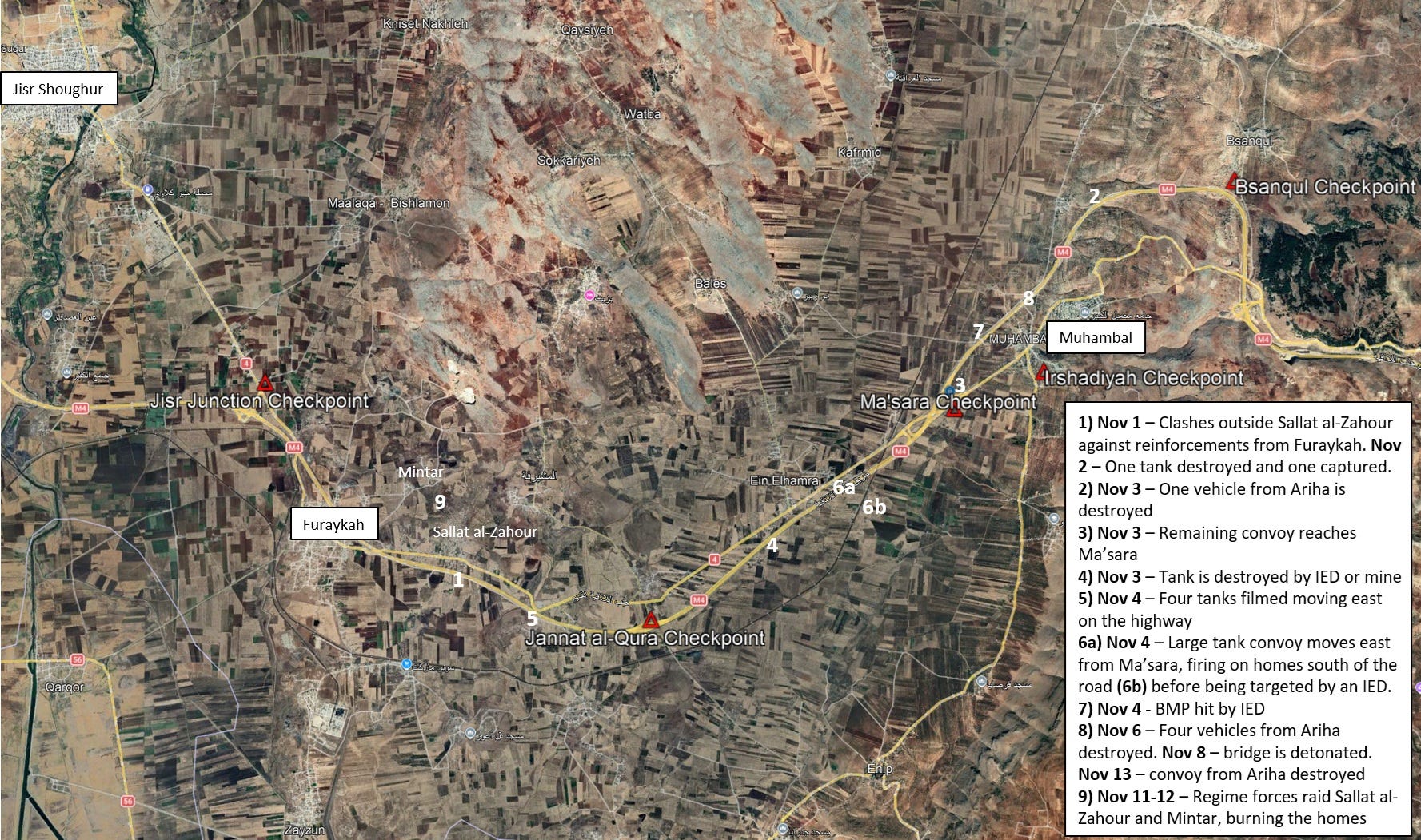
Over the next week, regime forces sent convoys every day to the battle. These were heavily armed reinforcements, each convoy consisting of multiple tanks and BMPs, arriving from both Jisr Shoughur in the west and Ariha in the east. Opposition fighters had expanded the frontline beyond the town itself, where KSM was the main force, and were trying to assault Ma’sara from multiple directions as well as cut the highway and besiege the checkpoint. Suqour al-Sham’s Nour al-Islam Battalion had been conducting IED operations in and around the northern Sahel al-Ghab area for several months already. As the Muhambal battle began, this unit established a position near the village of Sallat al-Zahour, along the international highway, and started ambushing small convoys moving in from Jisr Shoughur.
Opposition fighters attempt to stop a large armor column from entering al-Ma’sara Checkpoint from Ariha on November 3, 2012. Source.
On November 3, regime reinforcements consisting of four tanks, one BMP and several improvised troop carriers pushed towards the town from Ariha. Opposition units stationed along the highway ambushed part of the convoy, destroying one tank, but the remaining forces made it to Ma’sara.
A regime convoy enters the Ma’sara Checkpoint from the highway as opposition fighters strike part of the base, November 3, 2012.
The Suqour al-Sham fighters in the Sallat al-Zahour area likewise continued IED strikes against reinforcements moving from Jisr Shoughur, successfully successfully destroying and capturing several tanks and BMPs over the ensuing days. At the same time, armor columns from inside Ma’sara pushed west along the highway trying to dislodge the opposition forces operating out of the small ubran clusters north and south of the highway.
An armored column moved west from Ma’sara, firing on houses just south of the highway before a massive IED is detonated just in front of the advancing tanks, November 4, 2011.
Fierce clashes continued through November 6, when opposition fighters managed to knock out five vehicles arriving on the edge of the city from Ariha. This ambush seemed to have largely secured the town’s eastern approach under opposition control. On November 9, an engineering battalion rigged the Nahal Bridge on this axis with explosives, heavily damaging the road. With regime advances from Ariha now stunted, fighters repositioned from the highway back into the city, pushing up to the edge of the Ma’sara checkpoint.
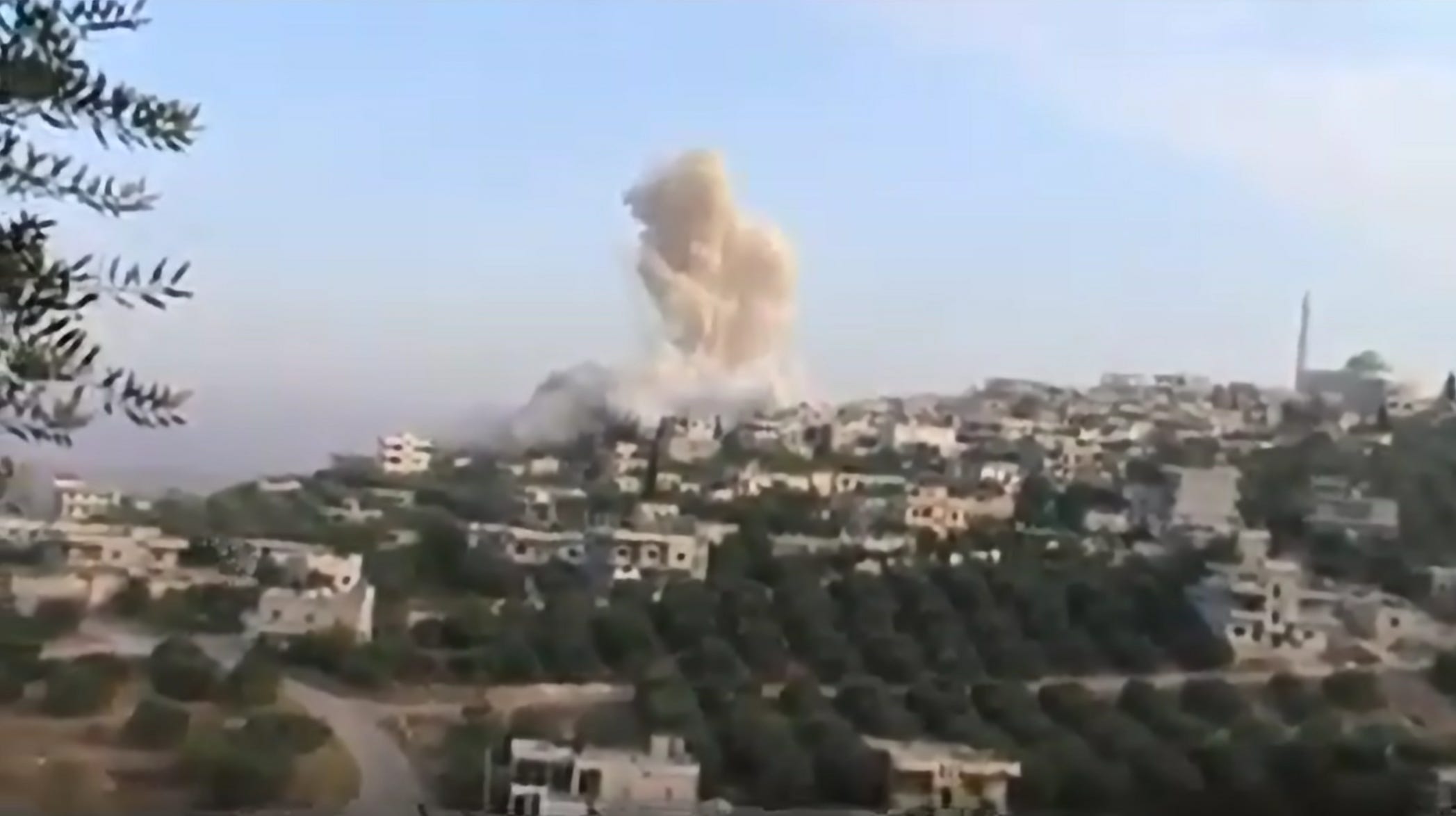
An engineering unit of the FSA’s Liwa al-Qasas lays improvised charges on the Nahal Bridge, nearly cutting the bridge entirely.
However, that same day, new regime reinforcements moved in from Jisr Shoughur, this time storming the villages along the highway where Suqour al-Sham and other factions had staged ambushes. Regime forces set fire to homes Sallat al-Zahour and Mintar as nearly a dozen tanks slowly advanced to Ma’sara. Regime warplanes stepped up their bombing runs too. The eastern axis, coming from Ariha, was under solid opposition control following the bridge bombing. Local forces were able to ambush regime support units as they were forced to slow down and navigate the broken bridge. But the combination of heavy airstrikes and endless columns of tanks coming down the open highway from Jisr Shoughur proved too much for the opposition to overcome.
Regime forces storming Sallat al-Zahour and Mintar villages on November 11, 2012. The villages would remain under assault through the next day.
The ferocity of the fighting eased and the frontline stabilized. Clashes continued through the end of the month, but neither side made any serious progress. At some point, a faction from eastern Idlib called Liwa Dawoud arrived with a car bomb. They intended to detonate the Old Idlib Highway Bridge, an overpass connecting a highway exit between Muhambal and Ariha with Muhambal, further limiting the regime’s ability to advance from the east. However, this road is extremely rugged and steep and was at the time only being used by local fighters and civilians to move out of the town. KSM leaders urged them to instead wait and use the car bomb on a regime convoy. Liwa Dawoud ignored this advice and detonated the bomb underneath the bridge, which remains destroyed to this day.
Many opposition units had withdrawn from the battle by late November. Ammunition shortages, especially among the smaller FSA battalions, was a major factor, but many had also lost hope in the battle and chose to return to their home areas. Seeing their support dwindling, Major Bassem made a final commitment to the town: “I will not leave Muhambal except as a martyr,” Ihsan remembers him saying.
On December 1, 2012, Major Bassem attempted one last assault on al-Ma’sara. He assigned a faction from a nearby town to hold the Qarat area – the same hilltop neighborhood from which they had first assaulted Irshadiyah – while KSM fighters advanced to the edge of Ma’sara. Qarat was a critical point, securing the high ground from regime forces. Yet instead of holding it, some members of the faction looted the abandoned civilian homes and withdrew. Regime forces inside Ma’sara realized Qarat had been abandoned and sent a unit through the edge of the town to take over the position. Heavy fire suddenly hit the KSM fighters from above. Unsure where this fire was coming from, Bassem ordered a retreat. Men moved along the pre-established roads into Jabal Zawiyah – including through the valley directly beneath Qarat. As Major Bassem carried a wounded fighter up the valley, regime soldiers called to him. Thinking they were from the allied battalion, Bassem and the wounded fighter moved towards them. The soldiers opened fire, killing both men.
Aftermath
The battle was over, and Muhambal was fully under regime control. The remaining fighters withdrew via the next valley, unable to recover Major Bassem al-Youssef’s body. He would lay under the olive grove in that valley for three more years. Ihsan had been wounded earlier in the battle and was in Turkey receiving treatment when his brother was killed. It was not until June 6, 2015 that the combined forces of Idlib’s opposition factions finally captured al-Ma’sara and liberated the town. Ihsan and his father immediately searched for Bassem’s body and gave him a proper burial. Their father passed away shortly after from a heart attack.
The Muhambal Martyrs Battalion had dissolved by 2014. Some of its former members blame the Free Syrian Army leadership in Turkey for never truly supporting them or the other local FSA battalions. But the revolutionaries of Muhambal did not disappear. Fighters from the town joined other more powerful groups like the Free Idlib Army, Ahrar al-Sham, and Jabhat al-Nusra. ‘Martyrdom’ commemorations for Muhambal fighters can be easily found through the fall of Assad. Many locals continued to be martyred after the liberation, killed by ex-regime insurgents while serving as General Security personnel in Syria’s coast in March 2025.
Civilians continued to be killed in the months after the first battle, as some people gambled with life in their homes rather than the tent camps along Turkey’s border. Regime forces in Ma’sara shot passerby’s with rifles and tank shells, women and men, and continued to indiscriminately shell the Idlib countryside for three years. One of the officers in charge of the checkpoint was a Sunni from a village close to Muhambal. All but his most immediate family had joined the revolution, and, according to one of his cousins, he seemed to inflict a personal revenge on the villages in the area. Officials today estimate the town of less than 20,000 lost around 600 people during the war.
The battle’s failure highlighted a key shortcoming of the opposition in Idlib during this period. As isolated and weak regime outposts were captured in the countryside, regime forces increasingly strengthened critical hardpoints along the major roads. The chaotic, unorganized “coordination” that worked against the smaller checkpoints stood no chance against heavily defended positions that could be easily supported by columns of armor and frequent airstrikes. This lesson would portend the stagnation of the Idlib frontline seen throughout much of 2013, only reversed when the factions finally united into the first large operations rooms at the end of the year.