

Hama’s Sahel al-Ghab is home to many of Syria’s religious sects, hosting Sunni, Christian, Alawi, and Murshdi villages all closely bordering each other within a fertile farming valley. Each community had naturally developed relationships before 2011, but these ties were largely shattered by the violence of the civil war.
By 2015, the residents of several Sunni villages along what was once the frontline between regime and rebel forces were expelled and their houses razed. Some of the perpetrators had come from bordering Alawi villages where young men had joined regime militias. Displaced residents began to return following the fall of the Assad regime, and with them came a resumption of the inter-communal conflicts started during the war.
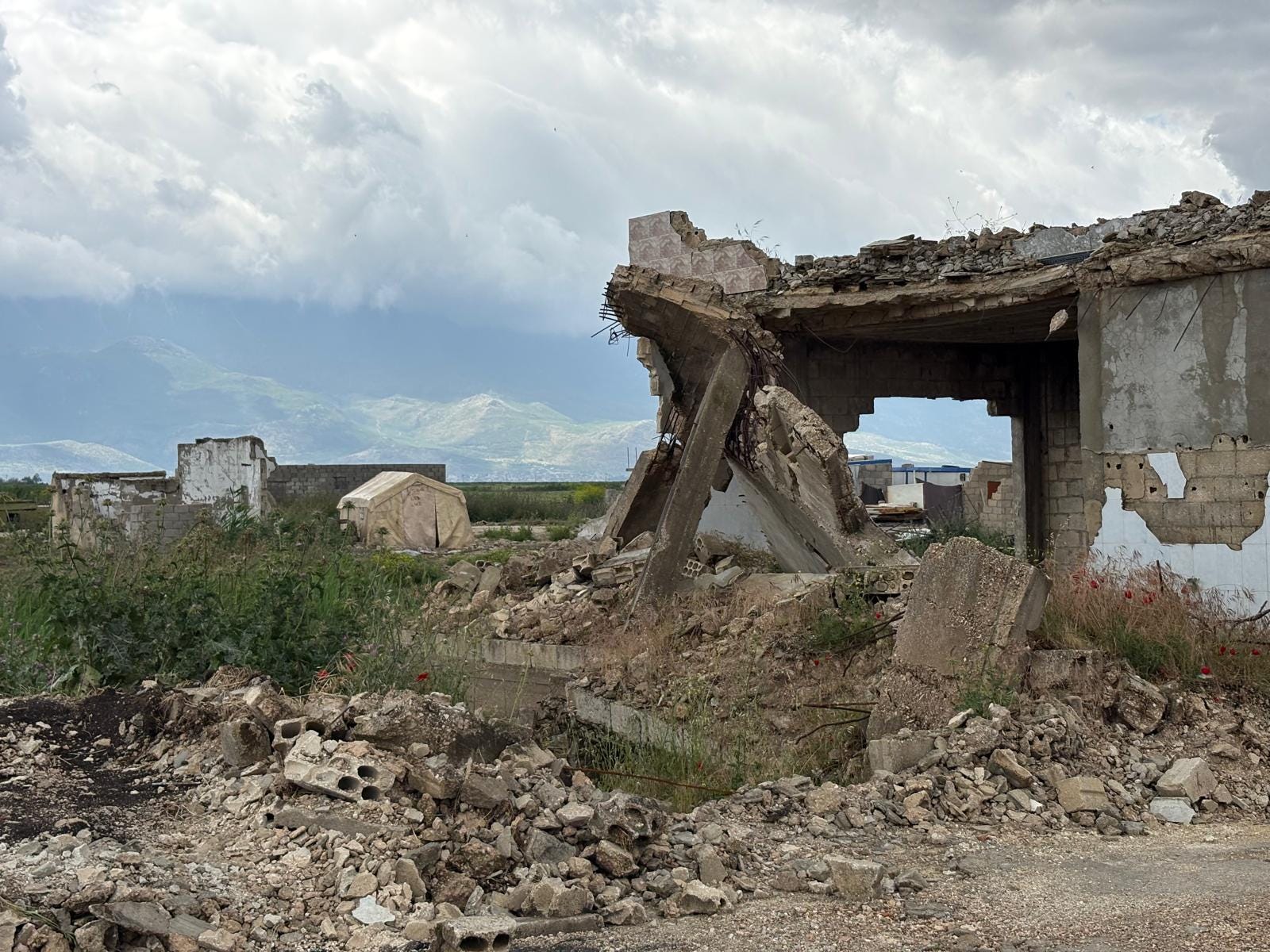
I recently visited one of these destroyed villages, Ramleh, and met with a school teacher who returned from the IDP camps in the north in March 2025. The village today is dotted with shattered homes, small new structures, and tents. Most the roadside is empty and overgrown, hiding the foundations of what once were scores of homes.
Ramleh sits just south of a Murshdi village named Rasif and an Alawi town called Aziziyah. Below is an edited transcript of our meeting, discussing the history of Jamleh and complex inter-sect relations with its two neighboring towns, one Alawi and one Murshdi.