

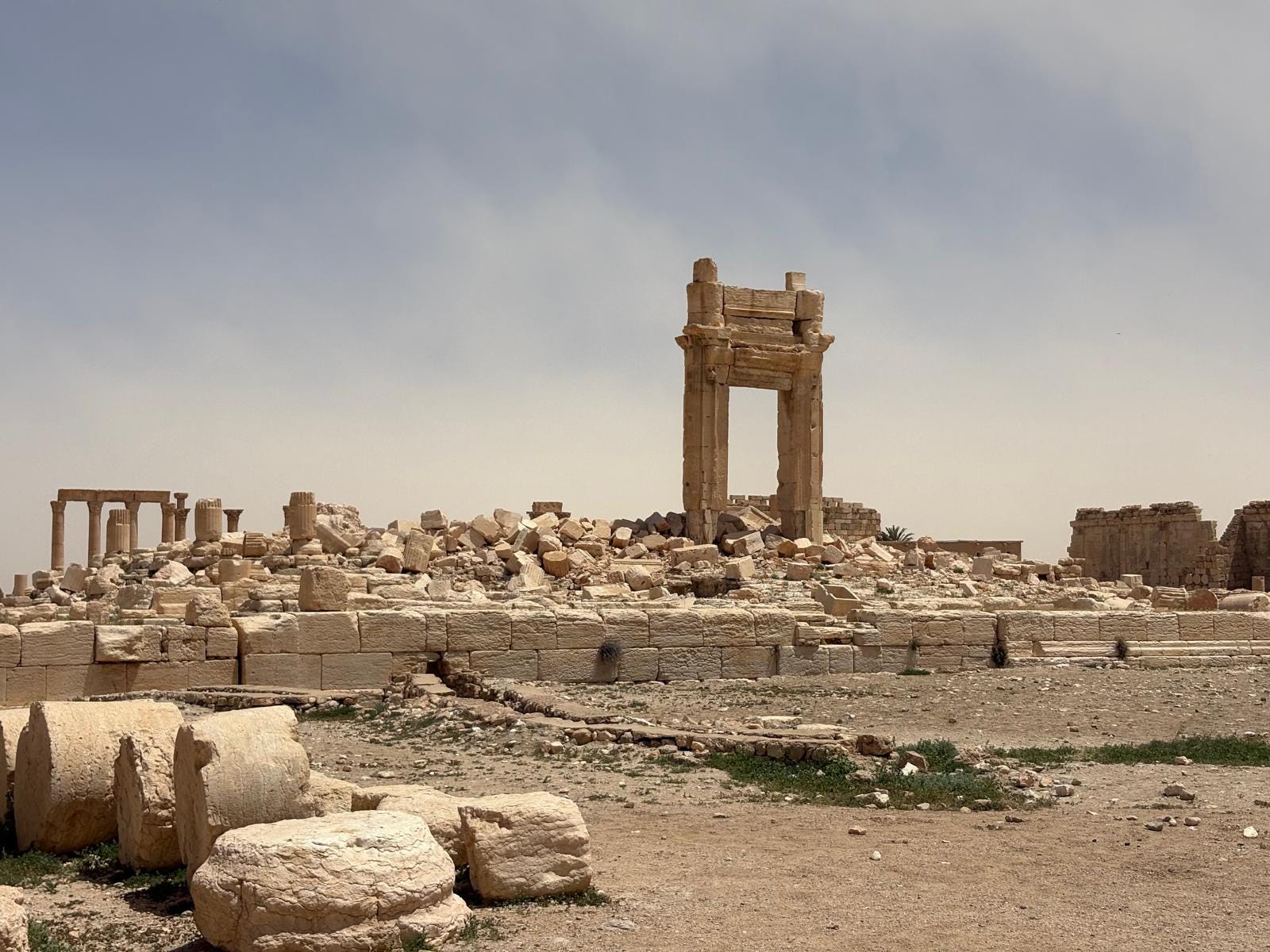
Palmyra stands unique from the rest of Syria. The city is home to the largest ancient site in the Middle East. Massive stone temples, walls and amphitheaters stretch into the desert south of the city, all under the watchful eyes of an ancient mountaintop castle. The land bears the marks of countless civilizations over the past 4,000 years. Today, the city and its desert’s most glaring scars are from their most recent occupiers. But while the Assad regime and its foreign allies have vanished, the people of Palmyra remain and rebuild.
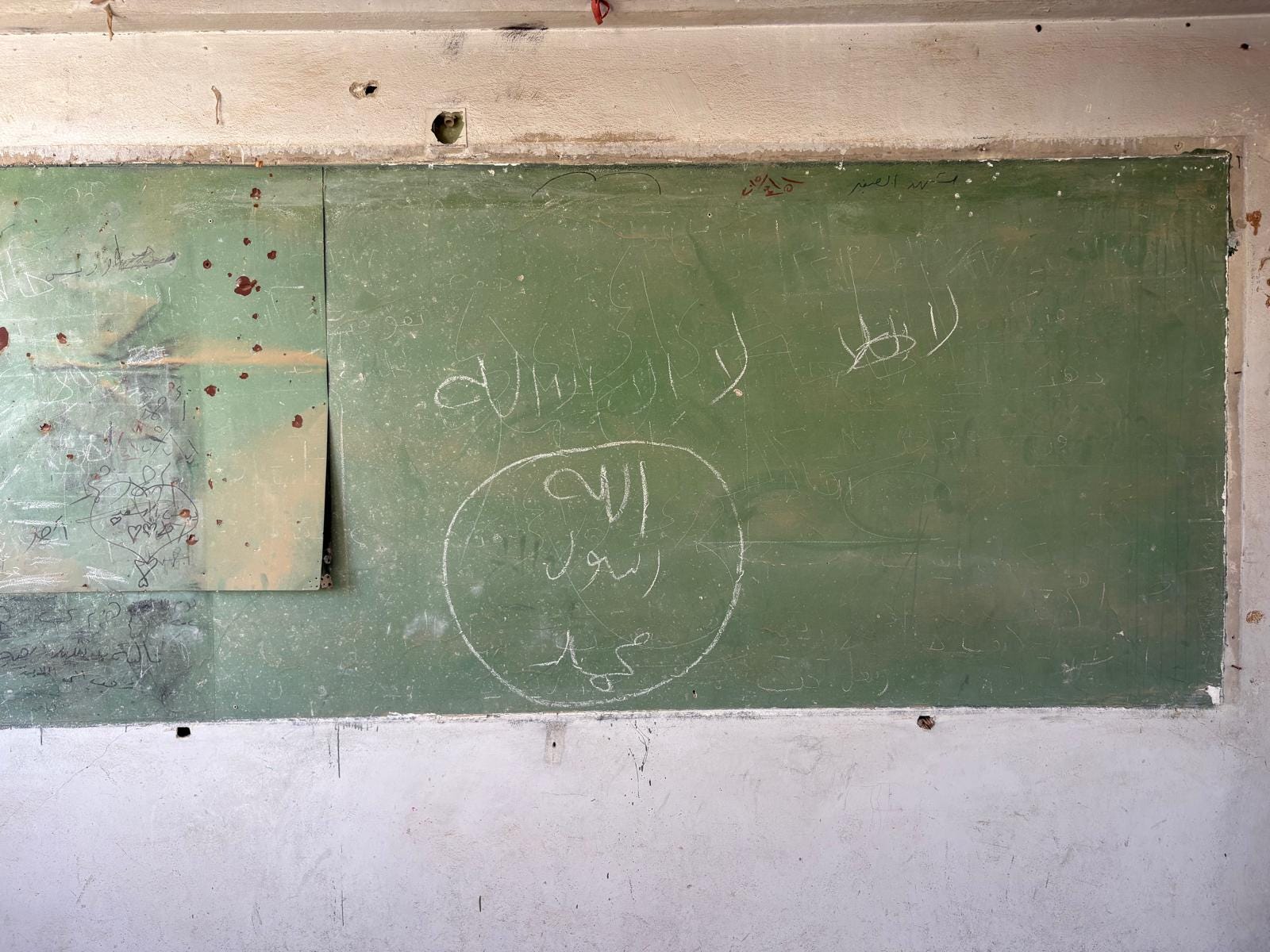
One room in an old government office amid the ancient Temple of Bel is marked, “Snipers Headquarters.” Inside, the walls are adorned with Islamic State slogans and names. In the floor above, there is room labeled with one of Assad’s intelligence forces, “The Counter Terrorism Unit.” It is surrounded by religious verses and slogans of Shia militias from Iraq and Lebanon. To the east, a once impressive hotel complex lays in ruins. Yet barely faded on its walls are large, carefully painted slogans in Farsi honoring the Afghan Fatemiyoun Division. Just north of the ancient ruins, on the edge of Palmyra city, seven piles of twisted concrete and rebar lay clustered together – the remnants of an Israeli airstrike on an Iranian headquarters in the waning days of the Assad regime.
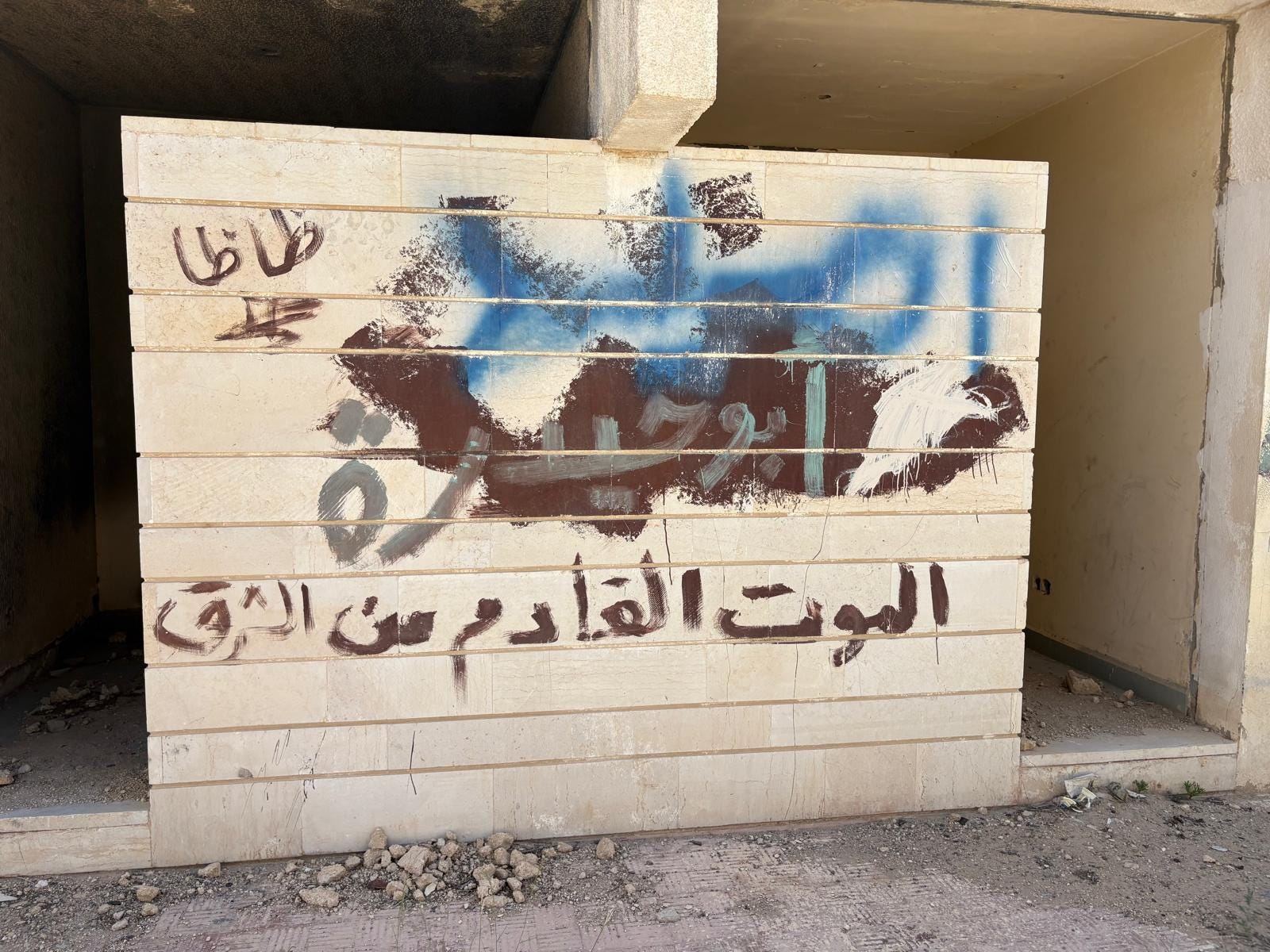
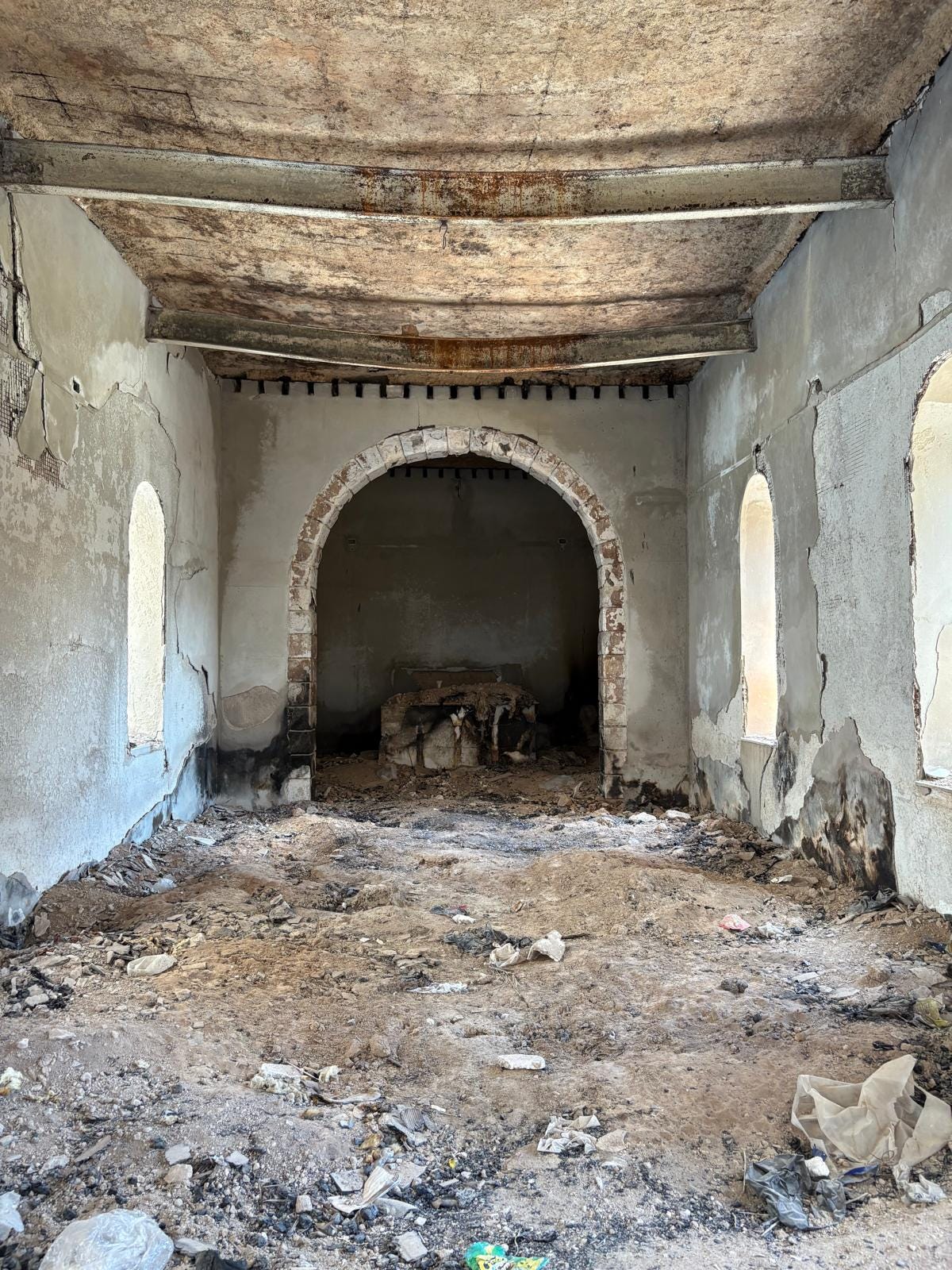
Assad, then ISIS, Iran, Russia, and Shia jihadists from abroad all tried to rule this ancient city. Now they are gone. For years Palmyra was a battered coffin – its residents almost entirely displaced, its homes, schools, mosques, and churches destroyed and looted and what buildings remained turned into military barracks. When the regime fell on December 8, 2024, the people of Palmyra and the surrounding areas began to return. They quickly organized a new local administrative body and started to rebuild their city, even as the new Syrian state was still forming.
Palmyra was, and remains, the administrative and economic center of the Syrian Badia, a vast array of steppes, desert, dry river beds and gaunt mountains lying between Damascus and the Euphrates River. Hundreds of miles of paved and unpaved roads connect the Badia’s distant towns with each other. Nine towns and dozens of formal and informal hamlets fall under the Palmyra District. Urban tradesmen and farmers living alongside nomadic Bedouin tribes. Nearly forgotten amid the mass destruction across all of Syria, it is Palmyra’s people who have begun to rebuild their ancient city.
Returning Basic Services
Reconstructing this vast expanse of interlinked communities after 14 years of war and decades of neglect has fallen on just a small number of under-supported locals. Saher al-Saghir was among the first to return to Palmyra from the refugee camps in northern Syria after the regime fell. He quickly set about organizing a basic local administration; fundraising for and re-establishing basic serves, resolving disputes and supporting families returning to destroyed homes. The community quickly rallied around him and in August 2025 he was officially appointed the Director of the Palmyra District. “Saher will work with anyone who can help the people of Palmyra, he only cares about serving these areas,” one local activist told me.
Yet he and his team face a daunting challenge. “Palmyra city was a military area until the end of the war,” Saher tells me in his office earlier this spring. “The city was completely destroyed and very few residents remained.” Russians, Iranians, Afghans, Iraqis, and Syrian regime forces had all divided control of the remaining buildings, establishing small bases for each of their factions. These forces planted hundreds of thousands of landmines across the city and its countryside, each using their own maps and plans leaving behind no centralized database. Since the liberation, engineers from the new Syrian army, Civil Defense personnel, as well as locals in private initiatives, have removed 50,000 mines from Palmyra District. Thirty army and civil defense engineers have been killed in the process, while more than 100 civilians have died to mines here in just one and a half years.
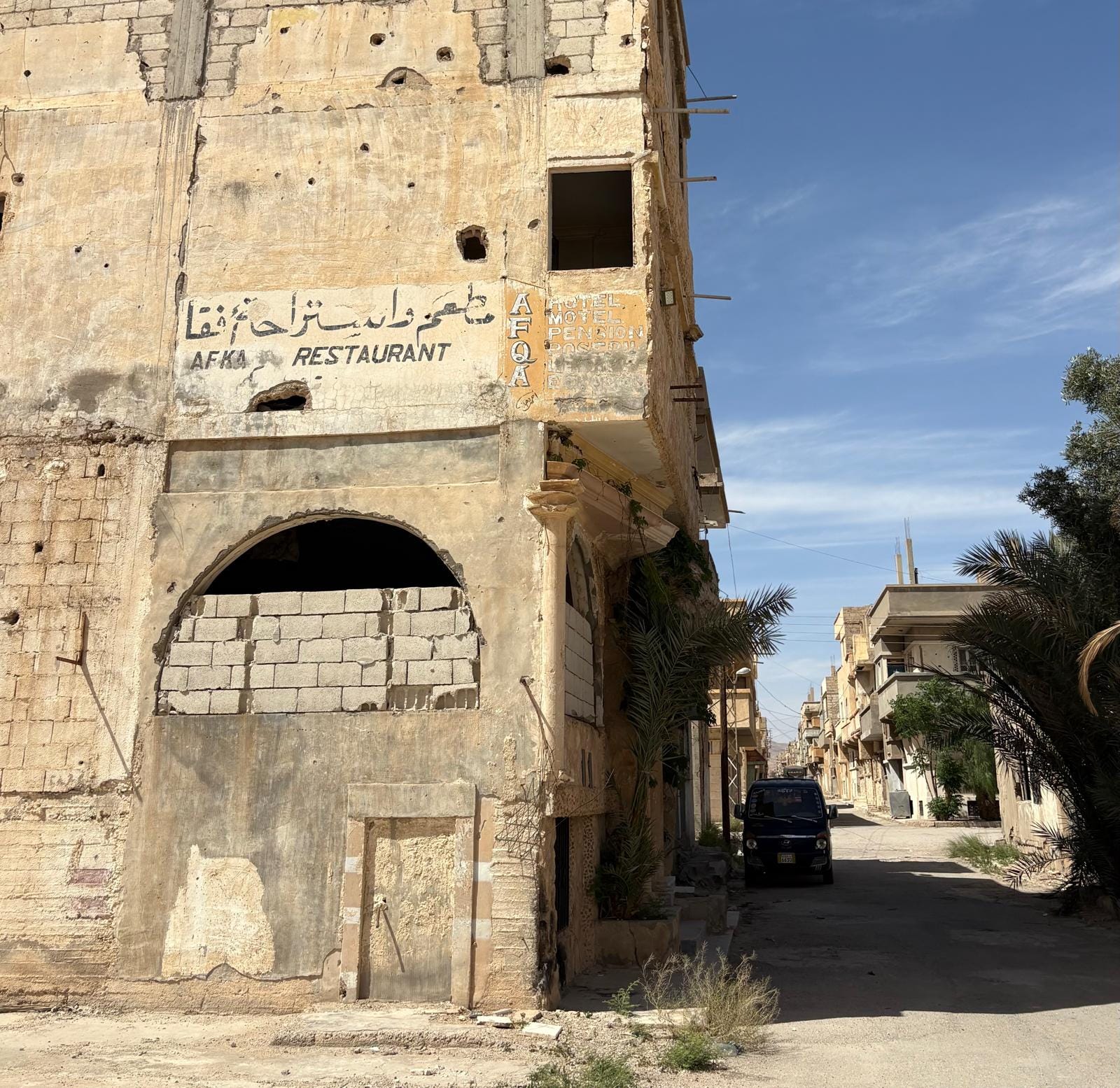
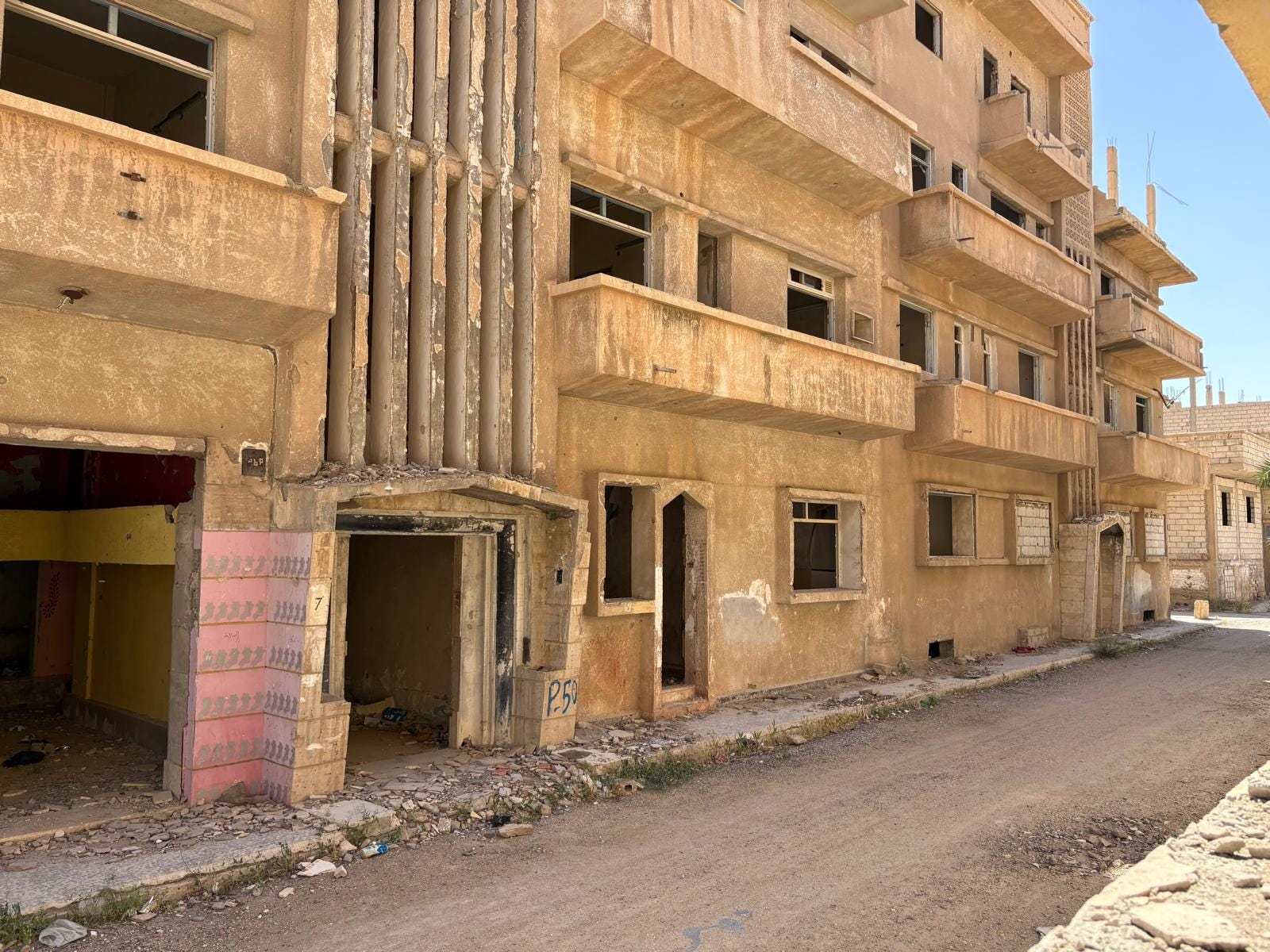
For nearly a decade, Palmyra had been the frontline of the desert war between ISIS and the Syrian regime. The city itself had exchanged hands several times before regime forces took final control in 2017, but the countryside remained contested until the regime fell. As a result, everything in the city had been hit multiple times by air and artillery strikes. Infrastructure is completely destroyed, schools and hospitals lie in ruin, and the large historic oasis outside the city known as al-Waha is heavily burned. Local officials estimate that 20% of the city was fully destroyed by December 2024, the rest of the buildings looted and suffering at least partial damage that required reconstruction before habitation.
These rebuilding efforts have been almost entirely locally led. Around 50,000 people, one third of the city’s population, have returned from the camps in Syria’s north. But leaving the camps meant leaving behind basic services like healthcare, electricity, schools, and water. None of this was available in Palmyra when the regime fell. Saher and his small team of dedicated managers have worked tirelessly to change this.
Basic infrastructure within Palmyra city was gradually restored over 2025, but still remains extremely limited and weak. All medical equipment had been looted by the regime, and while returnees had repaired the hospital and bought new equipment, they face a daunting staffing shortage. Palmyra’s hospital, serving the city and every village in the 30,000 square kilometers of the Palmyra District, has only one doctor and a handful of nurses. Low salaries, an arduous multi-hour journey from Homs city, and lack of housing has prevented other doctors from working in the city. On top of regular medical issues, this doctor and his small staff must deal with mine injuries and severe traffic accidents caused by the heavily damaged roads. Any serious injury requiring specialist care means traveling over two hours to Homs City – even further if they are living in one of the other towns in Palmyra District.
The medical department is not the only understaffed service department in Palmyra. Before the war, the Palmyra District Electrical Department had 80 workers servicing stations across the entire district. Today there are just five. These five engineers are tasked with assessing and rebuilding an almost completely destroyed electrical grid. An estimated two million dollars’ worth of copper cabling was looted from the area during the war, 70% of the electrical pylons were destroyed by fighting, and almost all of the city’s converters needed repair or replacement. Operating on a shoe string budget, the department has had to replace the old copper lines with aluminum cables – much cheaper, but far more susceptible to the desert’s extreme weather. While the old copper cables had a 20-year lifespan, these new aluminum cables will need to be replaced again after just two to three years. Just enough of the city’s grid had been repaired by this summer to cover the returnees’ basic needs, but the district’s other towns, like Sukhnah, are still largely without power.
Palmyra’s schools faired no better under the regime’s occupation. Four of the city’s 60 schools have been repaired, not nearly enough to provide for even the current number of returnees. As a result, classes have been shortened and divided into morning and afternoon shifts, and each class doubled in size. In effect, this has turned four schools into 16, but at the cost of an extreme strain on the teachers and reduced quality of education. Up until this summer, all school rehabilitation efforts have been isolated to Palmyra city. Children from the outlying villages have to walk several kilometers through open desert each day to reach the city, sometimes being attacked by packs of wild dogs and risking death from landmines.
“So many children did not get an education during the war and have fallen behind,” the director of Palmyra’s education department tells me. “And students who came here from Turkey often don’t have good Arabic, so we need to start from the basics.” Palmyra needs specialized teachers to fill the gaps caused by war and displacement, but like with the health sector, it is difficult to hire more staff. In Sukhnah, the second largest town in the district, families have resorted to group home schooling in order to provide at least some basic level of education. But thousands of people live across dozens of other villages and hamlets in Palmyra’s countryside, none of whom currently have access to schools or healthcare.
The broader destruction in the city is also undermining economic recovery efforts. This summer, Palmyra saw its first deployment of Syria’s new Tourism Police to its ancient sites. Yet while tour groups have been arriving here since early 2025, the city has reaped little economic benefit. Most of the hotels, cafes, and restaurants remain destroyed, leaving little infrastructure to support the tens of thousands of tourists who have visited over the past year and a half. Only two out of 40 hotels are currently functional and there are not even any public bathrooms in the city.
Fraught Transitional Justice
More than the physical destruction is the human cost to the past 14 years of war. On the city’s outskirts lies the Tadmur Prison, one of the Assad regime’s most infamous detention centers where political detainees were tortured and executed. In 1980, regime forces executed more than 1,000 political prisoners here in a single day. Hundreds more of the city’s residents were killed in fighting during the revolution or disappeared into the matrix of regime detention facilities.
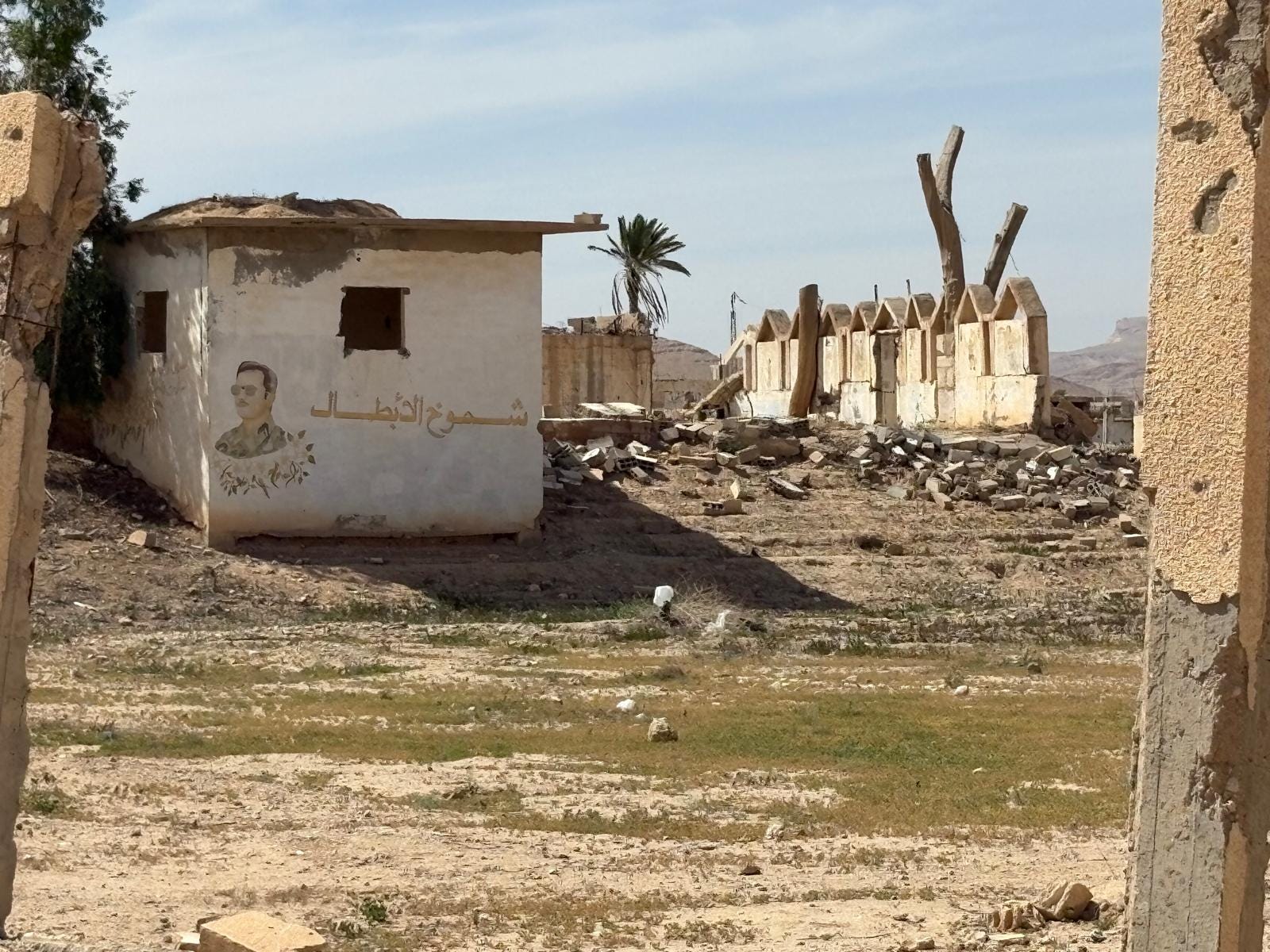
Palmyra was among the earlier cities to hold anti-regime protests and was overwhelming on the side of the revolution. Still, like every Sunni town, the regime had its supporters. Some local men worked as informants while others would in later years join the regime’s National Defense Forces militia. Palmyra would become a hub of tribal-linked NDF fighters operating across the Badia for nearly a decade. Most of their activity was against ISIS, but as with all regime militias, crimes were committed against local residents as well.
Holding these former regime supporters accountable has become a contentious topic in Palmyra and neighboring Sukhnah over the course of the past year. At first, local activists accused the new Syrian government of protecting local businessmen who had funded the NDF. Legal complaints were filed and names published of men still living in the city who had been members of these militias. Yet they remained free. In October 2025, residents began holding weekly protests calling for the “shabiha” to leave. This went on for two months with no response from the government or the ex-regime members.
Then the killings began. Over a two-day period in late December, three former regime militiamen were assassinated in the city. The killings were followed a day later by a public announcement, shared anonymously with several prominent local new pages, stating:
“Our message to every regime thug, the fate of every traitor and every agent: Blood for blood... and killing for killing. Take a lesson from those who were killed in the past two days. In revenge for God and His Messenger and for the blood of innocent Muslims: The agent Suhail Al-Kubba, the agent Rakan Al-Aboura, the agent Mukhtar Al-Saeed.
Our second message: To everyone who cooperates with the regime’s remnants, even with a word, or in buying or selling, or even sitting with them, or anything else: Death is coming for them, and death awaits them, so do not be on their side. The bullets that will be fired will not distinguish between you and them.”
Two months later, tensions erupted again with protestors issuing a demand from the city’s mosques that “remnants of the former regime” had 24 hours to leave the city. The next day armed men fired a rocket at the house of a family linked to regime militias. The protests and attacks triggered a city-wide meeting between the district administration and military and security officials. According to local media, the gathered officials,:
“…stressed the importance of adhering to the state and the rule of law as the primary framework for addressing challenges, listening to the legitimate demands of the residents and working to address them within the legal framework, and upholding revolutionary principles while holding criminals accountable, thereby consolidating stability and preserving public safety.”
According to one local activist working on transitional justice issues, the killings in late December and protests in February resulted in many of the regime-linked families leaving the city. However, as displaced families continue to return to Palmyra, so to do those with former links to the Assad regime. Renewed protests erupted in Palmyra amid the nation-wide anti-shabiha protests in mid-June. This time, two recently returned brothers who had served in regime militias clashed with the protestors. The men were arrested, but the tensions and grievances remain. Local media, highly supportive of the protests, summarized the sentiment: “There is no stability without justice; we will not allow those who plundered Palmyra’s wealth and destroyed the city to escape punishment.”
Securing the Desert
Tasked with managing these complex social tensions is a mix of various security and military forces. There are three power bases in the Palmyra District today: the Military Police, the Badia Internal Security Directorate, and the army. The Military Police are often used to break up fights between families in the city, given that many of the men in these families are currently serving in the local military units.
The Badia Internal Security Directorate is tasked with overseeing all policing and security operations across the entire Badia: its urban areas and desert. This directorate is engaged in regular police work as well as securing the remote Badia roads from criminals and potential ISIS cells. Given the scale of this task, Syria’s new Ministry of Interior has designated the Badia as Syria’s 15th governorate, elevating the Badia Directorate to the same level as other governorate directorates and thus granting it expanded resources and capabilities to coordinate with other security and intelligence institutions.
Yet securing this vast area requires significant manpower and expertise, and the directorate has many resource shortfalls. According to a senior security official, the directorate’s biggest challenges are a lack of personnel and training, as well as weak infrastructure which makes communication and movements across 430 kilometers of roadway difficult.
Within the cities, security efforts are coordinated with the local administration in order to reduce the risk of social conflicts. For example, on Friday evenings, certain parts of Palmyra city are closed off to motorcycles and single men, providing safe places for families and women to gather for social events without the risk of disputes escalating into violent conflicts.
A New Future
The people of Palmyra have reclaimed their city after decades of regime occupation. The infamous Tadmur Prison now stands empty and silent. The local administration works closely with the residents and the security forces now serve the people, rather than terrorize them. Today, Palmyra is attempting to rebuild its physical and social foundations. Yet tensions over the continued presence of ex-regime members remains, fueled by the constant reminder of the regime’s barbarity in the shattered buildings on every street.
In late July, the Badia Security Directorate, local military officers, and the local administration met with community leaders and agreed to form a ten-person “Committee of Notables.” According to Syria In Transition, the committee is tasked with mediating disputes and accusations over collaboration with the Assad regime. A locally-rooted initiative brought under the umbrella of the state and law.
“We have a lot of work to do with only a bare minimum of funds,” Saher tells me this spring after explaining all of the city’s challenges, “we can wait on cleaning, but not education and healthcare.” On August 10, President Sharaa announced $1,000,000 from a larger Kuwaiti grant would be directed to support Palmyra’s hospital. It is an important step forward to helping this remote region which serves as the bridge between Syria’s east and west. But building the foundations for Palmyra’s future requires a fully coordinated effort between the government and international organization, all supporting the people of Palmyra as they rise up once more.