

A wide sweeping coastal plain stretches along the Mediterranean Sea, flanked along the east by increasingly towering mountains working their way to the Turkish border. The northern mountain ranges – Jabal Turkman on the west and Jabal Akrad on the east – are dotted with more than a hundred Sunni villages. The mountains south of here are all Alawi, forming the heart of the Assad clan and its regime’s manpower. Latakia city, which dominates a large extension of the plain, rests in the middle of this divide, having existed as a mixed Sunni-Christian city for hundreds of years and expanded significantly via Alawi migration during the 1900s.
The complex social and geographic divisions of the governorate would come to define Latakia’s experiences throughout the war. The city experienced some of the first protests in March 2011, with tens of thousands of residents taking to the streets to demonstrate against the regime. But the sensitivity of the region and the concentrated pro-regime presence in the governorate resulted in a rapid backlash. The scars of the regime’s suppression here are still fresh, fueling recurrent cycles of inter-communal violence even after Assad’s fall.
Syria’s coast saw some of the regime’s first serious military operations in 2011, beginning with the storming of Bayda village, outside Baniyas, in early April and escalating further with the siege and storming of Latakia’s Raml neighborhood in August. These early events shaped the revolution’s trajectory in the coast. From Raml to Kabineh, there is a direct line connecting the history of revolution and defiance against the regime in the Latakia. The rapid and brutal crackdown on dissidents in the urban heart of Latakia resulted in a concentration of opposition armed movements in the northern mountains of the governorate which would persist until the fall of Assad.
While these mountains would become the heart of Latakia’s armed revolution, their complete story cannot be told without also telling the story of Raml and the defectors who emerged from Latakia city in 2011; men who would go on to become household names like Malik al-Kurdi, the future Deputy Commander of the Free Syrian Army, and Mohamad Hamdou, the future founder of Liwa Ahrar Sahel. I met with Hamdou in Latakia in December 2025 for an extensive interview about the revolution in Raml and the origins of the Free Syrian Army in rural Latakia. I also received access to an extensive unpublished interview conducted by the Syrian Memory Project with Colonel al-Kurdi several years ago in which he discusses these same events. These interviews, combined with archival footage of the battle, provide a unique insight into Latakia’s early revolution and the regime’s assault on Raml.
Protests and Massacres
“On June 10, 2011, a Friday that would forever be etched in my memory as ‘Tribes’ Friday,’ my city of Latakia transformed into a battlefield. Since the first sparks of protests began to appear on the horizon, we had been hearing news of sporadic clashes between the regime forces and civilians, but I had never witnessed any of them directly; I was always far from the center of events.
However, that Friday was different. The intensity of the confrontations escalated unprecedentedly. The protesters went out bare-chested, facing the machinery of oppression with stones, firecrackers, and homemade Molotov cocktails. The regime’s response was brutal, devoid of any consideration for the presence of civilians in the area. Bullets and shells began to rain down from every direction, especially on our neighborhood, as our house was located directly opposite a military barracks. The shelling was indiscriminate, piercing walls and windows without distinction.
I vividly remember the sound of bullets shattering the living room window, and how fear drove us to take shelter in the kitchen, which seemed to us then the safest place in the universe. But even the kitchen walls could not block out the continuous sound of gunfire, which lasted for more than twelve terrifying hours. I felt as if my nerves were tearing apart with every shot, and my whole body trembled hysterically whenever I heard the sound of bullets piercing the walls of our house. It was a never-ending night, a night where we knew no sleep or rest, but remained awake, our bodies stiff and our hearts pounding with indescribable terror, until that auditory nightmare finally stopped.
The following morning, my father decided to get us out of that hell, to flee in search of a safer place. As we walked through the streets, I saw something I never wished to see: men and women washing the streets of blood. In that moment, I grasped the horror of what had happened that night; I knew that innocent lives had been lost. And since that ominous day, the sound of gunfire has triggered a deep fear within me, and I am completely unable to bear seeing any weapon or armed person, even in a picture or a fleeting scene. That night left a scar on my soul that will never be erased.”
- An account of the siege of Raml by a young Palestinian college student, shared with me following Syria’s liberation.
On March 25, 2011, demonstrators from across the city gathered for a march to the Sheikh Daher Square where a statue of Hafez al-Assad stood. Lieutenant Colonel Muhammad Hamdou remembers these first days well. He had been forced to retire from the army in 2008 after he and nine other officers were detained and investigated for anti-regime sentiments. For three years he had lived in his home in the Southern Raml neighborhood. As soon as the protests in Dara’a began in 2011, he started organizing his community in Latakia. “We all agreed we would pray at Khaled Ibn Walid Mosque that Friday then go out to the city center at Sheikh Daher where there is a statue of Hafez Assad,” he tells me during a meeting in now-liberated Latakia, “We wanted to destroy the statue, but as we arrived the regime started to shoot at us, and this was when the first martyr fell.” Two protestors were shot to death by Air Force Intelligence members hiding in a nearby school and police station that day, according to both Hamdou and al-Kurdi and shown in videos published by protestors at the time.
Protestors begin chanting anti-Assad slogans at the Khaled Ibn Walid Mosque, March 25, 2011.
Heavy gunfire erupts when protestors reach the Sheikh Daher Square
The next day, the first convoy of Alawi shabiha from Qardaha was mobilized. Colonel Malik al-Kurdi, still serving in the regime’s Navy at the time, was driving to his home in Haffah that afternoon. “I turned right to head towards the Haffah road, and there was a convoy of cars,” he recalls in his 2021 interview with the Syrian Memory Project, “some people were carrying sticks, others were brandishing weapons, and some had machine guns. I slowed down to observe the convoy, and by the time I reached the bridge, more than 60 cars had passed in front of me.” Latakia’s governor, Riad al-Hijab, a Sunni from Deir Ez Zor, was able to stop the convoy at the edge of the city while the Syrian Navy mobilized forces to establish checkpoints at the city’s entrances. It was too early in the revolution to allow what would have been a massive massacre of Sunnis.
Yet later that evening the Agriculture Director of Latakia, Hussam Badour, gathered and armed around 50 members of his office to attack Sunni shops in the al-Qaala Project area. According to Colonel al-Kurdi, Badour would gain power from here, establishing himself as a central militia figure in Latakia and turning his Agriculture office into a detention and torture center for Sunni residents. Far from individual acts, these Alawi militias were directly organized and controlled by regime intelligence and Baath officials. It was part of a broader system of violence and oppression directed from the very top of the Assad regime since the emergence of the very first protests, as documented by the Commission for International Justice and Accountability.
From this moment the protesters in Latakia faced increasing violence. Three weeks later, on April 17, huge crowds gathered again for peaceful demonstrations across the city. That evening the army and intelligence forces moved in and opened fire on the remaining demonstrators in the Al-Olabi Square. “When we arrived, I saw the snipers on the roofs, but despite warning the people everyone insisted on protesting,” says Hamdou, “Thirty-two people were killed that day by the snipers.” The next day, regime forces fired surrounded and fired on a peaceful sit-in at Homs’ Clock Square. killing at least 30 demonstrators.
The Olabi Square massacre marked the end of the ‘leniency’ the regime had shown Latakia’s protestors. Checkpoints were spread across the city to monitor and prevent movement and gatherings, forcing activists into an increasingly isolated area. “We chose Southern Raml as a protest place as it was easier to keep the regime out of the neighborhood due to its geography,” explains Hamdou. Raml was among the poorest areas of Latakia. Originally formed as a refugee camp for Palestinians, it had expanded with the migration of poor rural Sunnis from Haffeh and parts of Idlib governorate like Jisr Shoughur. These social connections to the mountainous north would prove crucial in a few months time.
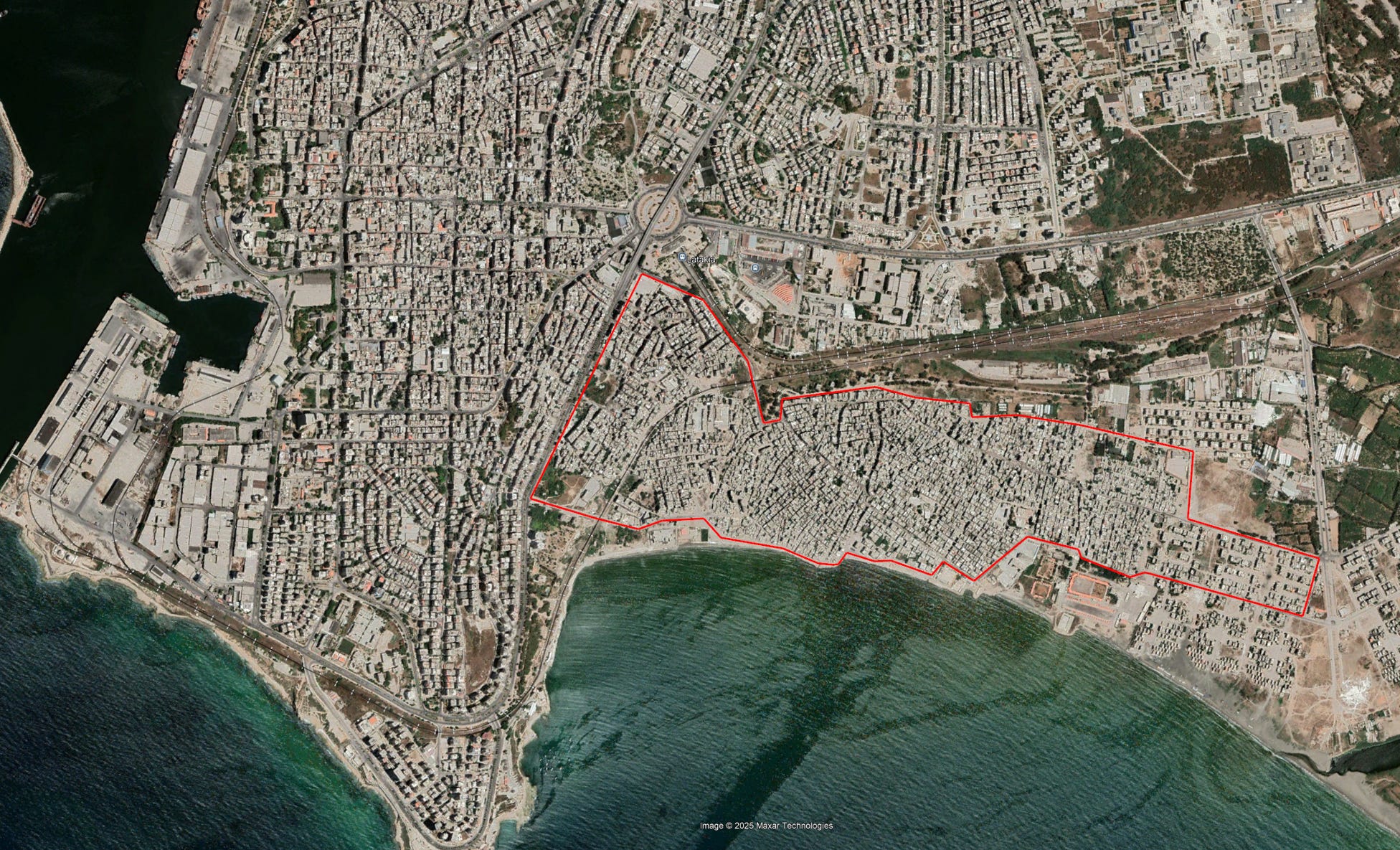
On June 4, 2011, protestors and armed locals in Jisr Shoughur rose up, besieging and capturing the two Military Intelligence offices in the city and killing more than 100 intelligence members. The regime responded swiftly, sending columns of tanks and special forces units into Idlib. Many residents from Jisr fled, arriving in Latakia city and making their way to Southern Raml. The demography and poverty of the neighborhood and the arrival of newly displaced Sunnis fueled the intensity of the protests here, even as other parts of the city went underground out of fear.
The Siege of Raml
Throughout this period and the next year, Hamdou would receive intelligence from a Sunni officer from Homs serving in the Latakia Military Intelligence Branch, Adnan Nahili. “At this point, Adnan told me that the regime had given instructions to the mukhabarat that 50 protestors were allowed to be killed a day,” Hamdou tells me, “With this we knew we had to be even more careful with our protests.”
That summer, the regime established seven checkpoints covering each entrance into Southern Raml and tried repeatedly to break into the neighborhood to disrupt the protestors. Both Hamdou and al-Kurdi remember the regime spreading rumors as early as that spring that, “the Alawis would be coming down from the mountains to kill the Sunnis in Raml, and that the Sunnis in Raml were going to the mountains to kill the Alawis.” Initially, the governor of Latakia, Riad Hijab, was able to deescalate the situation, standing between the two communities and preventing serious bouts of inter-communal violence. Yet he was replaced in mid-April, and from there the situation continued to deteriorate.
A driver films one of the checkpoints at the entrance to Raml neighborhood shortly before the regime’s attack. Originally posted on August 13, 2011 by the now-removed Latakia Coordination Youtube channel.
Around mid-June 2011 the regime began trying to undermine the protests by sending some military rifles into the neighborhood through its agents. “Again, I warned everyone not to fall for the regime’s tricks and not to use these weapons to attack regime forces,” says Hamdou. “At the same time, one of my friends put me on contact with Hussein Harmoush through skype and we formed the Free Officers Movement. It was just five of us at this time, but then Harmoush started to invite other officers to defect, and bit by bit it grew.” Colonel Riad al-Assad formed the Free Syrian Army shortly afterwards, with both groups encouraging the defection of military officers amid the surge in violence from the regime. Yet both of these groups were small and concentrated in Idlib, far from Raml. “Still,” says Hamdou, “these movements had no effect on us.”
Throughout the late summer, Latakia’s protestors shifted to a new type of “rapid protest,” going out in small groups of 50 or 60 people before returning home. These were common in the Sleibah, Bustan Qasr, and Qarmines neighborhoods. Nonetheless, the heart of the protest movement and the regime’s violence remained concentrated in Raml.
The regime’s noose continued to tighten. By early August the revolutionaries in Raml learned that the regime had gathered its forces in the Tala’a Camp, along the coast on the southeast edge of Raml, and were preparing to storm the neighborhood. These forces included tanks and BMPs and two naval ships which had arrived in the bay. The revolutionaries in Raml were armed with less than 200 rifles, mostly hunting rifles and shotguns, and had only two medium machines guns and two RPGs to defend themselves.
Regime armored vehicles gathering to advance into Raml, August 13, 2011. Originally posted by the now-removed Latakia Coordination Youtube channel.
Hamdou described those final tense weeks:
“In August, we would hold protests every day. My members, the men who carried hunting rifles, formed checkpoints across the neighborhood’s entrances to try and monitor who was entering and leaving. The regime’s forces were stationed along the southern corniche and along the railroad tracks [forming the neighborhood’s northern border] which gave them a good view of the neighborhood. They also had snipers deployed around the camp, and every day two or three people would be shot, whether protestors or our armed men. We had no hospitals or medical points in the neighborhood which made treating the wounded very difficult and increased the fatalities a lot.”
The Battle for Raml
It was clear the regime would storm the neighborhood soon. More forces had gathered around Raml and sympathetic officers, like al-Kurdi and Nahili, were keeping the residents updated with the latest plans. Colonel al-Kurdi had first-hand knowledge of the operation’s planning thanks to his position in the Navy:
“Brigadier General Fouad Reda was tasked with reconnaissance and planning for the assault operation,” al-Kurdi says in his 2021 interview, “Brigadier General Malik Deeb assisted him in this planning, and I was present. Brigadier General Malik invited me to his office for some reason, I think for breakfast. Brigadier General Fouad arrived and placed the plans in front of me. He had drawn the entire Raml neighborhood on a map and colored it. There was a color indicating those loyal to the regime, another indicating those who were neutral, and a third indicating those who supported the revolution. It was then that I realized the time was drawing near.”
“Adnan Nahili informed us the regime was preparing to storm the neighborhood,” Hamdou tells me, “So we, the senior men of Raml, decided we would fight back.” The neighborhood was famous for its small fishing explosives made from nitrogen fertilizers. Revolutionaries had begun turning these into IEDs and bombs to use against the regime. Malik al-Kurdi, his brother, and a Navy 1st Lieutenant named Abdullah Idris had also been using their vehicles to smuggle additional explosives into the neighborhood to help prepare its defenses.
On August 11, 2011, the heads of the Latakia intelligence and Baath Party branches arrived at the naval headquarters; the operation was only a few days away. Al-Kurdi immediately contacted Lieutenant Abdullah, who had family in the neighborhood, and told him to inform the men of Raml that the camp would be stormed that weekend. He also advised the fighters to move all of their mines to new positions along the camp entrances. “Some of the people who lived there, including some navy assistants, were leaking information,” says al-Kurdi, “They were all tasked with relaying information to the regime, and they assigned people to monitor everything. So, when the young men planted a mine, they would see them, and they would immediately cut the wires at night.”
On August 14, 2011, the regime began storming the Southern Raml neighborhood. Special forces and naval units entered by land, infantry following behind tanks and BMPs, while Navy warships shelled the area from the sea. Most of the mines’ wires had indeed been cut by internal saboteurs, the fighters unable to move them the day prior. The neighborhood was defended by around 300 fighters, according to Hamdou, but they were still loosely organized by the time of the attack and operating mostly as independent cells.
Video filmed from outside the neighborhood showing the intensity of clashes. Originally posted on August 14, 2011 by the now-removed Latakia Coordination Youtube channel.
Infantry and armor firing on Raml from the southern edge of the neighborhood. Originally posted on August 14, 2011 by the now-removed Latakia Coordination Youtube channel.
The battle lasted only one day. “We were able to destroy one BMP and killed and wounded some soldiers, but 30 revolutionaries were also killed,” recalls Hamdou, “We then attacked part of the front, the Ain al-Tamrah checkpoint, destroyed it with explosives and were able to break through and escape.” From here, most of the fighters and the wanted activists fled into Latakia city, moving through their own personal networks to avoid regime capture.
A convoy of regime soldiers withdrawing from Raml Neighborhood, being cheered on by some residents as they pass through the Alawi Az-Ziraa’ Neighborhood. Originally posted on August 16, 2011 by the now-removed Latakia Coordination Youtube channel.
With the battle over, the regime began a widespread detention campaign across the neighborhood, searching and destroying homes in multi-day operation. According to international reporting at the time, at least 36 people were killed by regime forces and hundreds detained. Al-Kurdi and a few other pro-revolution officers used their military vehicle to transport some families out of the neighborhood and remove a weapons cache from someone’s home. But the regime mukhabarat were detaining anyone they found suspicious. The Raml Police Station was turned into a detention and torture center as the mukhabarat attempted to uncover the remaining opposition networks.
Regime security forces, including armed civilians, patrolling the Sleibeh Neighborhood following residents’ attempted demonstrations in support of Raml. Originally posted on August 14, 2011 by the now-removed Latakia Coordination Youtube channel.
Hamdou found himself moving between relatives houses for the next 20 hours, searching for a way out of the city:
“From the Ain al-Tarmeh checkpoint I went to my brother’s house close to the southern corniche train station. I was already wanted by the regime, so I hid at my brother’s house for 17 hours, then moved to Sheikh Daher where my sister had a house. From her house I moved to my uncle’s house, who was one of the respected elders of the city. He told me I was too wanted to remain in the city. My uncle gave me sunglasses and a formal suit to change my appearance and an ID he had borrowed from one of the men in his shop who looked like me. Then he drove me out of the city. To reach Jabal Akrad we had to pass three checkpoints, but they each knew him personally and he was waved through. My uncle left me in a house in Jabal Akrad and returned home.”
Ten days later, Lieutenant Abdullah was arrested by the mukhabarat. Forty-eight hours after that, on August 26, al-Kurdi and another close colleague, an assistant named Othman, got in the vehicle of one of the weapons smugglers who had helped supply Raml Neighborhood and drove to Turkey. Colonel al-Kurdi had spent the past five months attempting to organizing a coup within the Naval Forces alongside a small group of Sunni officers. Abdullah’s arrest not put an end to those plans, and al-Kurdi was forced to officially defect from the regime. Abdullah Idris remains missing to this day.
Regrouping Along the Border
The revolutionaries of Southern Raml had dispersed across the governorate. “Some of the fighters from Raml went to Turkey,” Hamdou says from the café in Latakia, “but I went to Jabal Akrad and Khirbet Jawz.” Hamdou was the only man from Raml there at first, but the area was an attractive place for hiding. Khirbet Jawz sits between the Turkish border and the Latakia-Idlib highway. It is a remote, mountainous area dotted with small Sunni villages and rough roads. “I did know that some men from Raml who had defected were hiding in Jabal Akrad, but I had no contact with them yet,” says Hamdou. Like Colonel al-Kurdi, most of Raml’s fighters had gone to Turkey.
While Hamdou had been living in Raml, his family was from the village of Hanboushiyah, adjacent to Khirbet Jawz. When he arrived, his cousins introduced him to a small group of 16 men already carrying weapons. “They knew my background and welcomed me to join and appointed me as their commander. We then chose an area along the border to base ourselves.” From here, Hamdou contacted Riad al-Assad, who had been building his Free Syrian Army network for two months, and after providing his background began to receive small amounts of money from al-Assad to buy ammunition and weapons.
It was a slow process of rebuilding. “From the time of leaving Raml and connecting with the men in Hanboushiyah and planning the first operations, everything took 4 months, so we didn’t start fighting until December 2011,” Hamdou explains, “Sometimes buying one rifle took 15 days. We were buying these from corrupt regime members and weapons smugglers which were growing at the time. Many regime officers would steal things from the bases and sell them illegally, like rifles and ammo. Each Kalashnikov back then was $1000. This period of time was so difficult because we started from scratch, no guns or ammunition or food. We were hunting birds for food.”
During these four months of rebuilding, Hamdou’s small group made a base close to the Turkish border, including digging some trenches and fortifications. They chose a nearby regime checkpoint close to a chicken farm as their first target. In December they began their attack. The checkpoint had a tank which quickly engaged the fighters. Hamdou described the skirmish:
“The tank fired at us but missed and hit the Turkish side of the border. The Turkish army then moved units to the border, essentially protecting our backs. The tank moved further and got stuck in the winter mud. A regime truck winch came and got stuck, too. At this point the soldiers abandoned the whole checkpoint.”
Liberating the checkpoint further secured the group’s new base. But winter was setting in and the snow became too deep to do any further operations. Hamdou and his small group used the enforced pause to go to Turkey and visit the camps where the men from Raml had arrived. They then moved to the defected officers camp, where Riad al-Assad and Malik al-Kurdi were organizing the FSA. “I told Riad, ‘I am going back to Jabal Akrad to fight and I want you to support me.’”
Two months later, Muhammad Hamdou would return to northern Latakia where he would mobilize dozens of villages into the first united armed faction in Jabal Akrad.
Author’s Note: A recent discussion on Facebook about the battle of Southern Raml has provided some additional details about the final day. According to user Shadi Morad:
“On the final day of the Battle of Al-Raml, the Ain Al-Tamra checkpoint was struck with dynamite. A group of fighters from the Al-Saidawi area—specifically the Tarboush family (Issam and Wissam)—were firing at a secondary checkpoint to cover the withdrawal of their comrades from below.
On the day of the withdrawal from Al-Raml, the fighters split up: one group exited via the *Harsha* (wooded area) near the Governor’s building, while the other left through Ain Al-Tamra at the moment the checkpoint was hit.
Subsequently, some retreated to the Tabiyat area and took shelter in buildings opposite Al-Rahman Mosque—where local residents provided invaluable support—while others moved to safe locations until a secure route could be established for their withdrawal to territory near Al-Haffah.
In the aftermath, the identities of Issam Tarboush and Qusay Tarboush were revealed; they were part of the Al-Saidawi group that had engaged the regime forces to secure the safe exit of their comrades. Shortly thereafter, they were arrested by the defunct regime.
There are many interesting comments on the post worth reading, each providing different first or second hand perspectives of the battle.