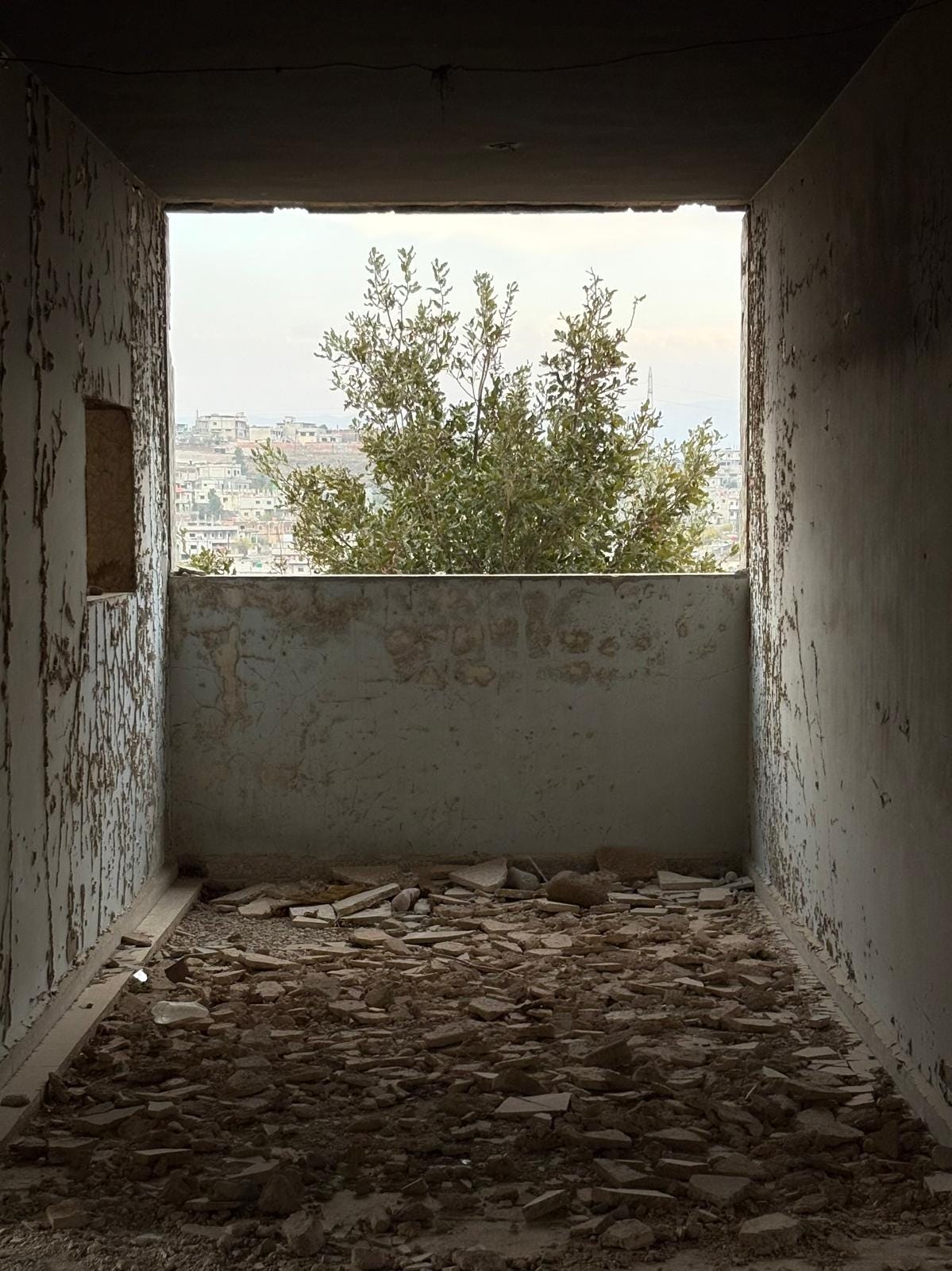
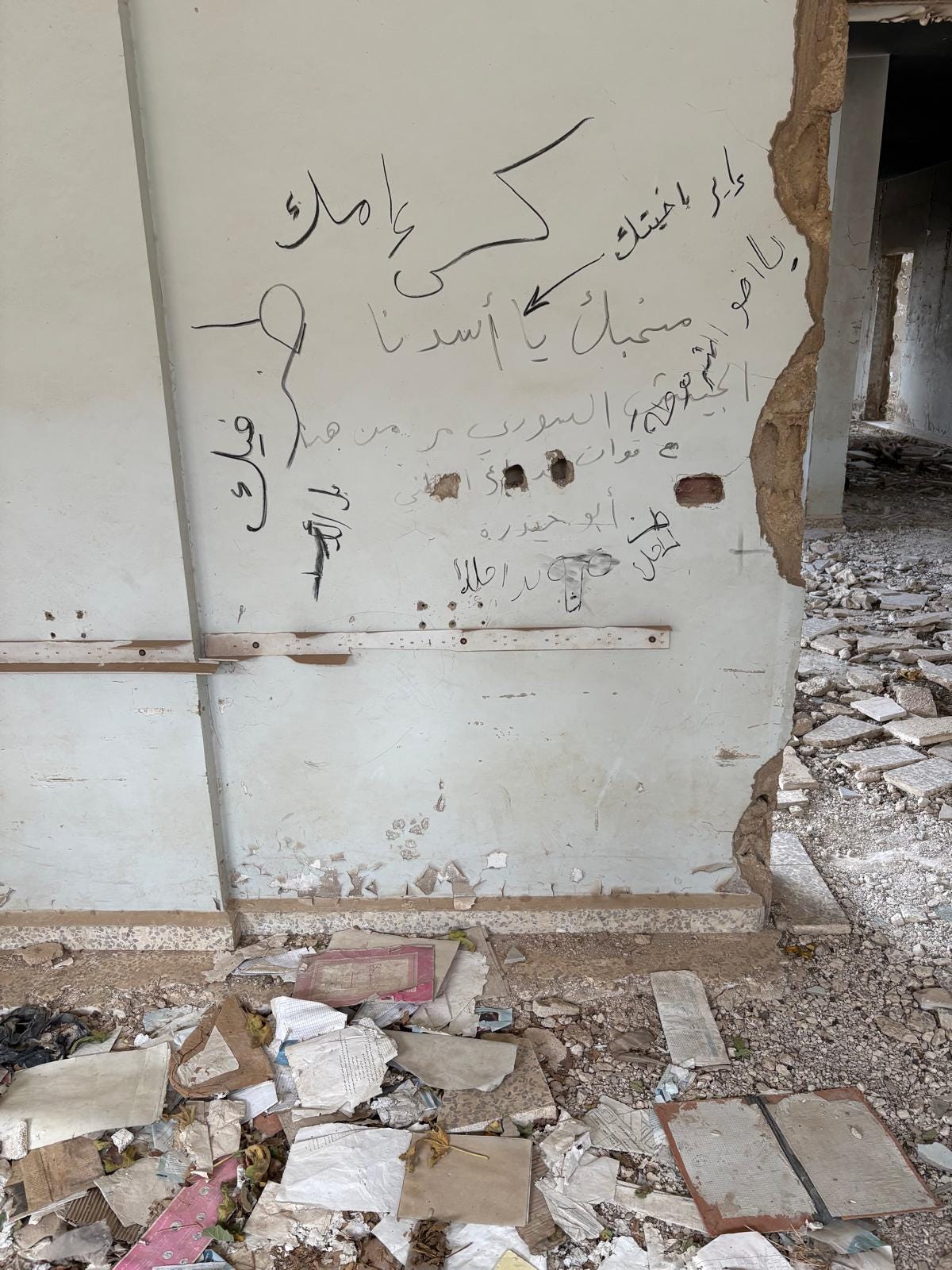
When Hamad finally returned to Zara, he found a town long dead. Every home had been looted down to its wiring, nearly every roof had been dismantled, only stumps remained where the acres of olive trees once grew. Even the school did not survive the war; what could not be taken was destroyed, the floors a mess of broken tile. In one classroom a wall remained adorned with the proud signatures of the occupiers: “The Syrian Army was here” and “The National Defense Forces.”
It was the first time Hamad had stepped foot in his hometown in ten years. He had lived in the nearby city of Talkalakh during that decade of displacement, a city which itself had seen mass displacement and looting of Sunni homes earlier in the war. Yet while he lived only a few minutes’ drive from his true home, he didn’t dare cross the regime checkpoint at the edge of the city. Any man found with “Zara” written on his I.D. was more often than not disappeared into the regime’s prison network.
It was only with Syria’s liberation on December 8, 2024, that Hamad and thousands of other residents of Zara were able to return home. Most came from Lebanon and Turkey, others from the sprawling refugee camps in northern Syria. A remote and isolated Sunni town, overshadowed by the events in neighboring Hosn and Talkalakh, Zara’s story has long been lost amid a decade and a half of atrocities across the country. Yet its history of protest, siege, and suffering, all inexorably underpinned by sectarian divisions, have shaped its post-war experiences. The story of Zara illustrates the common challenges of return and reconciliation felt in hundreds of towns in which wartime grievances fester and reconstruction is a slow, painful process. Economic and social ties between Zara and the surrounding area have helped to maintain a semblance of peace, but a lack of serious economic and social support has undermined the town’s ability to recover.
A Town Under Siege
The fields outside Zara are still littered with the shrapnel of shells and bombs. From 2012 until 2014 Zara remained besieged, cut off from the rest of the country. Hamad and his brother, Omar, walk me through the now half buried trenches which once marked the frontlines. “I found my friend’s body here one morning,” Omar tells me, pointing to a small outcropping of trench. “I had left him the night before while he was on ribat, in the morning I found him dead from a sniper.” He looks up over the bush-covered berm. Stretching out before us are the low hills and fields of the Alawi villages which surround Zara on two sides.
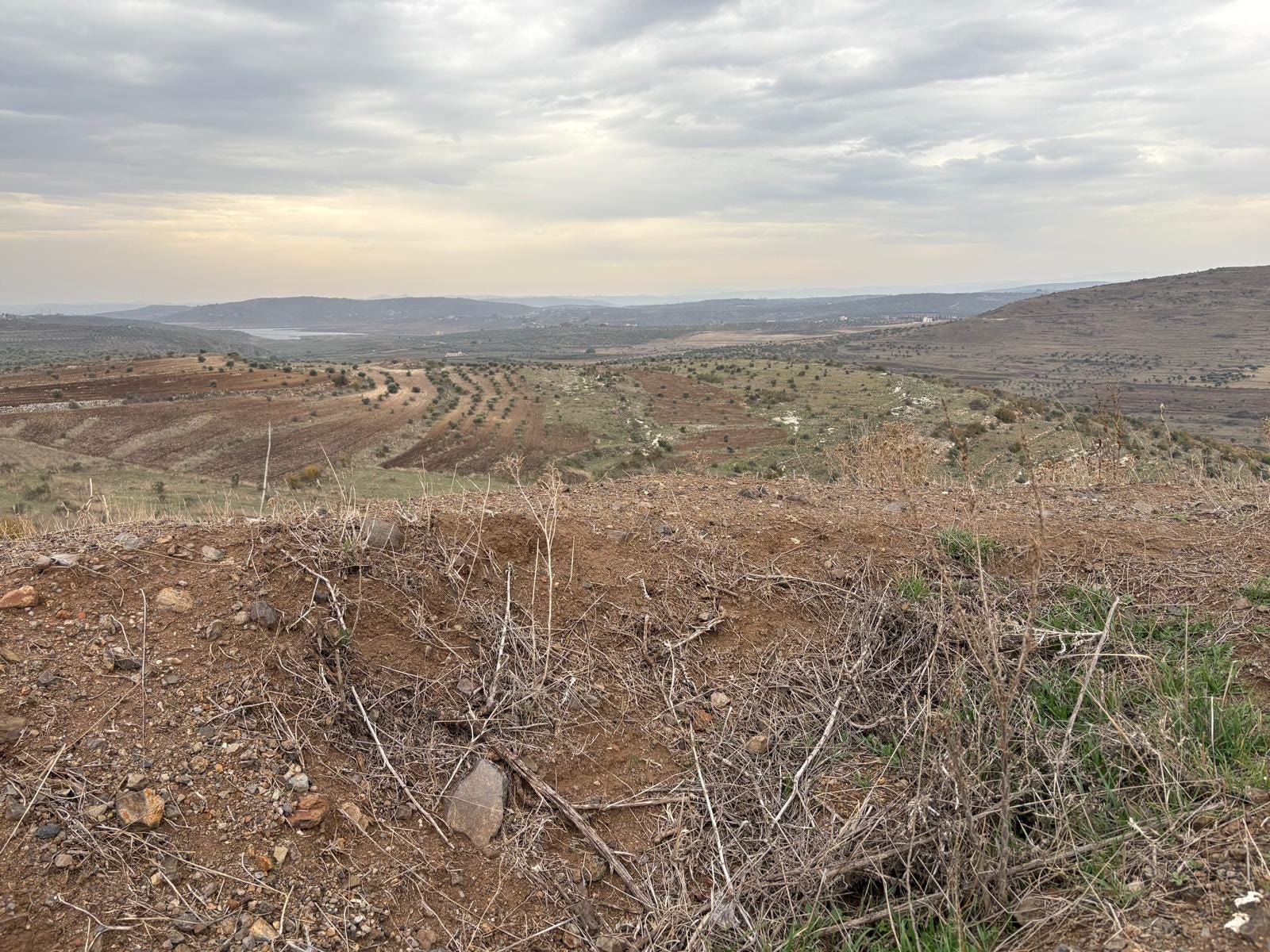
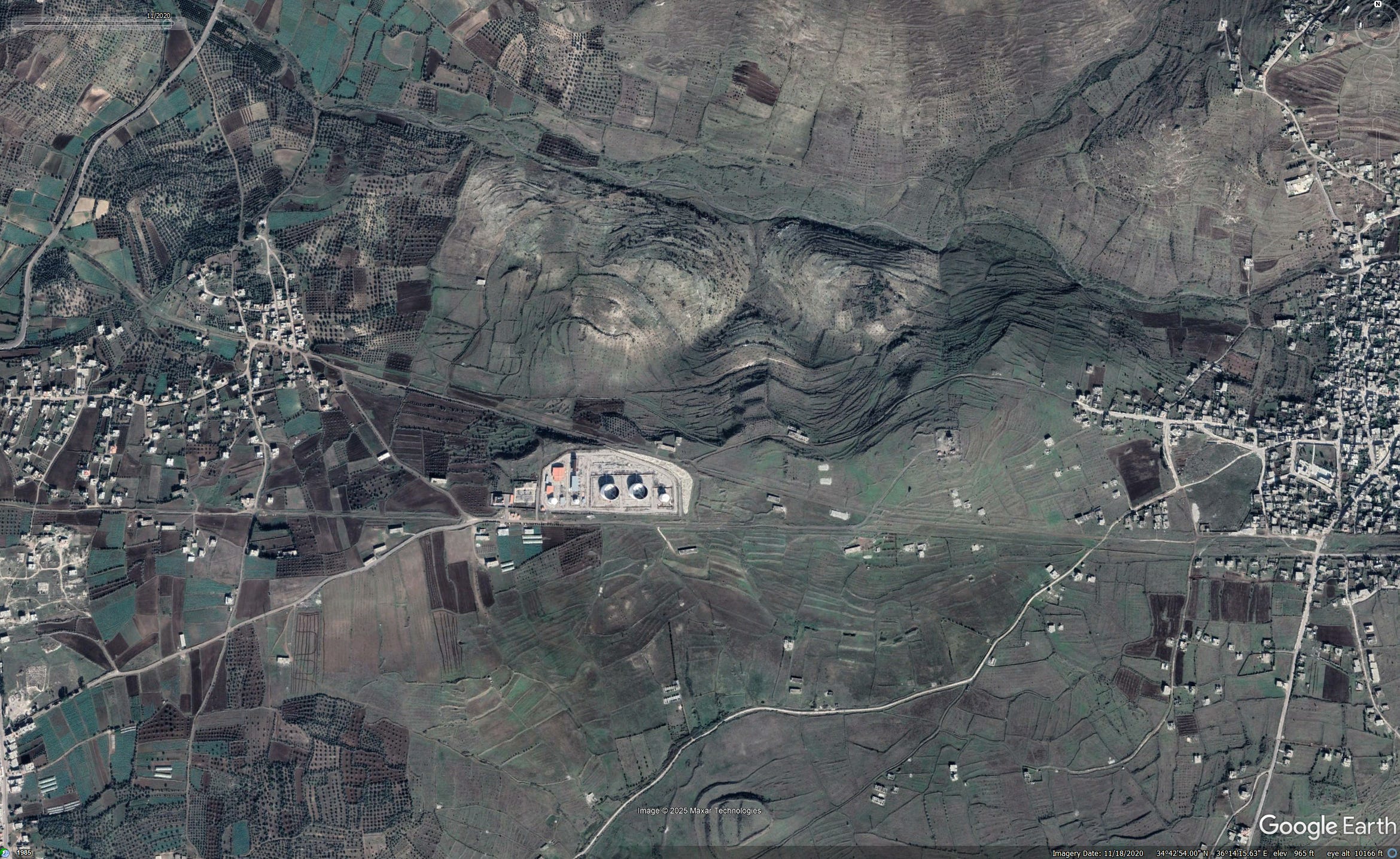
We are standing on the western flank of the town’s old defensive line. A network of trenches wraps in a C pattern around the tallest hill outside of town, atop which sits an ancient Byzantine tower. A small building next to the tower still contains a large painted regime flag. It is a constant reminder of Zara’s fate.
Like most Sunni towns, Zara’s residents had joined the anti-Assad protest movement in early 2011. However, the town is isolated in far western Homs, where a small string of Sunni communities sit surrounded by pro-Assad Alawi towns. They were all early targets for the regime’s military and shabiha. The first of 520 victims was murdered on May 14, 2011. Army units backed by local militiamen had just established a series of checkpoints around Zara and Talkalakh following protests the day before. Ahmed Hamsho, a lawyer from Talkalakh, tried to visit his wife’s family in Zara that day but was detained by shabiha outside the village of Hajar Abyad. The shabiha beat and tortured him before handing him over to the army, who sent him to prison where he died under torture. His body was returned to his family two months later.
On May 15, the regime launched a military operation against Talkalakh. Three days of intense fighting later, Talkalakh had been subdued. Nearly 4,000 residents had been displaced to Lebanon and more than 1,000 detained by regime forces, according to Human Rights Watch. Increasingly isolated from other pro-revolution towns, Zara would gradually come under siege.
Hamad and Omar had been teachers before the war. After the revolution began, Hamad moved to the newly established local council’s education office. When the regime besieged Zara in 2012, Omar took up a rifle to defend his city. “We had many defectors who supported us and helped to organize and train our forces,” Omar explains. Whether Alawi or Sunni, the towns of the Talkalakh countryside have historically had limited job opportunities; farming, smuggling, or joining the army were the only real paths forward for young men. According to the regime’s 2004 census, while Zara was the largest town in northern Talkalakh and had among the highest percentage of government employees (30%), it was in the lower half of education and economic indicators for the area. Economic hardship had pushed many of the town’s men into the army or cross-border smuggling, with other families relying on remittances from children sent abroad. By 2011 the town boasted around 200 officers and 1,000 conscripts.
Unlike the nearby Alawi villages who also contained significant numbers of regime soldiers, almost all of Zara’s men defected early in the war. These defectors formed the core of the opposition factions that soon mobilized in the town, lending a high degree of experience and coordination which prevented major infighting and allowed the town to withstand the tightening siege. “Everyone took up arms to defend the town, and the defected officers organized the fighters and led the defenses,” explain Hamad and Omar.
“Some defectors brought with them trucks of ammunition and weapons when they fled the regime, other weapons were captured during battles, and weapons smugglers working across the border and from within the regime sold weapons as well.”
More than 120 fighters, many of them defectors, died during the siege. Today, the people of Zara hold immense pride in these men. Facebook pages dedicated to covering news in the town regularly report on the return of defected officers following their exile in Europe. Meanwhile, by the end of 2025, 150 of the young conscript defectors had re-joined the new Syrian army, cementing the town’s position within the revolutionary story of Syria.
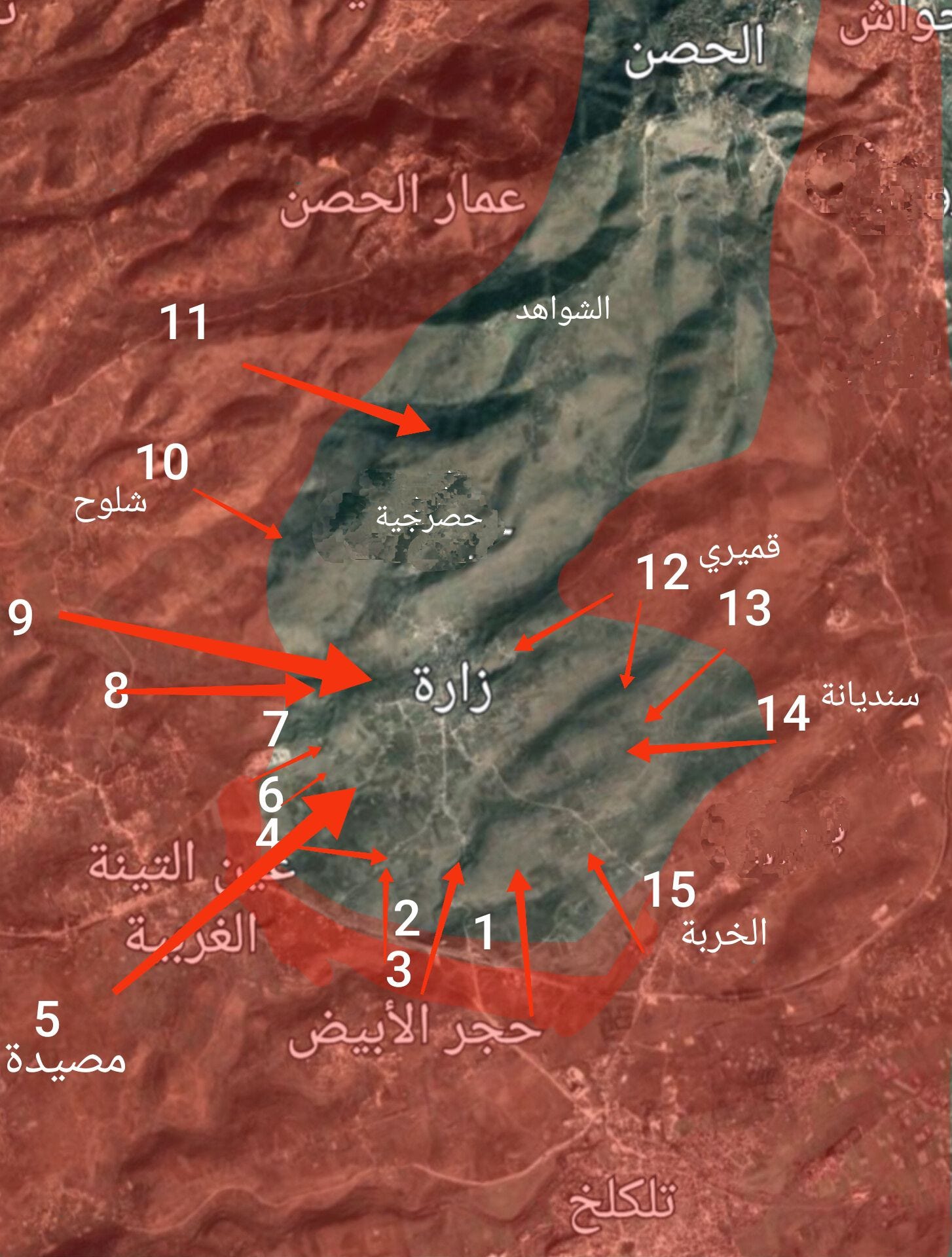
By the time the regime fell, only 10% of the town’s population were still living in Syria. A few, like Hamad, lived in Talkalakh while the rest were trapped in the sprawling refugee camps in the north. Most residents had smuggled themselves to Lebanon throughout the siege and the day the town was captured. Yet despite being less than 4 miles from the border, getting to Lebanon was itself another battle.
The regime entered Zara on March 8, 2014, triggering a mass wave of displacement among fighters and civilians alike. For two months regime army units, supported by Alawi militias from across the coast, assaulted the town in what residents called “The Great Battle of Zara.” Nearly the entire town fled when the regime finally broke through. Some went up the nearby mountain to Hosn, another besieged Sunni Turkmen town. Around 800 people tried to enter Lebanon. However, as Hamad and Omar describe it, “Alawi villages saw the people fleeing and set up checkpoints to capture them. Others were shot at or shelled by regime and NDF positions around the valley.” As many as 200 people were caught or killed trying to reach the border.
“At this point the average weight was 40-50kg and most of us were eating grass,” recalls Omar, “Fighters had to open the road, first breaking through a checkpoint near Hosn then escorting the civilians under a hail of fire.” Some elderly residents and children knew they could not make this journey and believed that, as clear non-combatants, they could remain behind when the regime entered the town. More than 120 executed by regime forces and local militias that day, according to Dr. Nadir al-Halil, with bodies still being found. Another 200 people were detained in the following weeks, many after being promised amnesty by the regime. Young men were then forcibly conscripted into the regime’s forces, while defectors disappeared into Sednaya Prison. “The regime called it victory day,” says Hamad, “but for us it was a black day.”
Pride Without Homes
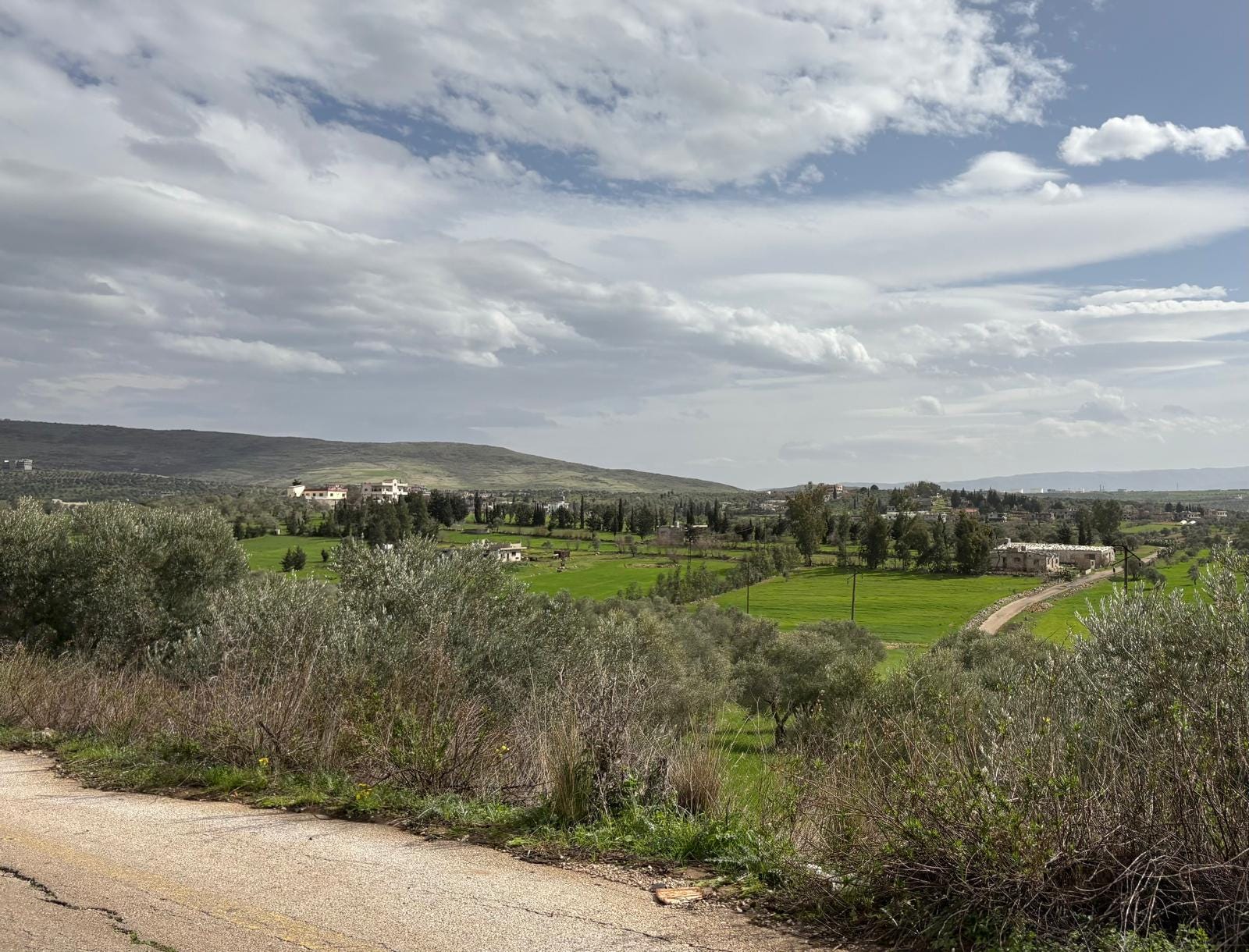
When the Assad regime fell, this proud history was all the people of Zara had left of their town. Even in the heart of winter, the hills around Zara remain brown and empty. Weeds and stumps protrude where thousands of olive trees once flourished. Looking out over the countryside is like seeing where two oceans meet – the empty hills of Zara ringed in by the dense orchards of Alawi villages. It was regime militiamen from these towns who had swept through Zara after expelling every resident and desecrated its fields. It was an explicit attempt to permanently displace the Sunni population.
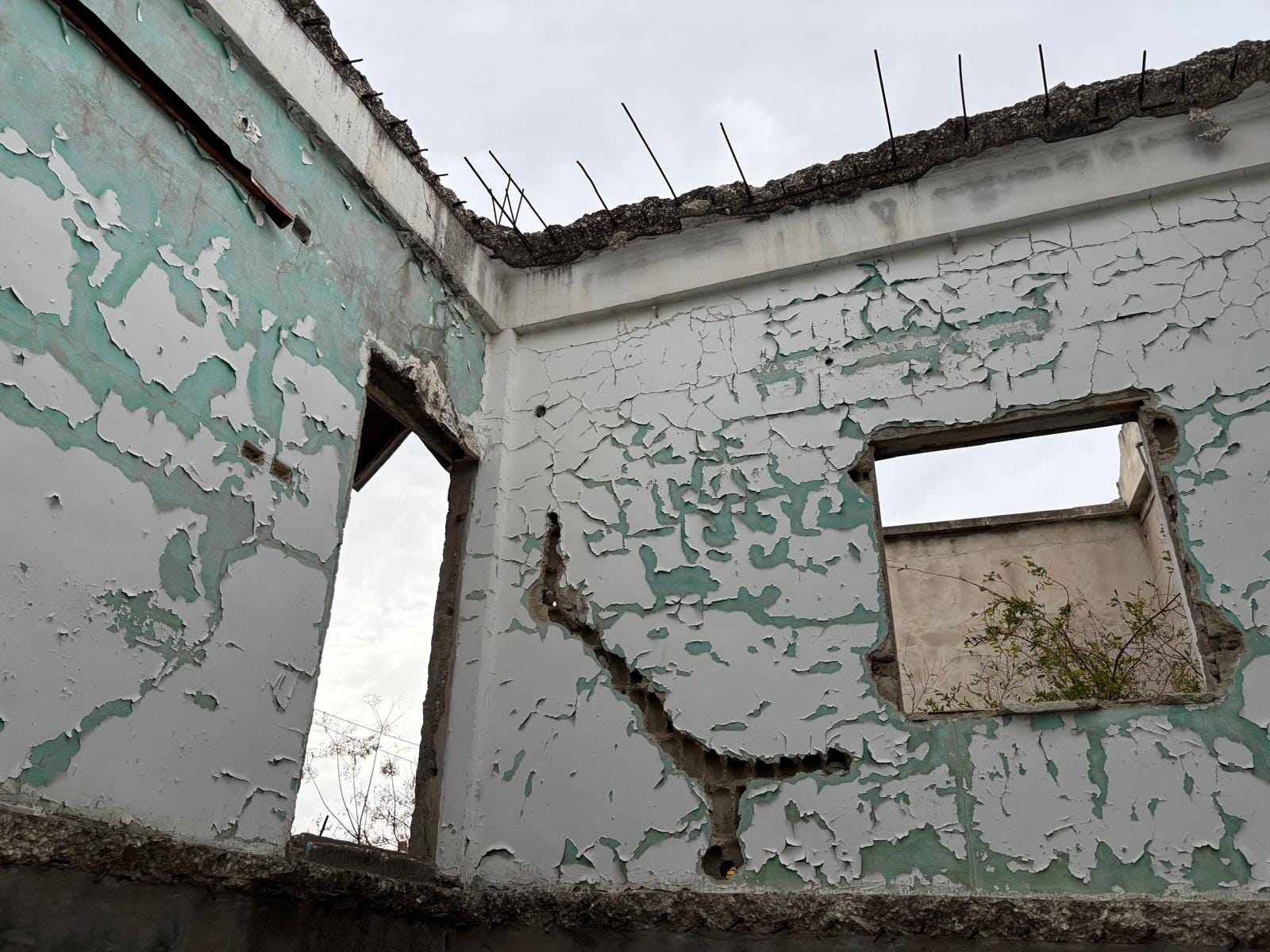
The town itself did not escape this systematic destruction either. Between 2014 and 2019, nearly every house was stripped of its contents, wiring, rebar, and roofs. Anything that could be sold for scrap was taken. Regime fighters did not even wait for the smoke to settled before beginning their looting, as one video recently shared by locals shows:
Two regime militiamen loot a home in Zara while the sounds of shooting can still be heard in the distance. The two men mock the now displaced residents by sarcastically yelling “Allahu Akbar” and saying “We are Shabihah of Assad”.
When some residents were finally allowed to return in 2019, these local shabiha attacked the town again. According to the journalist, Alawi farmers began setting seasonal fires to the land Zara’s residents were attempting to regrow, while others simply seized land belonging to displaced Zara families. A local journalist has documented the destruction of his town in detail. In a series of Facebook posts in early 2025 he wrote:
“Since the regime took control of the town of Zara in March 2014, the town’s notables had attempted to obtain security approvals for the return of residents. However, the regime’s response was that the neighboring villages “did not want them to return,” especially the shabiha known as “Ghawar Khanat”, who had not yet completed the theft of property.”
Rebuilding a Town and Relationships
Zara’s experiences during the war were shaped by their local environment. The regime relied heavily on informal militias recruited from the Alawi towns and villages surrounding Zara. Raids by opposition fighters targeted security points in these towns, which were then described by pro-regime media as targeting “civilians”, further radicalizing local Alawi communities against the Sunnis in Zara. Artillery batteries, tanks, and sniper positions were all placed in and around these villages, and checkpoints were often manned by local National Defense Forces (NDF) personnel. All of this created an inexorable link between Zara’s neighbors and the regime’s crimes, even before the systematic looting of later years.
A video filmed by regime supporters in the nearby village of Hajar Abyad showing residents gathering to watch regime artillery shell Zara on the final day of the siege, March 8, 2014.
The people of Zara now have to rely on a complicated and weak justice system for any hope of justice and accountability. The alternative is risking mass retributive violence. Differentiating between entire villages and just those who participated in the crimes against Zara is key, but so far no one has been arrested. Hamad and Omar claim there were around 400 formal NDF and Baath Battalion fighters from the neighboring villages, along with another 2000 “shabiha.” Yet the two brothers believe that, “most of the criminals fled to Lebanon and the rest are in hiding.” It is a common claim used over the past year to mitigate the risk of vigilante and indiscriminate retributive violence.
“After liberation, the surrounding areas were waiting to be slaughtered,” Omar says, referring to the widespread fears among Alawis that the Sunni victors would come seeking revenge, “But we are abiding by the laws and support transitional justice, not revenge killings.” The two mens’ only demands are that the criminals be held accountable and stolen property returned. They reject calls for communal retribution or accountability against entire Alawi villages and even dismiss the need for financial compensation. “Zara doesn’t need an apology or acknowledgement of the crimes,” says Hamad. It is unclear if the entire town shares his opinion.
There have been no formal attempts at civil peace or social cohesion initiatives in Zara. The area has been abandoned by most NGOs and civil society organizations, but locals have pursued their own form of informal relationship building. “No one here demanded civil peace because we already have civil peace,” Omar emphasizes repeatedly when I ask about the need for a Civil Peace Committee. “We have made it clear that killing our Alawi neighbors is neither victory nor justice,” he adds. However, while both men claim that the people of Zara have no problems towards their neighbors, “some of them are sensitive towards us.”
Rebuilding communal ties now occurs on three levels. Community leaders in Zara talk with the leaders of the Alawi villages, ensuing there is an open communication channel for any issues between town residents. Additionally, Alawi teachers now work in Zara, and young men from the Alawi villages are employed as construction workers helping to rebuild residents’ homes. Lastly, schools have become a central part of intercommunal bonding. Arts and sports events now regularly bring together students and families from Zara’s schools and the nearby Alawi schools.
Despite this, there is still deep anger between the towns, as Zara’s residents view the Alawi towns as having initiated the attacks against them in 2011. In June 2025 this anger and distrust erupted in a night of violence, when the death of a security officer under unclear circumstances in a nearby Alawi village resulted in a mob attack targeting an Alawi family in that village. Social media rumors had fueled that mobilization, and online misinformation and hate speech continues to undermine the personal and economic ties holding the the fragile peace.
“More needs to be done though to tie the villages together, especially economically,” Omar implores. Zara’s economy and infrastructure was decimated by the regime’s systematic looting. Multiple families are now cramped into single homes they have spent their saving on to rebuild, and job opportunities remain scarce. Walking through the town center we find a small group of men gathering at an electrical substation angrily yelling at a municipal electrical employee over the ongoing power outages in the town. Some farmers are attempting to replant their fields, but the olive groves they had historically relied on will takes years to regrow. “The industrial sector was very weak even before the war,” explains Hamad, “Two generations ago the town was known for carpet making, but this has long stopped.”
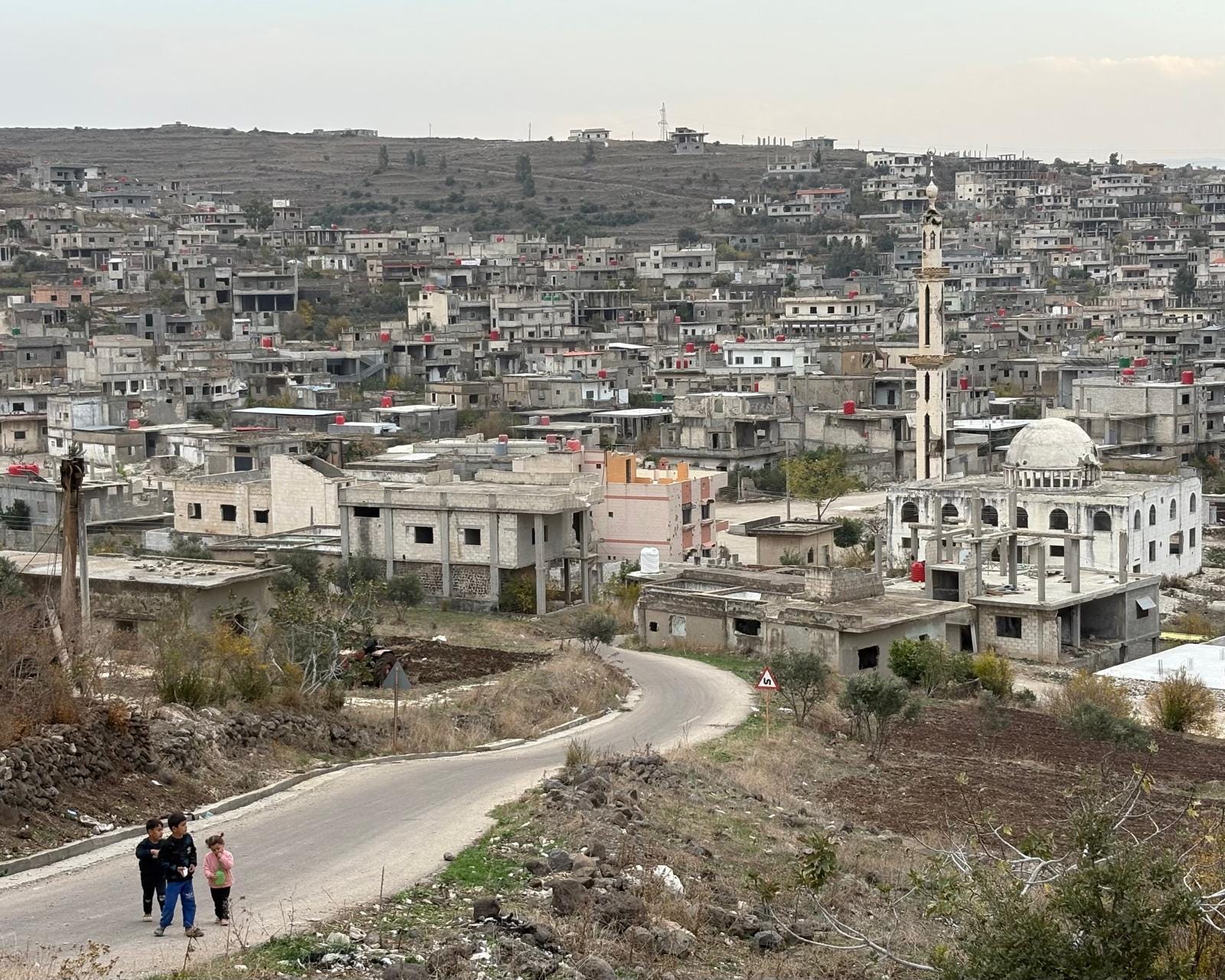
Zara’s needs are immense. There are now nearly 1,000 students attending schools which had all been destroyed, crammed into classrooms hastily shored up by locals early last year. The 12,000 residents who have returned have only a single well whose generators are too weak to pump water to parts of the town. Every family has had to use their own money to rebuild their homes, forcing some to remain displaced abroad and others to smuggle themselves back to Lebanon in search of work. Projects to alleviate the economic strains in Zara could help strengthen the frayed inter-communal relations here as well, says Omar. “We need new industrial and development projects that link all of our economies together,” he tells me, “simple things like greenhouses and food stores, or maybe some food processing factories for all of our towns to use.”
Zara is just one of hundreds of Sunni towns to face systematic and sectarian assaults by the Assad regime and its supporters during the revolution. The town harbors its own unique story, but the types of crimes - the detentions, executions, indiscriminate bombings and systematic looting - were part of a nation-wide policy of violence employed by the regime. Yet crimes were not limited to formal military operations and often blurred the lines between the crimes of the regime and sect-based intercommunal violence.
Zara has been liberated, but it has once again been abandoned by the international community. Its people have had to rebuild their homes and their lives with no outside support, and now face the monumental task of rebuilding relations with their neighbors after 14 years of siege and displacement. These are not challenges one small community can defeat alone. The longer Zara goes without support, the greater the risk the town will never fully recover and violence could return to the area.