

The National Defense Forces was the largest of Assad’s militias during the Syrian war, comprising local chapters across every governorate and many districts. Formed first in Homs in early 2012, the NDF grew under the patronage of the Republican Guard and Iran. By 2013, NDF centers had been established in every governorate. It quickly became a key auxiliary for the regime’s forces at a time when the formal army was hemorrhaging tens of thousands of soldiers to defections and combat losses.
The NDF is often described as a local militia, designed to entice men who did not want to serve in the army or far from their homes. This did not mean locally-deployed NDF members didn’t see action - many units were recruited along disputed mix-sect frontlines in Homs, Hama, and Damascus city and were heavily employed against their neighbors. But the NDF’s role in the early years was larger than this, more akin to what the later Tiger Forces would become. While many units served as local support forces - manning checkpoints and providing emergency manpower for military operations close to their hometowns - others were used as frontline assault units. These units were deployed widely across the country to support whatever the regime’s most pressing operation was at the time.
The Tartous NDF provides an excellent example of this multifaceted role. In particular, several eulogies for a company commander killed in 2016 provide a detailed history of its combat deployments. The timeline provided by these eulogies match other open-source claims shared by pro-regime accounts over the years about different battles members of the center participated in. The extent of just this one center’s deployment history underscores the complexities of post-Assad transitional justice: how do you hold accountable 100,000 members of a pseudo non-state militia that fought across and committed crimes in scores of cities over 14 years of war?
The Sniper Company
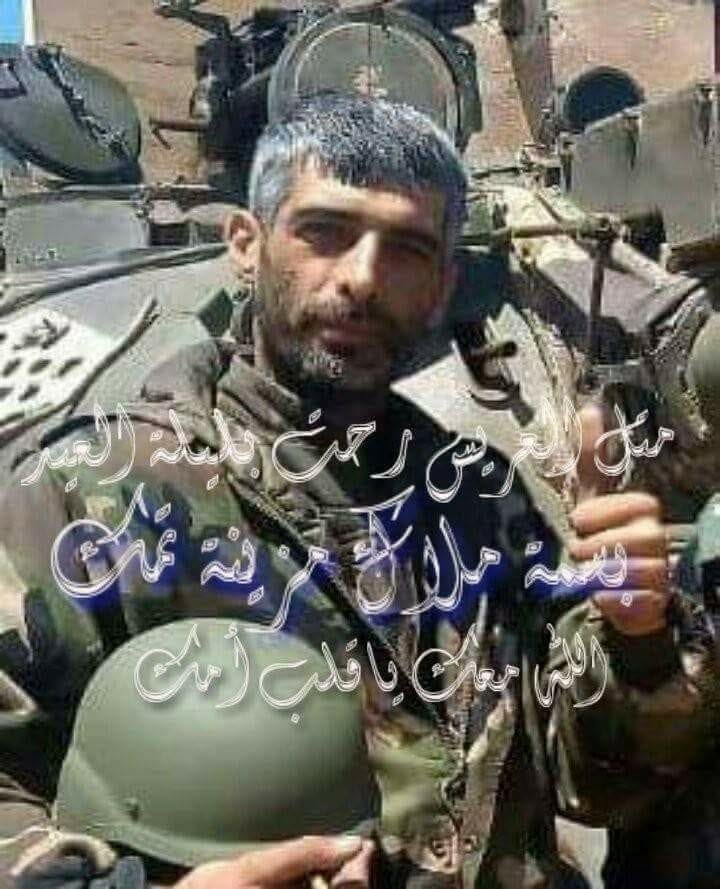
Ali Muhammad Suleiman was born in Tartous’ Sheikh Badr District and worked as a carpenter before the war. At the onset of the revolution, he abandoned his business and his family to join the new Tartous NDF Center, or as the eulogies describe it, “He left behind his young family—his wife and three children. He told them, ‘I am going to restore safety and defend my land and my honor.’” In 2012 he was assigned to lead a sniper company. Two eulogies posted in 2017 provide a chronology of deployments for Suleiman and his company. Approximate dates can be assigned to most of these deployments thanks to other pro-regime media posts about Tartous NDF combat operations at the time.
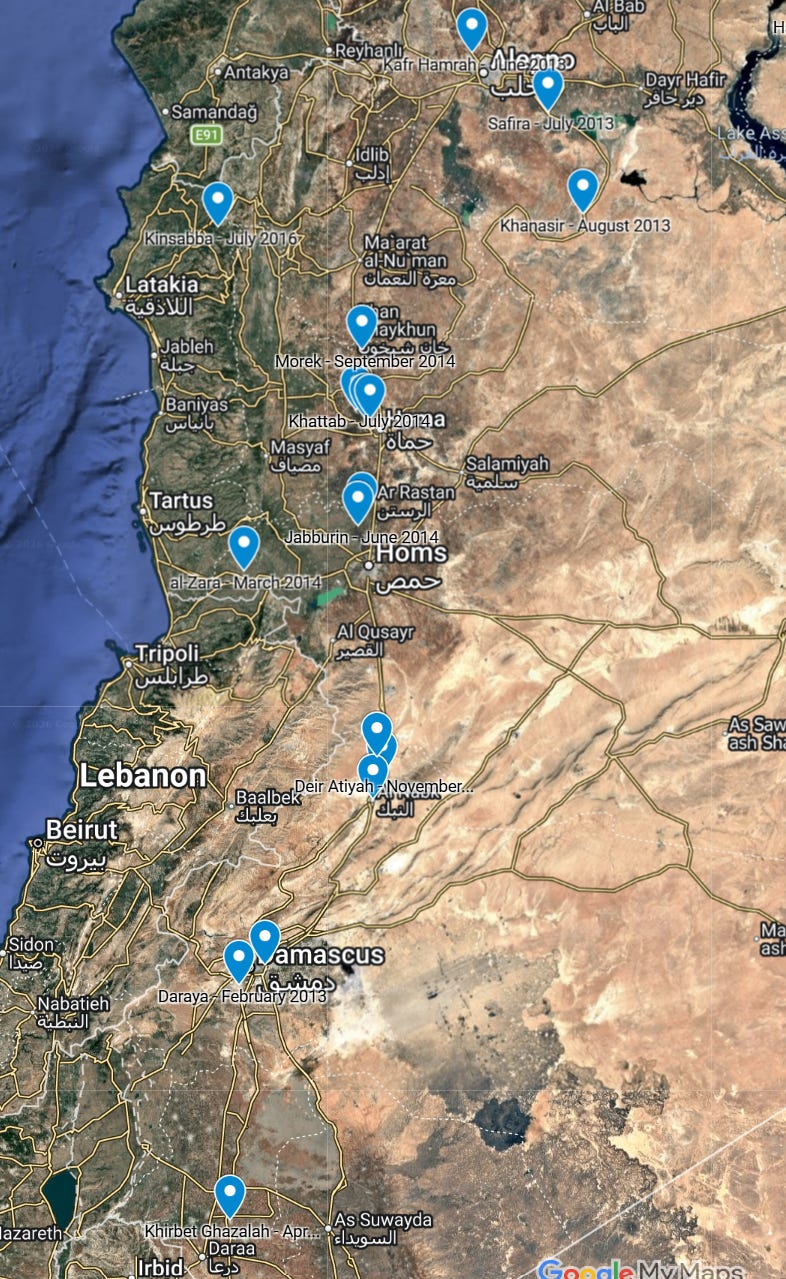
Suleiman’s company’s first deployment was to the Damascus suburbs of Daraya and Jobar. This likely refers to the major fighting in and around Damascus City in February and March 2013. The fighting was triggered by an opposition offensive targeting the city’s eastern neighborhoods on February 6, which began just weeks after a stalemate had been reached in Daraya. His units participation here gives a small indication to just how stretched regime forces already were in early 2012 that they needed to pull in militias from Tartous to help protect the capital.
A few weeks later, Suleiman’s company moved south to Dara’a, joining the regime’s operation to seize the town of Khirbet Ghazala in late April 2013. The Tartous NDF’s participation in this operation was likely substantial, as the overall commander of the center was present and wounded during the battle.
Shortly after the Khirbet Ghazala operation, Suleiman’s unit moved to Aleppo. They first fought in Kafr Hamra, likely referring to the June 2013 regime offensive in Northern Aleppo in which at least one NDF Tartous member was killed. By the end of the month they had been moved to the Safira region of southern Aleppo. The unit then participated in the failed defense of Khanasir in late August 2013, losing more than 20 fighters before withdrawing from the town.
In November 2013, the company deployed to rural Damascus’ western Qalamoun region to participate in the Republican Guard-led offensive against the towns of Qarah, Deir Atiyah, and Al-Nabek. The operation was commanded by Brigadier General Muhammad Khaddour, the former commander of the Republican Guard’s 106th Brigade who had founded another important militia in Aleppo and rural Damascus, the Popular Defense Forces. While some NDF Tartous units returned to Tartous on December 9, 2013, other units reportedly remained stationed in the newly captured areas.
At some point in the first half of 2014, Suleiman’s company joined the siege of Al-al-Zara, a small Turkmen town in western Homs. While the eulogies do not provide any specifics beyond this, it is likely his unit was tasked with supporting the regime’s final offensive against the town, culminating in the storming and and complete displacement of its residents on March 8, 2014.
Interestingly, the sniper company was also deployed to the northern Homs frontline where it participated in battles for the two towns of Umm Sharshuh and Jaburin. While no date is provided in the eulogies, this likely refers to clashes during the early summer of 2014. NDF units, most likely belonging to the Homs Center, had previously entered Umm Sharshuh, but the two towns came under opposition attack in late June and were taken by July 4. Pro-regime media referenced NDF involvement in fighting around the towns in early June 2014.
In the late summer of 2014, Suleiman’s company was deployed from Homs to northern Hama to assist in the regime’s defense against a new opposition offensive, and then to help re-capture a series of towns north and west of Hama city. From late July through the end of September, the his unit fought in Arzah, Khattab, and Shar’aya before moving north to Morek. In Khattab, regime fighters stripped every home bare after displacing its residents. On October 20, 2014, Suleiman was awarded a medal by the NDF General Command for his role in the battles.
Suleiman was killed in northern Latakia on July 8, 2016 while his unit supported the Republican Guard and Special Forces units storming the town of Kinsabba.
Not the Only Unit
Suleiman’s Sniper Company was not the only Tartous Center unit to be deployed widely across the country in offensive roles. Other Facebook posts provide additional deployments which do not match those listed for Suleiman, suggesting that the Tartous NDF contained numerous offensive units relied on to support army operations in any frontline.
A Tartous NDF member was reportedly killed in Aleppo governorate as early as October 6, 2012, a year before Suleiman’s unit deployed to Kafr Hamra and Khanasir. A Baniyas Sector NDF member was similarly killed in the Kweires area in April 2013, the same time that Suleiman’s unit was fighting in Khirbet Ghazala in Dara’a.
Multiple NDF Tartous units likely deployed to rural Damascus in November 2013. While Suleiman’s company fought in the western Qalamoun, another unit reportedly joined the regime’s operation to recapture the Mheen Weapons Depot along the Damascus-Homs border on November 14.
NDF Tartous Center units continued to be deployed in major hotspots throughout 2015, including in Jisr Shoughur in Idlib, Jobar in Damascus, and Khanasir in Aleppo.
NDF Tartous members participated in multiple operations in Northern Latakia prior to Suleiman’s death there in 2016. Units deployed to the northern fronts in both April and August 2013, and again in March 2014. The founding commander of the Tartous NDF Center, Colonel Nizar al-Khatib, was killed during the fighting around Salma on August 18, 2013.
Those Who Stayed Home
Many members of the Tartous NDF Center also stayed within their own governorate. These fighters were largely responsible for a sprawling network of semi-formal checkpoints, but also participated in military operations and massacres within Tartous.
Most prominent of these are the May 2013 massacres in Bayda, Marqab, and Ras al-Naba in which the Baniyas Sector NDF participated, and the storming of Mitras in October 2013. Similar to the Baniyas Sector’s role in Bayda, the Safita Sector NDF played a prominent role in the Mitras attack, given that the Turkmen village resides in Safita District, and its members were subsequently assigned by the regime to occupy the town.
NDF checkpoints were notorious throughout the war for their general criminality and lack of discipline. The militia itself often formed along familial and personnel networks. Family members and friends of regime officers would be given contracts to recruit small groups of fighters or to guard certain roads. The inherent corruption within the NDF system fueled abuses against civilians of all backgrounds who did not have strong enough personal connections to protect themselves from predatory militiamen.
In 2014, a regime fighter from western Hama wrote on Facebook about the rise of unprofessional checkpoints manned by Tartous NDF personnel:
“The Syrian National Defense is a formidable force that has achieved significant successes alongside the army. However, a critical issue concerns the Tartus center—specifically the “Cold Contracts” formations deployed at checkpoints within the villages. Anyone with a modicum of authority, or a connection to an official or commander at the center, forms a group—often including their own relatives, even minors—and obtains weapons for them. The vast majority of these individuals have no military background and lack any understanding of weaponry.”
The Tartous NDF Center’s role as an assault and support unit diminished during the second half of the war. Frontlines solidified and shrank and the entry of the Russian military shifted the internal militia dynamics within loyalist areas. By 2018 the NDF more broadly had begun to downsize. Some units moved to other formations, like the 5th Corps or Tiger Forces, others were simply disbanded or their fighters’ contracts adjusted to be part time reservists.
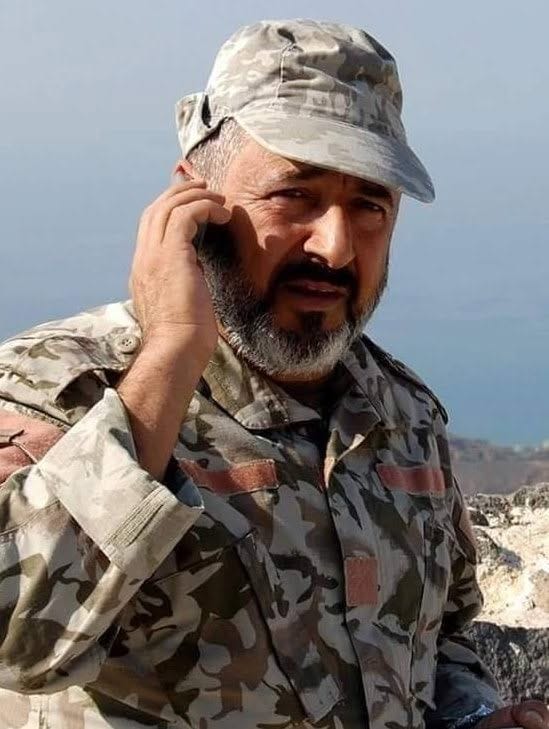
The Tartous Center continued on until the collapse of the regime mostly just manning checkpoints and running small training camps in the governorate. The center had lost at least two of it’s original commanders and was last led by Faisal Hassan, who served as its general commander from June 2016 until the fall of the regime.
Im curious, does the commander that you mentioned at the very end, Hassan, have any relation to Suhail, of the Tiger forces? (In the photo he has similar facial features, so its not only the name that made me wonder.) And, also, do you know if that man fled when the regime fell?